A bedroom fan has a difficult balancing act: move enough air to cool the room without adding distracting noise or a bulky object beside the bed. I focus on that practical mix of sound level, airflow, controls, timers, and placement rather than treating every quiet fan as interchangeable.
The compact models suit nightstands and dorm rooms, while tower fans serve people who want air distributed across a larger space. Cordless operation, remote controls, and smart-home features matter only when they solve a specific problem in the room where the fan will actually live.
The Choices Worth Comparing

SIGBOT 10-Inch 28dB Remote Desk Fan with 8 Speeds and Timer

duludulu 4000mAh Rechargeable Desk Fan, 6 Speeds, Display

Honeywell TurboForce HT-900 Desk Fan
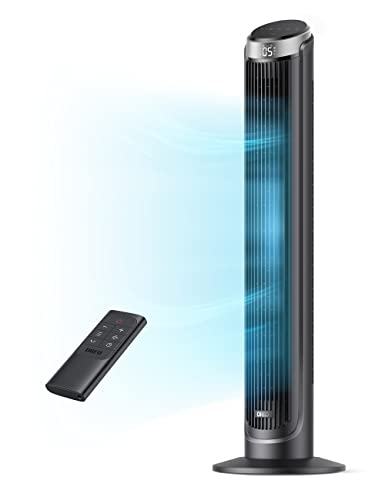
DREO Bedroom Tower Fan with 90-Degree Oscillation

DREO 519 Tower Fan, 28 ft/s, 9 Speeds

DREO 28 ft/s Tower Fan, 8 Speeds

ZAFRO Smart Tower Fan with 120-Degree Oscillation

LAMJIE Rechargeable Jet Engine Desk Fan
The Details Behind The Selections
The SIGBOT focuses on bedside control, with eight speeds, three operating modes, and a dedicated setting listed below 28 decibels, a unit used to measure sound. I find that combination useful for light sleepers, shared rooms, and nightstand placement where frequent adjustments would be inconvenient.
The included infrared remote, or IR remote, avoids reaching across the bed, while the display turns off after 60 seconds. Unlike the cordless duludulu, this model stays on the tabletop and uses automatic and manual movement to spread air across the room.
A Few Strong Suits
- Eight speeds and three modes provide useful airflow control.
- The screen-off function keeps the bedside display dark.
- Memory restores previously selected settings.
- A 1-to-9-hour timer supports timed bedtime use.
Practical Considerations
- The 12-by-8-by-9.8-inch body needs a reasonably clear tabletop.
- An IR remote generally needs a clear path to the fan.
Key Specs
Who It Suits Best
Light sleepers and shared-room occupants benefit most from the low-output mode, timer, and remote.
Where Another Pick Suits Better
The duludulu 4000mAh Rechargeable Desk Fan suits travelers who prioritize cordless operation over oscillation.
The duludulu makes cordless cooling the central feature, with a 4,000mAh battery and a listed operating level of about 28 dB. I would consider it for a dorm, hotel room, or home office where a nearby outlet is inconvenient and the fan must move between locations.
Six speeds appear on the digital display, which also shows battery status, while 360-degree rotation changes the direction without a conventional oscillating head. Compared with the SIGBOT, the setup favors portability rather than timed bedside control.
The Practical Payoff
- Battery operation removes dependence on a wall outlet.
- The display provides clear speed and battery feedback.
- 360-degree rotation supports flexible directional cooling.
Details To Watch
- The listed 16-hour runtime applies to low speed; maximum output is listed at four hours.
- Wall mounting requires a suitable surface, while the removable rear mesh needs regular access for cleaning.
Quick Facts
The Right Fit
Travelers, dorm residents, and people working near a window benefit from the rechargeable format.
Another Choice May Suit
The SIGBOT 10-Inch 28dB Remote Desk Fan suits sleepers who value oscillation, setting memory, and a bedtime timer more.
The Honeywell takes a direct approach, using a seven-inch blade, three speeds, and a head that pivots through 90 degrees. I see it as a practical choice for a desk where directional airflow matters more than elaborate controls or a tower-style footprint.
The TurboForce shape is designed to move air efficiently, and the listing describes the model as 25 percent quieter than comparable versions. Its table or wall-mount placement also makes it more flexible than the purely bedside emphasis of the SIGBOT.
What Stands Out
- Three speeds cover basic airflow adjustments.
- The 90-degree pivot directs air toward a desk or bed.
- Table and wall mounting offer two placement options.
Where It May Fall Short
- The seven-inch blade and three-speed setup suit focused cooling rather than whole-room distribution.
- Wall mounting requires a suitable location, so renters may prefer tabletop operation.
Who Will Love This
Office workers and students benefit from the compact design and simple directional adjustment.
A Better Fit Elsewhere
The DREO Bedroom Tower Fan with 90-Degree Oscillation suits a sleeper who wants broader room distribution and a timer.
The DREO tower changes the scale of the search. Instead of a compact airflow machine aimed at one person, it uses 90-degree oscillation to distribute air across a bedroom, and the listing describes a 28 dB low point for a gentler bedtime setting.
A timer adjustable from one to 12 hours handles overnight use without much interaction. Compared with the Honeywell HT-900, the tower footprint is more substantial, but the control schedule and wider movement better suit a shared room.
Why It Works Well
- The 28 dB setting supports low-output nighttime use.
- Oscillation reduces the need to aim the fan manually.
- The long timer covers many sleep schedules.
Some Limits To Know
- The 90-degree sweep is narrower than the ZAFRO model’s 120-degree movement.
- Tower placement requires more floor clearance than a desk fan.
Feature Snapshot
Made For
Shared bedrooms and home offices benefit from the quiet setting, oscillation, and extended timer.
Consider Something Else When
The DREO 519 Tower Fan suits larger rooms that need higher output and nine separate speeds.
The DREO 519 moves away from the gentler bedtime focus of the previous tower and prioritizes output. Its 42-inch bladeless body, 28-foot-per-second air speed, and 1,397 CFM of airflow make it relevant to larger bedrooms, with CFM meaning cubic feet of air moved per minute.
The direct-current, or DC, brushless motor supports the tower’s airflow while keeping the mechanical design simple. I would favor this model for a room where stronger movement matters, rather than placing a high-output fan directly beside a sleeper.
The Upside
- High listed air volume suits larger rooms.
- Nine speeds provide finer control than eight-speed models.
- The bladeless tower leaves no large exposed blade at the front.
Points To Keep In Mind
- The 42-inch height calls for adequate storage and floor clearance.
- Its high-output capability may be unnecessary for a compact nightstand setup.
Best Suited To
Large-bedroom occupants and home offices benefit from the high air volume and nine-speed control.
Swap It Out When
The DREO 28 ft/s Tower Fan, 8 Speeds suits a smaller room where a more compact tower is preferable.
The DREO 28 ft/s Tower Fan retains the same listed maximum air speed as the larger 519 but offers eight speeds and a 34-foot projected reach. I see it as a middle-ground tower for a bedroom or office that needs more distribution than a desktop model without moving to the largest model here.
An algorithmic impeller and brushless DC motor form the core of its airflow design. Compared with the 519, the main decision comes down to room scale and control count rather than maximum velocity.
Useful Highlights
- The 28 ft/s output suits active cooling needs.
- Eight speeds allow meaningful airflow adjustment.
- Projected reach covers a substantial room area.
Less Ideal Details
- The listed 34-foot reach is shorter than the ZAFRO model’s reach beyond 43 feet.
- One fewer speed makes the DREO 519 more granular for close adjustments.
At A Glance
Whose Shelf It Belongs On
Small-space households and office workers benefit from the compact tower format and eight speeds.
Look Elsewhere When
The ZAFRO Smart Tower Fan suits a connected home needing wider oscillation, app control, and voice control.
The ZAFRO adds connected control to the tower format, supporting operation through a touch panel, remote, app, and voice commands. I find that useful in a connected home because the fan does not have to remain within arm’s reach or depend on a single physical controller.
Its 120-degree oscillation, 12 speeds, and four wind modes offer more adjustment than the DREO 28 ft/s Tower Fan. The listed 1,060 CFM output, 28 ft/s velocity, and reach beyond 43 feet support use across larger rooms.
Reasons It Performs
- Four control methods suit different routines.
- Twelve speeds provide fine-grained adjustment.
- Wide oscillation covers more of the room.
A Few Limitations
- App and voice controls add complexity for anyone who prefers a simple panel.
- The large control set may be more than a bedside user needs.
Who Should Grab It
Connected-home users benefit from remote, app, and voice operation combined with broad oscillation.
Not Your Match When
The DREO 519 Tower Fan suits a larger room that prioritizes high output and simple physical controls.
The LAMJIE takes a different approach from every quiet-focused model here. Its twin-turbine shape is inspired by an aircraft jet engine, turning the desk into a display that suits aviation enthusiasts and offices with industrial décor.
The rechargeable design supports cordless personal cooling, which makes it more of a desk accessory than a room-distribution tower. I would choose it for visual appeal and focused airflow, while keeping a quiet bedside task in mind, I would favor one of the desk models with a stated decibel level.
What Makes Sense
- The aviation styling serves as functional desk décor.
- Rechargeable operation avoids tethering the fan to an outlet.
- The twin-turbine design suits collectors of aviation-themed objects.
Trade Offs
- Personal cooling does not match the room distribution of a tower fan.
- Cordless operation requires convenient access for recharging.
Core Details
Built With In Mind
Aviation collectors and executives benefit from the industrial styling and rechargeable desk format.
Where A Sibling Pick Shines
The ZAFRO Smart Tower Fan suits a bedroom where room-wide airflow and multiple control methods matter more than aviation-inspired décor.
What to Look for in a Quieter Bedroom Fan
Noise Floor and Operating Mode
The noise floor is the background sound produced by a fan. Decibels, abbreviated dB, measure that level, so a stated figure gives a more useful comparison than a vague quiet label. I also check whether that figure belongs to a dedicated low mode or represents the most powerful setting, since the level can change with output.
Airflow Reach Versus Room Size
A compact desk fan can provide a focused breeze for one person, while a tower is better suited to moving air across a wider area. Match the listed reach, oscillation, and air volume to the room rather than assuming a larger number always improves comfort. A person in a small bedroom may gain more from precise low-speed control than from maximum output.
Controls and Timer Access
Remotes are useful on a nightstand, while an app adds value when the fan lives in a connected home. A timer provides a simple way to manage bedtime or daytime use. I compare the available control methods with normal routines, because extra features can become unnecessary complexity in a room used mainly for sleep.
Footprint and Placement
Desk dimensions, fan height, and wall-mounting support determine whether the unit fits comfortably. I check the intended surface, nearby furniture, and charging access before choosing. A compact model with limited reach may work well for one sleeper, while a tall tower needs enough open floor space to direct its airflow.
Practical Lessons Before Checkout
Mistakes Worth Dodging
The most common error is focusing on a quiet label without checking the operating mode or noise figure. Another mistake is buying for maximum airflow when the fan will sit beside a bed. I compare the actual room, intended speed, physical footprint, and available control methods before deciding.
The Upgrade Payoff
Spending more can add stronger airflow, finer speed selection, wider oscillation, or connected controls. The ZAFRO provides app and voice operation, while the DREO 519 emphasizes high output for larger rooms. Those additions are worthwhile only when the extra capability addresses a specific need.
Frequently Asked Questions
What does 28 dB mean for bedroom use?
A 28 dB operating level gives shoppers a more concrete basis than vague quiet wording. Noise can still change with speed, so the selected mode and distance from the bed matter.
Which fan type fits a small bedroom?
The SIGBOT 10-Inch 28dB Remote Desk Fan is a practical bedside choice because it combines low output, a timer, and a compact footprint. Tower models make more sense when air needs to circulate across an entire room.
Can I run a bedroom fan all night?
The SIGBOT timer runs from one to nine hours, while the DREO Bedroom Tower Fan supports a one-to-12-hour timer. For other models, I would check the operating instructions and available scheduling controls before assuming all-night use is covered.
Do I need remote or app control?
A remote is useful when a fan sits out of reach on a nightstand, while an app suits connected-home routines. The ZAFRO supports touch, remote, app, and voice controls, whereas simpler desk models rely more heavily on their physical panel.
Is a rechargeable bedroom fan quieter?
Rechargeable power does not automatically indicate a lower noise level. The duludulu combines a stated noise level of about 28 dB with a brushless motor and cordless 4,000mAh battery for travel and dorm use.
Final Verdict
I keep coming back to the SIGBOT for the most complete bedside package, the duludulu for cordless flexibility, and the DREO towers for room-scale airflow. The LAMJIE wins on desk character rather than a conventional quiet-bedroom feature set. The right choice comes down to where the fan lives and how much of the room needs cooling.