
A musty odor near the bathroom or a darker patch behind the closet makes mold control feel personal fast. The right air purifier can capture airborne particles while you address the moisture that encourages mold growth, but room size, filtration, controls, and filter upkeep determine how well each model fits your home. These options suit different spaces, from expansive living areas to compact bedrooms.
A Closer Look At The Lineup

WINIX AT40 Air Purifier with Two Years of Filters, Air Quality Monitor and Carbon Filter

WINIX 5510 Air Purifier with App Support, True HEPA and Carbon Filter

WINIX 5520 Air Purifier with Air Quality Monitor, True HEPA and Carbon Filter

WINIX 5530 Air Purifier with App Control, True HEPA and Carbon Filter
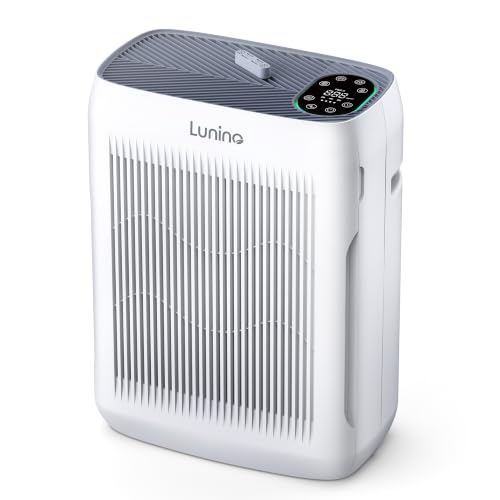
LUNINO 3000-Sq-Ft Pet Air Purifier with H13 HEPA and Aromatherapy

DREO 338 Air Purifier with PM2.5 Monitor, Sleep Mode and Scent Diffuser
A Closer Look At Each Pick
The AT40 is built for a home where one purifier must handle several large connected rooms. Its stated maximum reaches 1,968 square feet in one hour, while the air quality display gives you a visible reading and dynamic feedback instead of leaving operation entirely guesswork. That combination makes it a practical fit for open-plan homes, downstairs play areas, and households dealing with musty odors near a damp utility room.
HEPA filtration captures fine airborne particles, and the carbon layer addresses odors and smells carried through the air. Two 360-degree filter sets are included, which reduces early replacement planning. Compared with the smaller-room DREO 338, the AT40 makes more sense when floor area, rather than bedroom placement, drives your decision.
Where It Excels
- The high stated coverage suits large living areas and connected spaces.
- Two complete filter sets support easier initial ownership planning.
- The air quality monitor provides a useful at-a-glance reading.
- Carbon filtration complements the particle filter when musty odors are a concern.
Trade Offs
- The maximum room figure reflects a one-hour cleaning target, so room shape and air circulation still affect results.
Key Specs
Who It Suits Best
You benefit most from the AT40 in a large home with persistent damp-area odors and a preference for visible air quality feedback.
Where Another Pick Suits Better
The DREO 338 fits a compact bedroom better because its stated performance focuses on rooms up to 178 square feet.
The 5510 is for households that want large-room filtration with phone-based control. It reaches a stated 1,882 square feet in one hour, giving it nearly the same coverage figure as the AT40 while adding app support. That makes the model appealing in a busy home where you want basic control from your phone rather than walking to the unit each time the room conditions change.
Its True HEPA filter targets fine airborne allergens such as pollen, dust, smoke, and pet dander, while the carbon filter handles odors. The 5510 does not carry the AT40’s included two-filter package or explicit air quality display, so the practical decision is control and standard filtration versus added supplies and visible feedback.
Noteworthy Benefits
- App support puts everyday control within reach of your phone.
- The 1,882-square-foot claim suits large residential spaces.
- True HEPA filtration targets dust, pollen, smoke, and pet dander.
- Carbon filtration adds odor control for everyday household smells.
Practical Considerations
- Unlike the AT40, it does not include two years of filter sets.
- An air quality display is not highlighted among its defining features.
At A Glance
Made For
Connected-home users and large households benefit most from phone access combined with broad room coverage.
Consider Something Else When
The WINIX AT40 suits you better when included replacement filters and a visible air quality reading matter more than app support.
The 5520 centers on a feature many large-room users will notice immediately: an air quality monitor. Its digital display provides a clearer picture of changing conditions, which is useful in a basement, family room, or other space where musty odors can appear seasonally. The stated 1,882-square-foot maximum keeps it in the same broad capacity class as the 5510.
True HEPA filtration handles airborne particles, and the carbon layer targets odors associated with smoke, dust, and pets. Compared with the 5510, the 5520 favors on-device feedback over app support. That makes it the more direct choice for someone who wants to glance at a display while keeping the purifier independent of a phone connection.
What Works In Its Favor
- The built-in air quality display gives immediate visual feedback.
- Large stated coverage handles expansive living spaces.
- HEPA and carbon layers address particles and odors together.
Points To Note
- It lacks the AT40’s two included filter sets, so replacement costs deserve attention.
- For phone-based control, the 5510 may align more closely with your routine.
The Right Fit
You benefit most from the 5520 when you want large-room capacity and a clear on-device air quality display without app control.
A Better Fit Elsewhere
The WINIX 5510 serves connected households better when phone access takes priority over the 5520’s visible display.
The 5530 presents app control as its defining addition to the Winix 5500 series. It handles rooms up to a stated 1,882 square feet in one hour and includes auto mode for hands-off operation. For a large home with connected devices, that combination can make the purifier easier to manage from different parts of the house.
Its True HEPA filter targets airborne pollen, dust, smoke, and pet dander, while the deodorizing carbon layer handles everyday smells. The naming distinction matters when comparing it with the 5510: the 5530 emphasizes app control, while the 5510 is described more generally as offering app support. Neither the two-filter package nor the air quality display is a highlighted 5530 feature.
A Strong Showing
- App control supports flexible connected-home routines.
- The 1,882-square-foot figure suits large rooms.
- Auto mode reduces the need for constant manual adjustment.
- True HEPA filtration targets several common airborne particles.
- Carbon filtration adds odor management.
Worth Noting
- Its lack of highlighted filter packages makes the AT40 the more economical ownership choice when replacement supplies are already included.
Quick Facts
Who Should Grab It
Large-home occupants who regularly use phone controls benefit most from the 5530’s remote operation.
Reach For A Different Pick When
The LUNINO 3000-Sq-Ft Pet Air Purifier fits larger pet households better because it combines a washable filter with aromatherapy.
The LUNINO K3 is built around a broad 3,000-square-foot claim, making it the most expansive option in this group on paper. Its three-stage filtration targets pet hair, smoke, PM2.5, and odors, while a washable H13 HEPA filter offers a different maintenance path from the Winix models. That combination works well for pet households, dorms, offices, and open living areas.
Four fan speeds and auto mode let you match output to the room, and the aromatherapy compartment adds fragrance rather than filtration. Compared with the WINIX AT40, the LUNINO offers a larger stated coverage area and aromatherapy, while the AT40 adds two replacement filter sets and a dedicated air quality monitor.
What Helps Most
- The broad room coverage suits open spaces and pet areas.
- A washable HEPA filter supports a different upkeep routine.
- Four speed settings provide more control than a basic on-off setup.
Possible Compromises
- The 3,000-square-foot figure is a maximum cleaning target rather than a promise of uniform treatment in every room shape.
- Aromatherapy changes the scent of the air but does not replace particle or odor filtration.
- Regular washable-filter care remains part of ownership.
Built With In Mind
Pet owners and large households benefit most from the washable filter, pet-hair focus, and broad stated coverage.
Where A Sibling Pick Shines
The WINIX 5530 is a stronger fit for connected homes that place app control and auto operation above fragrance options.
The DREO 338 narrows the focus to smaller rooms, which makes it a more realistic fit for a bedroom, dorm, home office, or apartment. AHAM verification supports its performance claims, including a clean air delivery rate of 115 CFM. That rating describes how quickly the unit delivers filtered air, a more practical measure than room size alone.
The stated performance reaches 178 square feet at 4.8 air changes per hour and an air refresh every 12.4 minutes. A PM2.5 monitor, sleep mode, turbo mode, and four fan speeds cover different routines, while the scent diffuser adds fragrance. Compared with the large-room Winix models, its strengths are more precise bedroom performance and a quieter operational range for nighttime use.
Features That Help
- AHAM verification adds a useful basis for comparing performance.
- Sleep mode suits bedrooms where lower output is appropriate.
- The PM2.5 display keeps particle readings visible.
- Auto and turbo modes cover routine and stronger air movement.
Details To Watch
- Its 178-square-foot performance target is much smaller than the stated capacities of the large-room models.
- The scent diffuser adds fragrance, so it should not be confused with odor-removal filtration.
Technical Reference
Who Will Love This
Bedroom occupants and apartment residents benefit most from the 338’s compact performance, sleep mode, and visible particle reading.
Not Your Match When
The WINIX AT40 fits expansive living areas better when you need substantially higher stated room coverage and included filter sets.
What Matters Before You Buy a Mold Air Purifier
Start with moisture and room size
Mold needs moisture to grow, so an air purifier belongs beside a larger moisture-control plan. Repair leaks, improve ventilation, and address damp materials rather than expecting filtration to handle the underlying problem. Measure the intended area and compare it with the stated cleaning target, allowing for furniture, walls, and room shape that restrict circulation.
Understand each filtration layer
HEPA filtration is designed to capture fine airborne particles, including dust and some mold spores, while carbon filtration targets odors and smells. A three-stage system can add another layer, but the practical benefit depends on the filter’s actual construction. Washable filters may lower replacement pressure, while bundled sets make early ownership simpler, so compare the ongoing care rather than the label alone.
Choose controls that match your routine
Auto mode handles everyday operation with less attention, an air quality display gives you visible feedback, and app control helps in larger connected homes. Bedrooms benefit from sleep-oriented settings, while open spaces may need more speed controls. Match the interface to the habits you will actually maintain, since a useful display or phone control adds little value when it is ignored.
Keep replacement and placement in mind
Check where filters come from, how they are replaced, and whether the housing has enough space for regular access. Place the unit where air can circulate rather than against a wall or inside a crowded corner. A purifier near a bathroom can help with airborne particles, but it cannot replace ventilation or repair of wet materials.
Common Mistakes Worth Avoiding
Pitfalls Shoppers Hit
A large maximum coverage figure does not guarantee even results throughout every open area. Airflow, room dimensions, and obstacles matter, so avoid placing the purifier in a dead corner. Do not choose solely for fragrance either, since pleasant scent can distract from the less visible work of particle and odor filtration.
What The Higher Tier Buys
Higher-end models often add air quality displays, app control, sleep modes, faster filters, or replacement sets. Those extras help when you want feedback, remote operation, or lower filter friction. A basic model still makes more sense when the room is small and straightforward operation matters more.
Frequently Asked Questions
Can an air purifier remove mold spores?
A HEPA purifier can capture airborne mold particles, but it does not remove mold growing on walls, floors, or inside ducts. You still need moisture control and appropriate remediation for the affected materials.
What size mold air purifier do I need?
Choose a model whose stated cleaning target comfortably exceeds the room’s floor area. You also need to account for furniture, narrow layouts, and the distance between the purifier and the affected area.
Is a carbon filter important for mold odors?
Carbon filtration helps reduce odors carried by the air. It works alongside moisture correction and HEPA particle filtration rather than replacing either one.
Can I use one purifier for a large open-plan home?
A high-capacity model can serve an open living area when air can circulate throughout the space. Separate units may work better for divided rooms, blocked doorways, or multiple floors.
Do I need to remove the filter regularly?
Yes, follow the maker’s replacement or cleaning schedule. Dirty filters restrict airflow and reduce the unit’s ability to move filtered air through the room.
Closing Remarks
The WINIX AT40 stands out for large spaces, included filter sets, and visible air quality feedback, while the 5520 and 5530 serve people who prioritize a display or app control. The DREO 338 fits compact rooms more realistically, and the LUNINO K3 offers broad coverage with a washable filter and pet-focused features. Match the purifier to the room, the source of moisture, and the controls you will use.