A hairline crack in an interior block wall can turn into a much larger repair when paint is applied over loose material or moisture reaches the joint. The right product depends on what you are fixing: a flexible joint needs sealant, a small surface defect needs filler, and a tiled shower wall needs a dedicated waterproofing membrane. These seven options cover several of the most common repair tasks, from filling nail holes to sealing tile joints and managing movement beneath stone or tile.
The Essentials At A Glance
PickWhy We Picked ItBest ForAction
![]()
Professional Pick
LATICRETE Hydro BAN Waterproofing Membrane 1 Gallon
Flexible waterproofing membrane
Tiled shower wall systems

Value Pick
DAP 76857 Phenopatch Spackle Paste
Simple surface defect filling
Nail holes and minor blemishes
Compact Choice
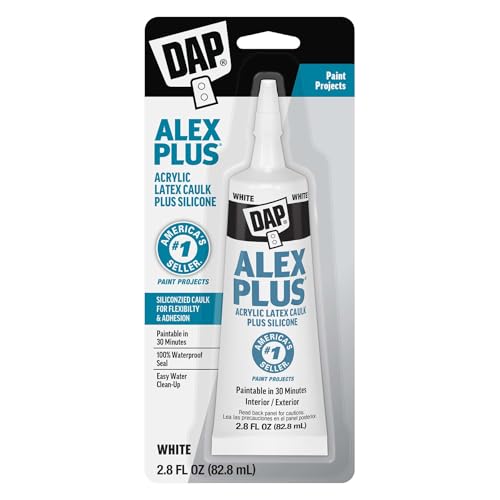
DAP Alex Plus Acrylic Caulk 2.8 oz
Small-tube touch-up convenience
Small interior paint touch-ups

Feature Rich
Gorilla 100% Silicone Caulk 10 oz
Broad indoor and outdoor sealing
Wet rooms and exterior joints

Everyday Favorite
LATICRETE SPECTRALOCK 1 Pre-Mixed Grout #44
Ready-to-use tile joint filling
Color-coordinated grout refreshes

Heavy Duty Pick
LATICRETE STRATA_MAT Uncoupling Mat 323 Sq. Ft.
Movement-isolating tile underlayment
Large stone and tile floors

Convenience Pick
Somafix Clear Silicone No-Gun Caulk
No-gun application in a small tube
Quick household sealant touch-ups
More Details On Our Top Picks
A tiled shower wall needs more than a bead of ordinary paintable caulk around a visible crack. Hydro BAN is a liquid-applied membrane designed to waterproof the surface and isolate cracks within a tile assembly. Unlike the smaller DAP products later in this list, its role is structural within a larger wet-area installation.
The one-gallon container suits a substantial wall system, although the actual coverage depends on the substrate and application. For a professional tile installation or a carefully planned DIY shower, the fabric-free application process offers a meaningful convenience advantage.
Positive Takeaways
- ✓Does not require fabric reinforcement in field corners or coves, reducing application steps.
- ✓Water exposure can begin after two hours at 70°F or higher under the stated conditions.
- ✓The lighter color makes coverage easier to inspect before continuing the installation.
- ✓Its liquid rubber membrane forms a seamless, flexible layer across prepared substrates.
Practical Considerations
- •Gaps of 1/8 inch or less call for the complete Hydro BAN installation instructions.
- •Allow the coating to cure as directed before exposing the assembly to water.
Feature Snapshot
| | Feature | Specification | Why It Matters |
|---|
| Water-ready time | 2 hours at 70°F or higher | Supports an efficient installation sequence. |
| Reinforcement | No fabric required | Reduces corner and cove application steps. |
| Color | Light-colored application | Makes missed areas easier to identify. |
| Composition | Single-component liquid rubber polymer | Forms a flexible, seamless membrane. |
Who It Suits Best
This option fits installers creating a tiled shower wall that needs waterproofing and crack isolation within the membrane system.
Where Another Pick Suits Better
Choose Gorilla 100% Silicone Caulk 10 oz instead for a localized joint around a window, sink, or interior block-wall opening.
Check on Amazon
Not every defect in an interior block wall is a joint that needs waterproof caulk. Phenopatch addresses small surface imperfections such as nail holes, dents, and minor blemishes before painting, making it a practical companion to heavier sealing work. The paste format is easier to control than a thick bead of sealant.
Hydro BAN solves a fundamentally different problem, so the two should not be treated as interchangeable. Phenopatch earns its place when the wall is sound and only the surface needs leveling before decoration.
A Few Highlights
- ✓White paste suits common interior wall colors before painting.
- ✓Useful for filling small holes and surface defects around an active living space.
- ✓Works alongside caulk rather than competing with it for larger joints.
Where It May Fall Short
- •It addresses surface filling, not a continuous waterproof membrane.
- •Large gaps or joints that may move need a product formulated for sealing.
Made For
This paste is made for DIYers patching minor wall defects before painting an otherwise sound interior surface.
Consider Something Else When
Reach for DAP Alex Plus Acrylic Caulk 2.8 oz when the repair involves a narrow interior joint rather than a small surface blemish.
View on Amazon
A small tube of Alex Plus is easier to keep within reach for scattered touch-ups around an interior block wall. The acrylic latex formula includes silicone additives for flexibility, adhesion, and reduced shrinkage, giving it more joint-sealing intent than the DAP Phenopatch reviewed earlier. Its 2.8-ounce size favors precision over a large project.
White works neatly against painted trim and many light-colored interior surfaces. In your view, that compact format is most useful for the one stray joint discovered after the main painting work is finished.
Points In Its Favor
- ✓The compact tube simplifies small touch-ups and reduces unused material.
- ✓Silicone additives support flexibility and adhesion across interior or exterior surfaces.
- ✓Reduced shrinkage helps the sealant maintain a neat seal after application.
- ✓White color coordinates with typical painted trim and wall finishes.
Small Caveats
- •The 2.8-ounce size is not the natural choice for a long wall joint.
- •Use a separate waterproofing membrane for a complete shower assembly.
Quick Facts
| | Feature | Specification | Why It Matters |
|---|
| Size | 2.8 oz | Keeps a small job compact. |
| Base | Acrylic latex with silicone additives | Combines paint-friendly application with added flexibility. |
| Color | White | Matches common light interior finishes. |
| Use areas | Interior and exterior surfaces | Allows one formula to cover varied small joints. |
Right Fit For
This caulk fits DIYers handling a few narrow joints, trim edges, or last-minute paint touch-ups.
A Better Fit Elsewhere
Gorilla 100% Silicone Caulk 10 oz is the better fit for a longer joint or a wet area that needs a full silicone seal.
Check Latest Price
A 10-ounce silicone cartridge gives you more material than the compact Alex Plus tube for long joints and repeated repairs. Gorilla’s all-purpose white silicone is suited to showers, sinks, windows, doors, gutters, vents, and other interior or exterior sealing tasks, so it broadens the scope beyond simple interior wall touch-ups.
Water exposure can begin after 30 minutes under the product’s stated conditions, which suits a busy household repair window. The honest read is that this is a general-purpose sealant rather than a complete wall waterproofing system.
Well-Handled Touches
- ✓The 10-ounce cartridge provides practical coverage for longer joints.
- ✓Water can be introduced after 30 minutes under the stated conditions.
- ✓One formula handles showers, sinks, windows, doors, gutters, and vents.
- ✓The silicone seal resists mold and mildew in suitable interior and exterior applications.
- ✓White provides a clean visual match for many painted surfaces and fixtures.
Things To Consider
- •Check adhesion and compatibility on porous or painted block before covering a large area.
- •A cartridge is less convenient for a tiny isolated repair than a no-gun tube.
Technical Highlights
| | Feature | Specification | Why It Matters |
|---|
| Material | 100% silicone | Provides a flexible general-purpose seal. |
| Water-ready time | 30 minutes | Shortens the wait before water exposure. |
| Application | Indoor and outdoor | Supports multiple household sealing tasks. |
| Package size | 10 oz cartridge | Offers more material for longer jobs. |
Who Will Love This
This option suits homeowners and installers handling longer interior block-wall joints, window edges, or wet-area sealant repairs.
Not Your Match When
DAP 76857 Phenopatch Spackle Paste is more appropriate for a small surface defect that does not need a flexible joint seal.
View Latest Price
Tile joints need grout, not a flexible bead of wall caulk, and SPECTRALOCK 1 addresses that distinct part of the repair process. The pre-mixed formula is ready to use, while the bright white #44 color provides a coordinated finish for lighter tile installations. Its stain resistance makes color consistency particularly relevant in kitchens and bathrooms.
Compared with Gorilla 100% Silicone Caulk 10 oz, this material fills the space between tiles rather than sealing a movable joint around them. Use it as the finishing component after the tile and waterproofing layers are properly installed.
Strengths Worth Knowing
- ✓Ready-to-use grout removes the measuring and mixing step.
- ✓The formula is designed to maintain uniform color and resist stains.
- ✓Bright white coordinates with light tile and trim schemes.
Points To Note
- •Grout does not replace waterproofing behind tiled shower walls.
- •The bright white shade needs to coordinate with the surrounding tile.
- •Removal and regrouting take more work than patching a small surface defect.
Best Suited To
This grout is best suited to homeowners refreshing light-colored tile joints in a kitchen, bathroom, or similar interior area.
Look Elsewhere When
LATICRETE Hydro BAN Waterproofing Membrane 1 Gallon is the better fit when the tile assembly needs a waterproof membrane behind the finished surface.
Check on Amazon
6 / 7
STRATA_MAT belongs to a different category from the sealants and fillers above. It is a floor underlayment for stone and tile, with an uncoupling function that separates the finished tile from the substrate to accommodate movement. A 323-square-foot roll suits a substantial residential or commercial floor installation.
Unlike SPECTRALOCK 1, which fills joints after tile placement, this mat goes underneath the tile and adhesive. Its coverage-verification feature helps installers confirm mortar placement without lifting the mat afterward.
Why It Works Well
- ✓The mat creates a mechanical bond with the adhesive mortar through its hydration vents.
- ✓Visible coverage markings reduce the need to lift the mat for inspection.
- ✓The system supports tile placement and grouting after 16 to 24 hours under the stated conditions.
- ✓A 323-square-foot roll provides useful coverage for larger floor projects.
Details To Watch
- •This is a floor system, not a sealant for an interior block wall joint.
- •Large or heavy tile requires the specified medium-bed mortar, a thicker adhesive bed used to support heavier tile.
Essential Details
| | Feature | Specification | Why It Matters |
|---|
| Coverage | 323 sq. ft. roll | Covers a comparatively large floor area. |
| Bonding feature | Mortar hydration vents | Create a mechanical bond with adhesive mortar. |
| Installation check | Instant coverage verification | Shows mortar coverage without lifting the mat. |
| Concrete rating | Light over concrete with medium-bed mortar | Defines the stated installation condition. |
Built With In Mind
This mat is built for installers laying stone or large tile over concrete where movement isolation and coverage verification matter.
Another Choice May Suit
DAP 76857 Phenopatch Spackle Paste is the more practical choice for filling a small blemish on an interior block wall.
View on Amazon
A cabinet seam, window edge, or small interior block-wall joint can be sealed without setting up a cartridge gun. The Somafix tube uses direct pressure from the hand, making it especially convenient for scattered household touch-ups. Its clear silicone is flexible and waterproof, while its listed applications include kitchens, bathrooms, showers, sinks, tubs, windows, and wood surfaces.
Gorilla 100% Silicone Caulk 10 oz offers more material for a long joint, but the no-gun format is the easier choice for a small repair close at hand. For a larger wall run, factor in the amount of material you actually need before selecting this tube.
Practical Advantages
- ✓Direct squeeze application removes the need for a caulking gun.
- ✓The flexible, waterproof silicone suits multiple indoor sealing tasks.
- ✓Clear color works with wood, trim, tile, and assorted household finishes.
- ✓Strong adhesion on wood makes it useful around doors, cabinets, stairs, and panels.
Possible Compromises
- •Check the visible bead against the exact finish before treating a large area.
- •A small tube is less efficient for a continuous joint across an entire wall.
Core Features
| | Feature | Specification | Why It Matters |
|---|
| Application | No gun required | Allows immediate hand-pressure dispensing. |
| Material | Flexible silicone | Forms a flexible waterproof seal. |
| Color | Clear | Limits visual contrast on suitable finishes. |
| Surface compatibility | Includes wood, hardwood, panels, doors, and cabinets | Expands usefulness beyond painted walls. |
The Right Fit
This tube fits DIYers who want quick, no-gun sealant application for small household joints and touch-ups.
Where A Sibling Pick Shines
Choose Gorilla 100% Silicone Caulk 10 oz instead for longer joints, a larger cartridge format, or water-ready conditions in a larger wet-area repair.
Check Latest Price
A Practical Plan for Interior Block Wall Repairs
Identify the Actual Defect
Start by deciding whether the wall needs filling, joint sealing, waterproofing, or movement isolation. A nail hole calls for spackle, a narrow joint calls for sealant, and a tiled shower assembly calls for a membrane behind the tile. Treating each problem with the same product can leave you with the wrong repair.
Consider the Material and Location
Block, painted surfaces, wood, and tile each have different adhesion and appearance requirements. Silicone offers flexible sealing for many wet and general-purpose applications, while acrylic latex is useful for small interior touch-ups. A clear formula can be convenient on assorted finishes, although the underlying color and texture remain visible.
Think Through the Whole Installation
For a large project, application sequence matters as much as the product. Waterproofing comes before tile, grout comes after tile placement, and sealant handles a defined joint rather than an entire surface. Check the required curing time, coverage, tool format, and compatibility with adjacent materials before opening a container.
Common Mistakes Worth Avoiding
Mistakes Worth Dodging
Using spackle for a flexible wall joint, or grout to waterproof a shower, creates the wrong repair for the surface. A no-gun tube also suits only a small quantity of work, while a shower membrane should be selected as part of a complete tile system. Match the product to the actual layer you are repairing.
What Separates Premium From Basic
Specialized membranes, uncoupling mats, and stain-focused grouts cost more because they perform defined roles beyond basic crack filling. The extra spending makes sense for a complete shower, a large tile floor, or a finish expected to remain visually consistent. Small surface repairs rarely need that level of specialization.
Frequently Asked Questions
QCan I Use Caulk on an Interior Block Wall?
Flexible caulk can cover narrow joints and suitable cracks on an interior block wall after the surface is properly prepared. Wider defects or movement concerns need a more suitable system.
QShould I Use Caulk or Grout?
Use caulk for a joint between surfaces and grout for the spaces between tiles. These materials serve different parts of the installation and should not be substituted for one another.
QDoes Hydro BAN Require Fabric Reinforcement?
Hydro BAN does not require fabric in field applications, corners, or coves. Gaps of 1/8 inch or less call for the complete installation instructions, and curing conditions still matter before water exposure.
QWhich Caulk Size Is Best for Small Repairs?
The DAP Alex Plus 2.8-ounce tube works well for localized touch-ups, while the 10-ounce Gorilla cartridge handles longer joints. The Somafix tube is useful when you want to dispense by hand without a gun.
QWill Clear Caulk Disappear on a Painted Wall?
Clear caulk may blend well with some finishes, but the paint color, texture, and application thickness still affect the result. Check a small area and confirm compatibility before applying it across a visible wall.
Final Verdict
Your best choice depends on the repair layer, not simply the word caulk. Use flexible sealant for joints, spackle for small surface defects, grout for tile joints, and a dedicated membrane for a shower. Matching the product to the job gives you a cleaner result and avoids a repair that never belonged there.
