
A highway drive can expose every rattle in your floorboards, doors, and engine bay. Automotive sound-deadening insulation softens vibration before it turns into cabin noise, while some materials also block heat from hot pavement and exhaust components. These picks cover different vehicle sizes, installation preferences, and project scopes, from lightweight panels to thick butyl damping sheets. Choose according to the noise source, available coverage, and how much trimming or adhesive handling fits your routine.
The Lineup, Simplified
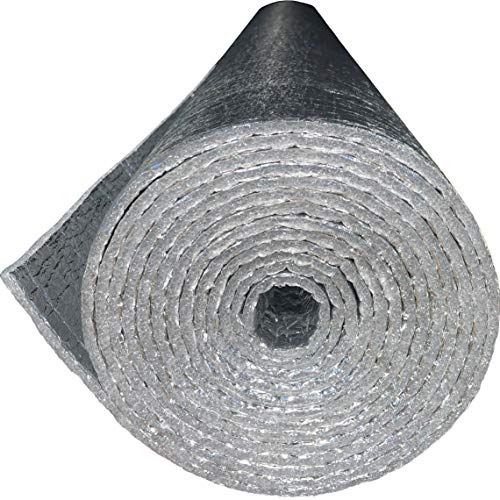
Xmntdo Car Insulation 4 x 10 Roll, 40 Sqft Heat Barrier Mat

Siless 50 mil 1.3mm Butyl Car Sound Deadening Mat, 52 sqft

KILMAT 50 mil Car Sound Deadening Mat, 50 sqft

KILMAT 80 mil Car Sound Deadening Mat, 18 sqft

KILMAT 80 mil Car Sound Deadening Mat, 36 sqft

AggSound 394mil 24sqft Car Material

Siless 80 mil 2mm Butyl Car Sound Deadening Mat, 36 sqft
More Details On Our Top Picks
Heat and noise often arrive through the same metal panels, making the Xmntdo roll useful for doors, floor sections, and engine-bay lining. Its double-sided aluminum construction reflects radiant heat, while the quarter-inch closed-cell foam core softens vibration and resists crushing. The honest read is that this is a lighter-feeling material than the 80 mil butyl options, so its appeal is balanced coverage rather than maximum mass.
The 4-by-10-foot roll provides enough material for broad but manageable projects, and the aluminum faces remain flexible around curved panels. You gain a useful dual-purpose layer in a garage or a vehicle that sees both summer heat and road rumble. Compared with Siless 50 mil, this material exchanges dense butyl damping for a lighter foam-and-aluminum construction.
Useful Strengths
- Blocks up to 97% of radiant heat, supporting cooler panels during hot weather.
- Closed-cell foam helps reduce vibration without relying on a rigid barrier.
- Flexible aluminum faces suit curved and contoured vehicle surfaces.
- The 40-square-foot roll offers substantial coverage for a focused project.
Practical Considerations
- Confirm that each panel is clean and dry before attachment, since trapped grit can cause uneven contact.
- The quarter-inch core provides less mass than the 80 mil butyl sheets, so focus on the noisiest panels rather than expecting equal treatment everywhere.
Core Details
Who Will Love This
This material best suits DIY drivers who want combined heat and vibration control without handling dense rolls on every panel.
A Better Fit Elsewhere
Choose KILMAT 80 mil 36 sqft instead when thick butyl damping across a larger cabin floor is your main priority.
Butyl sound deadening is a dense, vibration-damping layer designed to reduce rattles and structure-borne noise in vehicles. The Siless 50 mil sheet gives you 52 square feet of coverage at 1.3 millimeters, making it a practical middle ground between lighter foam and thicker damping material. For a daily-driven car, that balance can be more useful than concentrating maximum thickness on a single panel.
The material is intended for automotive applications where road vibration and panel resonance need attention. You can treat broad floor sections, door skins, and other noisy surfaces without moving to an 80 mil product. Unlike Xmntdo’s aluminum-faced foam, this sheet focuses on dense damping through its butyl construction rather than reflective heat control.
Well-Handled Touches
- The 52-square-foot area supports multi-panel cabin projects.
- Butyl construction targets vibration and rattles rather than adding mere padding.
- Its 1.3-millimeter thickness handles moderate, broad-area damping needs.
Things To Weigh
- Map the panels before cutting, since 52 square feet can disappear quickly across irregular shapes and trim allowances.
- Confirm the attachment method required by your installation plan, as the listed material details do not define a complete kit.
Quick Facts
Made For
This sheet fits daily drivers and weekend projects seeking broad butyl coverage without stepping up to an 80 mil layer.
Another Choice May Suit
KILMAT 50 mil 50 sqft is the better fit for DIY projects that call for a self-adhesive butyl-and-foil sheet.
A sticky backing changes the installation rhythm, especially across a clean, accessible floor or door panel. KILMAT’s 50 mil butyl-and-foil mat combines 1.3-millimeter damping material with a self-adhesive layer, so you can position, press, and trim sections without building a separate bonding step. For a first vehicle soundproofing project, that convenience carries real weight.
The 50-square-foot roll nearly matches the Siless 50 mil sheet’s coverage while offering a more straightforward DIY format. You still need to follow the material around cables, ducts, and body contours, but the adhesive makes isolated sections easier to place. This pick is a sensible middle layer between the Xmntdo foam roll and KILMAT’s heavier 80 mil versions.
A Strong Showing
- Self-adhesive construction simplifies placement on prepared vehicle panels.
- Butyl-and-foil construction targets vibration while adding a reflective facing.
- Fifty square feet suits a car floor or several separate doors.
- The 50 mil profile remains lighter and easier to trim than an 80 mil sheet.
Minor Gripes
- Clean the panel thoroughly before pressing the material down, because surface residue can interfere with full contact.
- Rolls stored in a warm vehicle may become less manageable during installation, so keep them flat until needed.
Best Suited To
You benefit most from this mat as a DIY driver working on a sedan, truck floor, or multiple removable door panels.
Where Another Pick Shines
Siless 80 mil 2mm Butyl Car Sound Deadening Mat, 36 sqft suits larger vehicles needing greater damping mass per section.
Targeted projects favor material you can handle in manageable sections. The KILMAT 80 mil mat uses a thick butyl-and-foil layer with a self-adhesive backing, giving it more damping mass than the 50 mil version without requiring a full-cabin roll. That makes it useful for stubborn door skins, wheel tubs, or isolated sections where vibration is most distracting.
The trade-off is coverage. At 18 square feet, this roll is better suited to carefully measured panels than to an entire floor, trunk, and rear quarter. Compared with KILMAT 80 mil 36 sqft, the material has the same thickness but half the area, so it reduces waste for compact jobs. You can treat the loudest zones first and use another layer elsewhere later.
What Earns Its Place
- The 80 mil profile provides a heavier damping layer than 50 mil material.
- Self-adhesive placement supports direct panel installation.
- Eighteen square feet suits focused projects without excess material.
Possible Compromises
- Measure the selected panels before opening the roll, especially around curved wheel arches and trim openings.
- Thicker material takes more effort to cut neatly than the 50 mil alternative.
Technical Sheet
Built With In Mind
This compact roll fits DIY installers addressing a few noisy doors, wheel areas, or floor sections in a smaller vehicle.
Reach For A Different Pick When
KILMAT 80 mil 36 sqft is the stronger choice for a full-cabin restoration requiring uninterrupted coverage.
Larger vehicles and fuller floor treatments call for enough material to cover several irregular sections without stopping midway. This 80 mil KILMAT roll combines self-adhesive butyl damping with foil facing across 36 square feet. The added thickness gives panels more mass, which is useful when road hum, exhaust vibration, and body resonance are competing for attention.
Coverage is its defining advantage over KILMAT 80 mil 18 sqft, with twice the area for a broader installation. That extra material also means more careful planning around wiring, channels, and fixed components. You gain a consistent damping layer across a floor or several doors, but the sheet is heavier to position than the 50 mil KILMAT option.
Strong Points
- Thirty-six square feet supports broad floor, door, and rear-panel projects.
- The 80 mil butyl layer provides more damping mass than 50 mil material.
- Self-adhesive backing simplifies attachment to clean vehicle surfaces.
- Foil facing adds a reflective component to the vibration-control layer.
Trade Offs
- Heavier sections can flex during layout, so measure twice before cutting.
- Thirty-six square feet may still fall short for a large truck with extensive exposed flooring.
The Right Fit
This roll suits owners of midsize cars, SUVs, and trucks who want substantial 80 mil coverage across multiple cabin panels.
Swap It Out When
Choose AggSound 394mil 24sqft Car Material instead when a three-layer foam construction and 10-millimeter core better match your heat-control priorities.
Heat and noise rarely separate cleanly on a vehicle exposed to sun and rough roads. AggSound addresses both with a three-layer product built around 10-millimeter high-density closed-cell foam, a strong adhesive layer, and a smooth backing designed to peel away during fitting. The result feels suited to hoods, floors, doors, trucks, and recreational vehicles where both concerns matter.
Closed-cell foam is a cellular material with sealed pockets, giving this mat more structure than basic open padding. The listed radiant-heat blocking reaches up to 98 percent, while the flexible construction follows complex contours without rigid corners. Compared with the thinner KILMAT 50 mil sheet, this option is a much bulkier thermal-and-vibration layer, so 24 square feet goes quickly.
Noteworthy Benefits
- Three-layer construction combines foam, adhesive, and smooth backing in one sheet.
- Ten-millimeter closed-cell foam provides substantial thickness and cushioning.
- Up to 98 percent radiant-heat blocking supports hotter-weather use.
- Flexible material can be cut and trimmed around detailed vehicle contours.
- The peel-away backing supports cleaner installation on shaped panels.
Details To Watch
- Its 10-millimeter profile makes tight channels and curved edges more demanding to trim.
- Twenty-four square feet suits selected panels rather than an entire large vehicle.
Feature Snapshot
Who Should Grab It
You benefit most from this material when heat reduction and vibration control are equally important across doors, floors, or hood sections.
Look Elsewhere When
Siless 50 mil 1.3mm Butyl Car Sound Deadening Mat, 52 sqft suits projects needing thinner material and greater overall coverage.
For a major cabin restoration, thickness and coverage need to arrive together. The Siless 80 mil sheet provides a 2-millimeter butyl damping layer across 36 square feet, giving it more mass than the 50 mil version and more area than smaller 80 mil rolls. It is a broad choice for floors, doors, and other structures that carry vibration into the passenger compartment.
Its Bmastic formulation is the manufacturer’s named damping composition, designed for demanding automotive sound-control applications. You gain a substantial layer that can address persistent resonance in a noisy vehicle, although a two-millimeter sheet still requires careful shaping around hardware. Compared with KILMAT 80 mil 36 sqft, the size and thickness align, while construction differs because this product is described as butyl rather than a self-adhesive butyl-and-foil mat.
Real Benefits
- Two-millimeter butyl material delivers a substantial damping profile.
- Thirty-six square feet supports extensive multi-panel vehicle work.
- The Bmastic compound is formulated specifically for automotive vibration damping.
Some Limits To Know
- Heavy sheet sections are less forgiving during layout, so work in smaller manageable pieces.
- Confirm the attachment system required for your chosen panels before beginning.
Important Details
Whose Shelf It Belongs On
This material fits dedicated automotive hobbyists and serious commuters treating several large cabin sections in one project.
Not Your Match When
Xmntdo Car Insulation 4 x 10 Roll, 40 Sqft Heat Barrier Mat is a better fit when low weight and reflective heat control matter more than butyl thickness.
Match Damping Material To The Noise Source
Start with the noise rather than the roll size. Road hum usually travels through floors and structural panels, while door rattles benefit from butyl damping applied to skins and edges. Engine-bay noise calls for heat-resistant, vibration-isolating material placed before the panels go back together. Sound deadening reduces structure-borne vibration, but it does not block every airborne sound entering through windows or vents.
Thickness changes how much damping mass the material contributes. A 50 mil sheet is easier to trim and lighter across broad areas, while 80 mil material provides more mass for persistent vibration. The AggSound 10-millimeter foam option sits at the opposite end of the construction spectrum, emphasizing a thick cellular core and radiant-heat control. For most vehicles, matching material thickness to the severity of the problem produces a more coherent installation.
Plan coverage before buying. Measure the floor, doors, trunk, or quarter panels, then add room for contours, wiring, fasteners, and trim. Twenty-four square feet may suit several selected panels, while 36 or 52 square feet makes sense for a full cabin. Keep rolls flat, clean the attachment surfaces, and allow extra hand room for thick material; extra coverage helps, but wasted cuts do not.
Lessons Before Installation
Mistakes Worth Dodging
Do not treat one sheet as a complete acoustic solution, because damping panels address vibration rather than every sound path. Measure the usable area, inspect the vehicle wiring, and remove obstructions before laying material. A clean, dry surface also matters for self-adhesive products.
What Separates Premium From Basic
The upgrade usually comes from added material mass, broader coverage, or a more specialized layered construction. That difference matters for persistent rattles, hot engine bays, and large restorations. For a single door, a compact 18-square-foot roll may make more sense than carrying extra material through the project.
Frequently Asked Questions
What Is Car Sound Deadening Insulation?
Car sound deadening insulation is a dense or cellular layer that reduces vibration in metal panels and vehicle structures. It helps limit rattles, road hum, and heat transfer from treated surfaces.
How Thick Should Sound-Deadening Material Be?
Thickness depends on the vehicle, panel, and severity of vibration. A 50 mil layer suits broader, lighter work, while 80 mil material provides greater damping mass for persistent rattles.
Does Thicker Material Always Sound Better?
Thicker material adds damping mass, but placement matters more than an arbitrary maximum thickness. Treating the correct panels with complete contact can help more than applying a very thick layer to the wrong area.
Should Sound-Deadening Insulation Cover the Entire Floor?
A full-floor treatment suits extensive projects, while targeted coverage works well for specific doors, wheel areas, or noisy sections. Measure the available space and prioritize panels that carry the most vibration.
Can Soundproofing Remove All Road Noise?
No. Sound deadening reduces vibration and some structure-borne noise, but open windows, tire noise, and airborne sound can still enter the cabin. Sealing gaps and controlling wind noise require additional vehicle improvements.
The Takeaway
The right insulation for soundproofing starts with the noise you want to reduce, not simply the thickest roll. Xmntdo offers lightweight heat control, KILMAT supplies convenient self-adhesive coverage, Siless provides dense butyl options, and AggSound combines thick foam with reflective backing. Match the material, area, and installation demands to your vehicle, then treat the panels that matter most.