
A tiled shower fails at the wall or floor before the tile does. You need a continuous moisture barrier, secure seams, and enough material to cover corners without gaps. This lineup includes flexible polyethylene membranes, seam tape, and reflective foam for larger wet or utility spaces.
A Closer Look At The Lineup

5in x 98.4ft TOMAIX Membrane

Golden Fox 9 Mil Vapor Barrier Tape
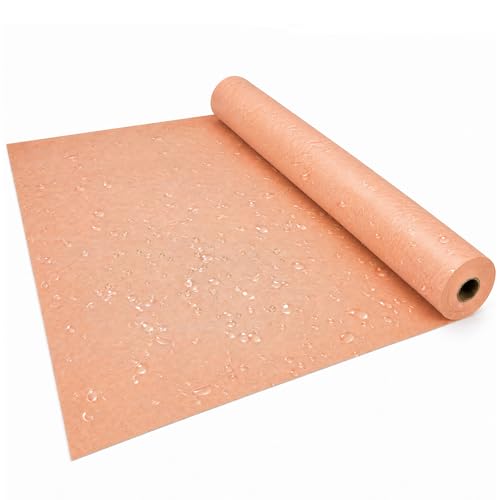
ACNOYEL 23.6 Mil Membrane

AES 400 sq ft Reflective Foam Barrier

Sidasu 100 ft Shower Membrane

TOMAIX 108 sq ft Shower Membrane

TOMAIX 324 sq ft Shower Membrane
Inside Each Recommended Option
The 5-inch-wide TOMAIX roll gives you a manageable strip for tracing shower corners, curving around plumbing, and joining wall sections. High-density polyethylene provides the moisture-blocking layer, while fleece on both faces gives thin-set mortar something to grip. For a full renovation, that combination supports direct tile work over the membrane.
The listed 41-square-foot coverage makes this more practical for a focused shower than for several bathrooms, and the 98.4-foot length helps with long seams. You can cut and shape the material, but careful planning matters because every opening and corner still needs a continuous, properly joined layer.
A Strong Showing
- Five-inch width works well for detailed cuts and wall transitions.
- Both fleece faces help thin-set mortar adhere during tile installation.
- The long roll can span multiple shower surfaces with fewer joins.
- High-density polyethylene suits repeatedly wet rooms such as showers and saunas.
Points To Note
- You need to calculate wall and floor coverage before cutting, since listed area is limited.
- Correct mortar compatibility and complete seam coverage remain essential to the installation.
Key Specs
Who It Suits Best
This fits homeowners and tile installers handling one shower with many corners and wall-to-floor transitions.
Where Another Pick Suits Better
TOMAIX 324 sq ft Shower Membrane is the better fit for a larger renovation covering several wet areas.
This tape serves a narrower role than the shower membranes: sealing joints in a polyethylene vapor barrier. Its 4-inch width provides useful overlap on long seams, while the 180-foot roll keeps you moving across a crawl space or similarly large moisture-control project. It is a companion material rather than a complete shower wall covering.
For a shower, you may use this type of tape to reinforce compatible polyethylene transitions, but your installation method and local building requirements determine whether it belongs behind the finished tile. The 9-mil thickness is meaningful for seam work because it is heavier than ordinary packing tape.
Well-Handled Touches
- A 180-foot roll supports long runs with fewer tape changes.
- Four-inch width offers useful overlap for barrier seams.
- White polyethylene matches common crawl-space barrier material.
- The thicker 9-mil construction suits demanding seam-sealing tasks.
Practical Considerations
- This is seam tape, not a complete membrane for shower walls or floors.
- Its primary listed application is crawl-space vapor-barrier installation.
Quick Facts
Made For
This suits installers joining polyethylene vapor barriers in crawl spaces and other accessible utility areas.
Consider Something Else When
ACNOYEL 23.6 Mil Membrane is the better choice for a shower floor that needs its own continuous waterproof layer.
ACNOYEL provides a clearly sized sheet for a shower or bathroom floor: 3.8 feet by 33 feet, or 125 square feet. That makes coverage easier to check before installation than an unknown roll length. The 23.6-mil thickness, roughly 0.6 mm, gives you a defined layer to compare against other membranes.
High-density polyethylene contributes tear strength and abrasion resistance, useful details for a membrane handled during tile installation. Unlike the narrower Sidasu strip, this roll works as a broader floor or wall sheet. Its 3.8-foot width still needs careful planning around a standard shower footprint.
Why It Works Well
- The stated dimensions make project coverage easy to estimate.
- Twenty-three-point-six-mil material suits substantial shower applications.
- High-density polyethylene adds tear and abrasion resistance during installation.
- The 33-foot length suits a standard shower and adjoining wet area.
Less Ideal Details
- Its width may require more seams in a wider shower enclosure.
- You must verify that its bonding method suits your chosen tile and mortar system.
Feature Snapshot
Right Fit For
This works well for DIY renovators and installers laying a defined membrane across a standard shower floor.
A Better Fit Elsewhere
Sidasu 100 ft Shower Membrane suits installers who prefer a narrow roll for corners, wall edges, and smaller detailed sections.
The AES option belongs in a broader moisture-control category rather than a direct replacement for a shower membrane. Its 400-square-foot roll, reflective faces, and 1/8-inch closed-cell foam core make it more relevant to warehouse walls, garages, and utility areas where condensation and radiant heat are concerns. You gain thermal reflectivity and a vapor-barrier layer in one sheet.
The elastic foam can seal around fasteners, and the listed contact-noise reduction may be useful in workrooms. In a tiled shower, however, your priority shifts toward a bonded waterproof membrane that integrates with mortar and tile. That makes this a supporting material for some projects, not the core layer for most.
Useful Highlights
- The 400-square-foot size covers large utility surfaces.
- Reflective faces help limit radiant heat transfer.
- Closed-cell foam provides vapor resistance and some sound reduction.
- Elastic construction allows the material to seal around nails.
Where It May Fall Short
- It is designed for broad insulation spaces, not direct shower-floor installation.
- The 1/8-inch thickness is less substantial than the 20- and 23.6-mil membranes in this list.
- You need a separate bonded waterproofing system for a tiled shower enclosure.
Who Will Love This
This appeals to workshop owners insulating a garage, warehouse, or utility room with condensation concerns.
Look Elsewhere When
TOMAIX 108 sq ft Shower Membrane is a better fit when your project centers on protecting tile, wood, or concrete in a shower.
The 5-inch-wide Sidasu roll favors detailed work. Its narrow format makes it easier to position along shower walls, around corners, behind fixtures, and across tub surrounds than a broad sheet. The 100-foot length provides enough material for many linear transitions without forcing you to work with an oversized roll.
Inside, a modified polyethylene core is reinforced by two non-woven poly surfaces, creating a three-layer vapor barrier at 20 mils. That construction supports use around showers and bathrooms, where the membrane helps protect tile, wood, and walls from moisture and steam. You still need to coordinate the bonding method with your mortar and tile system.
Strong Points
- The narrow width supports precise cuts around fixtures and corners.
- A 100-foot length covers many separate wall and tub-surround details.
- Three-layer construction combines a polyethylene core with non-woven surfaces.
- Twenty-mil thickness provides a defined moisture barrier for wet rooms.
Small Caveats
- A narrow roll creates more seams across a large shower floor.
- Its 20-mil thickness is slightly below the ACNOYEL membrane’s stated 23.6 mils.
Core Details
Built With In Mind
This suits tile installers handling shower corners, plumbing penetrations, and tub surrounds in confined spaces.
Another Choice May Suit
ACNOYEL 23.6 Mil Membrane suits projects that need broader floor coverage and fewer overlapping strips.
The TOMAIX 108-square-foot roll brings more coverage than a small repair sheet without reaching the storage demands of a 324-square-foot membrane. Its 3.3-foot width works across a typical shower floor or up a wall, while the 32.8-foot length gives you room to make cuts for corners and plumbing areas.
High-density polyethylene forms the core, and fleece on both faces provides a bonding surface for unmodified thin-set mortar. That setup suits a straightforward tile-over installation when your area, corners, and transitions are carefully measured. Compared with the 5-inch TOMAIX strip, this broader sheet can reduce the number of parallel seams.
Bright Spots
- The 3.3-foot width suits standard shower dimensions and wall sections.
- One hundred eight square feet balances coverage with manageable material size.
- Dual fleece surfaces support mortar adhesion.
- The flexible sheet can be cut around corners and unusual room shapes.
Where It Is Less Suited
- Large renovations may require several rolls and additional seam work.
- You need to confirm that the listed coverage matches the wall and floor dimensions.
The Right Fit
This suits homeowners renovating one compact shower where a manageable sheet is easier to handle than a large roll.
Swap It Out When
TOMAIX 324 sq ft Shower Membrane serves a larger project better when you want to minimize joins across multiple rooms.
The 324-square-foot TOMAIX roll is built for expansive wet-area work where repeatedly starting with a smaller roll becomes inconvenient. Its 3.3-foot width and 98.4-foot length suit long wall runs, multiple shower enclosures, and connected bathroom areas. You trade a larger storage footprint for fewer full-roll changes.
The polyethylene core provides the moisture barrier, while fleece on both faces supports application with unmodified thin-set mortar. For tile installers covering several surfaces, that broad construction can simplify material planning. Measure storage and handling space first, since the length is substantial.
What Pays Off
- Large coverage supports several shower and bathroom surfaces.
- The 98.4-foot length can reduce joins across long wall sections.
- Dual fleece faces create a bonding surface for thin-set mortar.
- High-density polyethylene suits moisture-prone rooms and wet areas.
Worth Weighing
- The long roll requires more storage space than the 108-square-foot option.
- You may have excess material for a single small shower.
The Details
Whose Shelf It Belongs On
This fits professional installers and homeowners managing a large bathroom renovation with several wet surfaces.
Where A Sibling Pick Shines
TOMAIX 108 sq ft Shower Membrane is easier to store and more economical in material for one compact shower.
What Matters Before You Cover Shower Walls
Material Before Coverage
High-density polyethylene is designed to resist moisture while remaining workable around corners and room shapes. You should also check the surface texture because fleece-backed material is intended to bond with compatible thin-set mortar. The width and length of each roll determine how many seams your project requires.
Thickness And Reinforcement
Thickness provides a straightforward way to compare membranes, but reinforcement matters too. The Sidasu roll uses a three-layer construction, while the TOMAIX products feature fleece on both faces. A reinforced narrow roll can suit detailed work, whereas a broad sheet may reduce overlapping strips across a larger floor.
Match The Installation
The membrane, mortar, and tile system need to work together. Measure the floor, wall height, corners, and plumbing penetrations before choosing a roll, and leave enough material for proper overlap and detailing. Narrow strips suit edges and fixtures, while larger sheets cover broad surfaces with fewer parallel seams.
Separate Vapor Barriers From Shower Membranes
Vapor-barrier tape and reflective foam have useful moisture-control roles, but neither replaces a shower membrane by itself. A crawl-space tape seals compatible sheet material, while reflective foam suits larger utility spaces and condensation concerns. Your shower decision should center on a continuous layer designed to sit behind the tile system.
Practical Checks Before Installation
Pitfalls Shoppers Hit
A common mistake is choosing by square footage alone. You need to account for wall height, corners, overlaps, and cuts, especially when the product shape does not match the enclosure. Another error is treating generic tape or reflective foam as a direct shower-membrane substitute.
What Separates Premium From Basic
The larger picks spend more on coverage and sometimes added reinforcement, which can reduce waste and repeated setup. A smaller project may get more value from a compact roll, while extensive renovations benefit from long material runs. Thickness and layer construction matter more than an extra roll you never need.
Frequently Asked Questions
Is a shower membrane the same as wall insulation?
A shower membrane is a waterproofing layer, not conventional wall insulation. It protects the assembly behind tile from moisture while the wall structure may provide separate thermal or sound insulation.
What thickness is suitable for a shower wall?
The listed choices range from 20 mils to 23.6 mils for the dedicated polyethylene membranes. You should follow the membrane and mortar system requirements for your specific installation rather than choosing thickness alone.
Can vapor-barrier tape replace shower membrane material?
No. Tape is designed to join or reinforce compatible barrier sheets and is listed mainly for crawl-space work. Your shower still needs a continuous waterproof membrane approved for the tile assembly.
Should you choose a narrow or wide membrane?
Choose a narrow roll for corners, fixtures, and detailed transitions. A wider sheet works better for shower floors and broad walls because it creates fewer parallel seams.
How much membrane does a shower need?
Measure the floor, wall areas, and every opening before ordering. Add enough material for cuts, overlaps, and corners rather than relying only on the floor’s square footage.
Final Verdict
For most shower renovations, a dedicated polyethylene membrane with a thickness and width matching your enclosure is the sound choice. TOMAIX offers broad and compact options, ACNOYEL emphasizes measured 23.6-mil coverage, and Sidasu handles tight details. Golden Fox tape and AES foam serve separate moisture-control tasks rather than replacing the shower membrane. Choose the layer your tile system calls for, then measure carefully before cutting.