
Cold weather turns an ordinary cat house into a shelter that needs dependable protection from wind, damp ground, and nighttime temperature drops. You may be building a backyard enclosure for one house cat, maintaining a community feeding station, or adding warmth to an existing structure. The right setup depends on the shelter’s construction, heating arrangement, local exposure, and the number of cats it needs to serve.
An Overview Of The Picks

PETUX Heated Outdoor Cat House

FHTONGE Elevated Heated Cat House

ALLWIN 1/4-Inch Self-Adhesive Neoprene Foam Insulation Pads, 8 Pieces

GUTINNEEN Insulated Outdoor Cat House
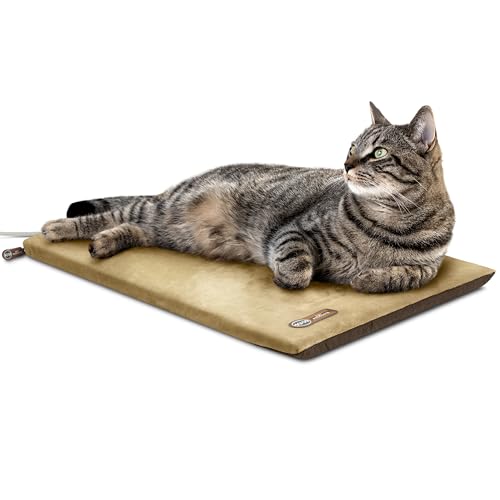
K&H Thermo-Kitty Heated Mat, Mocha

K&H Thermo-Kitty Heated Cat Mat, Gray

GUTINNEEN Extra Large Heated Two-Section Outdoor Cat House with Liner
A Breakdown Of The Leading Choices
A porch, patio, or exposed yard can be a harsh place for a small shelter, and the PETUX Heated Outdoor Cat House addresses several parts of that problem at once. Its 300D Oxford walls, honeycomb panels, and reflective foil provide several insulating layers, while a 900D Oxford roof and raised base help limit rain and damp-ground exposure.
Unlike a simple foam-lined box, this shelter includes a 13.78-by-21.65-inch heating pad with low and high settings and automatic cutoff at a preset temperature. That makes it a practical option for one outdoor cat, though you should confirm that its 22.8-by-13.4-by-20.5-inch footprint fits the available space.
Real-World Strengths
- Two exits give a cat a way to leave through the covered front entrance or the side opening.
- A clear PVC flap helps block wind and rain while preserving visibility into the shelter.
- The removable divider separates sleeping and feeding areas or creates one larger resting space.
- The included foldable bowl supports a convenient outdoor feeding station.
- A 5.9-foot chew-resistant cord adds flexibility when the shelter sits near a power connection.
Practical Considerations
- The listed guidance covers one cat up to 20 pounds or several cats totaling 16 to 24 pounds, so larger groups need more room.
- Outdoor heating requires a suitable protected power connection and placement away from standing water.
Feature Snapshot
Built With In Mind
This shelter suits a homeowner caring for one outdoor cat in cool or damp seasonal conditions.
A Better Fit Elsewhere
Households caring for several cats should look at the GUTINNEEN Extra Large Heated Two-Section Outdoor Cat House with Liner instead.
The FHTONGE Elevated Heated Cat House keeps its footprint fairly compact while adding thermostat-controlled warmth and two exits. It sits two inches above the ground, which can reduce direct contact with cold, wet soil during the seasonal months when an outdoor cat needs a protected resting point.
Compared with the PETUX Heated Outdoor Cat House, this model takes a simpler approach. Its appeal comes from the automatic heating cycle, elevated base, and weatherproof outdoor design rather than a broad set of interior zoning features.
Well-Handled Touches
- The built-in thermostat starts heating below 95°F and stops above 113°F.
- Two exits improve access for a cat approaching from different directions.
- A two-inch elevation helps keep the shelter separated from damp soil.
- Two size options accommodate different space requirements.
Details To Watch
- The automatic temperature thresholds are fixed, so the heating system offers less user adjustment than the PETUX model’s two settings.
- The compact dimensions may feel tight for a cat that prefers generous turning room.
Quick Facts
Made For
The FHTONGE Elevated Heated Cat House fits compact yards, porches, and barn corners where ground dampness and limited space are the main concerns.
Where A Sibling Pick Shines
Pet owners seeking separate feeding and sleeping zones will find more versatility in the PETUX Heated Outdoor Cat House.
Adding insulation to an existing cat house calls for a different approach from buying a complete shelter. The ALLWIN 1/4-Inch Self-Adhesive Neoprene Foam Insulation Pads, 8 Pieces provide a small sheet of closed-cell foam that you can cut into panels, corner pieces, or custom sections to match the structure’s interior.
Neoprene is a flexible synthetic rubber material, and closed-cell foam has sealed pockets that resist airflow through the material. For many outdoor shelters, the value here is versatility: you control the placement rather than accepting a fixed liner shape.
What Helps Most
- Eight separate squares provide enough material for several small surfaces.
- Each 4-by-4-inch pad can be trimmed with a blade to fit narrower spaces.
- Adhesive backing reduces the need for separate fastening inside the shelter.
- The quarter-inch thickness adds a light insulating layer without demanding a large rebuild.
Practical Considerations
- Eight small sheets may not cover the full interior of a larger shelter.
- The adhesive will be easier to position accurately before it is pressed into place, so plan each piece first.
Technical Highlights
The Right Fit
These pads suit a hands-on owner who wants to retrofit a small existing shelter rather than purchase another complete enclosure.
Consider Something Else When
You need full-wall insulation and a complete weatherproof structure, making the GUTINNEEN Insulated Outdoor Cat House the more direct choice.
The GUTINNEEN Insulated Outdoor Cat House centers on passive protection rather than built-in heat. A solid wood structure is paired with a six-sided thermal liner containing 0.78 inches of thicker sponge, creating coverage around the shelter’s interior surfaces.
Where the PETUX Heated Outdoor Cat House adds a powered pad and several fabric layers, this model uses a rigid wood shell and fitted insulation. That makes it a sensible fit for a sheltered patio or barn area where passive retention of body heat is the main goal.
Reasons It Performs
- The liner surrounds six sides rather than covering only a single wall or floor panel.
- A thick sponge layer provides more depth than a thin surface pad.
- Solid wood contributes rigidity and serves as the outer structure.
- The enclosed design gives an outdoor cat a dedicated place to retreat from wind.
Less Ideal Details
- This insulated version does not include the heated AIR92-M-HP configuration listed separately for the GUTINNEEN range.
- Its passive construction cannot adjust warmth like a shelter with a powered heating pad.
Who It Suits Best
This shelter suits a caregiver seeking a rigid, fully lined outdoor enclosure in a protected location without a powered heating system.
Reach For A Different Pick When
Cold-weather sites requiring automatic supplemental heat are better served by the FHTONGE Elevated Heated Cat House.
The K&H Thermo-Kitty Heated Mat, Mocha brings gentle warmth to an indoor room rather than an exposed shelter. Its 12.5-by-25-inch format fits beneath a familiar cat bed, beside a favorite resting place, or directly on a cool floor.
The thermostat responds to the cat’s presence, so the mat is designed for indoor comfort rather than year-round outdoor exposure. For a drafty bedroom, sunroom, or air-conditioned room, this focused approach can be more practical than placing a full outdoor shelter indoors.
Where It Delivers
- The 6-watt heating system offers a modest approach to indoor supplemental warmth.
- Thermostatic control warms the surface when the cat settles onto the mat.
- The reversible construction gives you two usable sides.
- Its narrow dimensions make it easy to add to an existing bed or resting area.
- The mocha color coordinates naturally with many neutral interiors.
Things To Consider
- This mat is intended for indoor use and does not provide a windproof or rain-resistant shell.
- Its 12.5-inch width may feel narrow for a large cat that prefers to stretch out fully.
Core Details
Who Will Love This
The K&H Thermo-Kitty Heated Mat, Mocha suits indoor cat owners who want to improve a specific cool sleeping spot rather than build a full shelter.
Another Choice May Suit
Shoppers who prefer a gray finish and a stated warming temperature of approximately 102°F can consider the K&H Thermo-Kitty Heated Cat Mat, Gray.
The K&H Thermo-Kitty Heated Cat Mat, Gray is built for a specific indoor upgrade: adding warmth to a cat bed, sleeping area, or favorite patch of floor. Its reversible design lets it operate alone or sit above a bed that already provides cushioning.
The pet-activated thermostat is the key detail. The surface warms to approximately 102°F when the cat lies on it, while an unoccupied mat stays near or just above room temperature, reducing the need to manage a constantly warm surface.
Positive Points
- Pet activation keeps the heating response closely tied to the cat’s position.
- The 6-watt heater uses relatively modest power for a small indoor mat.
- You can use the mat by itself or place it over a favorite bed.
- The gray finish suits a wider range of modern room colors.
Small Caveats
- An empty mat may not feel warm, which is normal for its pet-activated design.
- Its indoor construction cannot add wind or rain protection to an outdoor cat house.
Perfect Match For
This mat suits an indoor cat owner who wants a low-profile warming layer beneath an existing bed or beside a preferred sleeping location.
Swap It Out When
An outdoor caregiver needing elevated, weather-resistant housing should choose the PETUX Heated Outdoor Cat House instead.
The GUTINNEEN Extra Large Heated Two-Section Outdoor Cat House with Liner is built around group use. Its two-section, two-story layout is listed for one to six feral or barn cats, giving you more room than the single-cat PETUX Heated Outdoor Cat House.
A solid wood structure is covered by a six-sided insulated liner and a heating pad, while a door curtain helps interrupt wind and rain. The openable roof adds access for checking the interior and arranging the shelter during daily care.
What Makes Sense
- The listed capacity extends to six feral or barn cats.
- Two sections separate groups and create more usable shelter space.
- Six-sided liner coverage surrounds the interior rather than one wall.
- The integrated heating pad adds warmth to the insulated structure.
- A door curtain helps limit the entry of wind and rain.
- The openable roof makes the interior easier to reach.
Trade-Offs To Consider
- The two-story construction requires more outdoor space than the smaller shelters in this list.
- Powered heating needs a suitable protected connection near the installation area.
Feature Overview
Built With In Mind
This shelter suits an experienced caregiver maintaining several outdoor cats in a spacious barn, yard, or community enclosure.
Look Elsewhere When
One-cat households with limited ground space are better served by the compact FHTONGE Elevated Heated Cat House.
What Matters Before You Insulate A Cat House
Match the shelter to the weather
A wind-exposed yard calls for stronger walls, covered entries, and separation from damp ground. The PETUX model combines multiple fabric layers with a raised base, while the GUTINNEEN options use wood and fitted liners. Placement under a porch or beside a wall can reduce exposure before you add equipment.
Decide whether active heat is necessary
Passive insulation traps a cat’s body heat more effectively than an uninsulated shell. Active heating becomes more relevant as outdoor temperatures fall, especially for elderly cats or animals without access to a warm indoor retreat. A thermostat-controlled pad offers more regulation than a simple fixed-temperature arrangement.
Measure before purchasing
Shelter dimensions matter because entrances, bedding, electrical cables, and feeding bowls all need room. The PETUX measures 22.8 by 13.4 by 20.5 inches, while the FHTONGE offers two smaller options. Check the shelter against the available space and the number of cats you plan to house.
Think about the heating connection
Outdoor heating requires a protected power connection and deliberate cable placement. Extra length helps position the shelter, but it should remain away from standing water and areas where cats may repeatedly tug at it. Electrical setup should follow the heating system’s instructions.
Practical Lessons For Outdoor Cat Comfort
Mistakes Worth Dodging
Adding a small mat to an uninsulated box rarely solves wind and damp-ground exposure. Check entrances, floor separation, roof coverage, and liner continuity before focusing on heat. Measure the cat’s resting area too, since tight dimensions can discourage use even when the shelter is warm.
What The Extra Structure Provides
A larger shelter costs more in space and may require a larger heating arrangement. That added capacity becomes worthwhile when multiple cats need separate zones or a community site must remain functional over time. For one cat, a compact structure with accurate temperature control may be the more practical balance.
Frequently Asked Questions
Does insulation make a cat house warm enough for winter?
Insulation slows heat loss, but it works best with an enclosed shelter, dry ground, covered entrances, and suitable heating in cold conditions. Passive insulation protects one cat better when the structure also limits wind and dampness.
Are heated cat houses safe for outdoor use?
Outdoor suitability depends on the shelter’s weather resistance, heating system, cord protection, and protected power connection. Follow the manufacturer’s placement and electrical guidance, and keep cables inaccessible to chewing.
Is neoprene foam suitable for insulating a cat house?
Closed-cell neoprene foam can add a light insulating layer when cut to fit existing panels. Complete shelters offer broader wall and roof coverage, so foam is more practical for targeted retrofits than full enclosure construction.
Should an outdoor cat house have two exits?
Two exits provide alternate access from different directions and can help a cat enter without feeling cornered. Entry size, placement, shelter width, and the number of cats matter more than simply counting openings.
Do insulated cat houses need heating?
No. Insulation alone can help retain body heat, particularly in sheltered locations, while a heating pad adds adjustable warmth for colder conditions. Your climate, the cat’s age, and access to an indoor retreat should guide that decision.
Final Verdict
The PETUX Heated Outdoor Cat House offers the most balanced setup for a single outdoor cat, with layered materials, heating, two exits, and useful interior zoning. Group-care situations favor the larger GUTINNEEN two-section shelter, while indoor warmth is better handled by a K&H Thermo-Kitty mat. Choose the structure that fits your space, climate, and number of cats before adding extras.