
An attic that feels drafty in winter and overly hot in summer usually needs more than a thicker layer of loose material. Your decision depends on the space, the gaps you need to seal, and whether you prefer a spray application, rigid boards, or a flexible roll.
Spray foam suits irregular cavities and smaller cracks, while fiberglass boards work well where you need a defined shape and substantial thermal resistance. Reflective bubble insulation serves a different purpose, especially in camper vans and radiant-barrier installations. The two foam guns on this list are accessories rather than insulation, but they can make larger jobs more manageable.
Your Options, Compared

ixirpro Expanding Foam Sealant Spray 6-Pack

ixirpro Foam Gun 9 Extenders

ixirpro Foam Guns 18 Extenders

STANLEY F 990P Supercoat Spray Foam Kit, 12 Pack
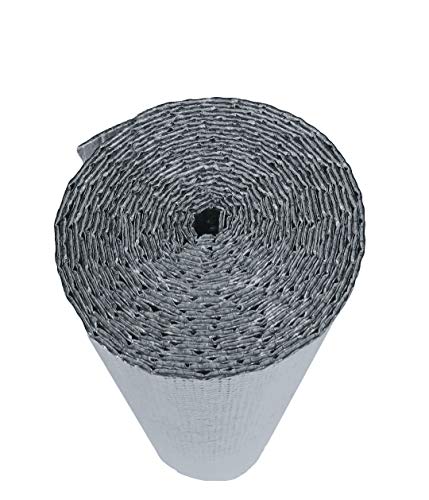
aes 4 x 25 ft Double-Foil Bubble Insulation

Owens Corning 703 2-Inch Fiberglass Board 6-Pack

Frost King SP1 Fiberglass Roll 16 x 3/4 x 48
A Deeper Look At The Lineup
For an attic with irregular joists, pipes, or gaps that resist blanket insulation, this expanding closed-cell foam can fill awkward spaces. Each 30-ounce can contributes to a six-can set, and the stated coverage reaches up to 23 board feet under standard application conditions. Actual yield may vary with temperature, humidity, and technique.
The spray application reaches cracks and cavities that rigid boards cannot match, making it useful for targeted attic repairs. The 5.6 R-value per inch indicates resistance to heat transfer, with a stated thermal conductivity of 0.025 W/m·K. The trade-off is application skill, since close spraying may create uneven buildup.
Useful Highlights
- Stated coverage of up to 23 board feet supports larger attic repairs.
- The formula adheres to wood, masonry, metal, glass, and other listed surfaces.
- Fast curing lets you trim or shape hardened foam for a neat finish.
- Six cans provide useful inventory for several isolated areas.
Things To Consider
- The dispensing gun is not included, so your setup may require an additional accessory.
- Spray from 25 to 30 centimeters for even coverage, and allow full curing before shaping.
Feature Snapshot
Built With In Mind
This spray foam best suits homeowners handling irregular attic cavities who are comfortable controlling application distance and trimming cured material.
Where Another Pick Suits Better
Owens Corning 703 2-Inch Fiberglass Board 6-Pack suits you better when you need shaped, removable panels rather than an in-place expanding application.
A foam gun gives you more control than pressing a nozzle directly against a can, which matters around attic penetrations and narrow wall cavities. This single-gun set includes nine extenders, which reach into deeper gaps and help position the nozzle without forcing the container into an awkward angle.
The spring trigger regulates the flow, while the copper nozzle is designed to reduce dripping and runoff. Its PTFE non-stick coating also gives the metal parts a corrosion-resistant surface. Unlike the six-can foam package, this item is a dispensing tool rather than insulation itself.
Where It Excels
- The trigger gives you finer control over foam placement in small cavities.
- Nine extenders improve reach for gaps along framing and around service penetrations.
- The non-stick coating and copper nozzle support cleaner handling.
Points To Note
- You still need compatible expanding foam cans to complete the setup.
- A single gun may slow large jobs because you must pause to change cans.
Key Specs
Made For
This gun is a practical fit for a homeowner sealing a limited number of attic gaps who wants more control than a bare can provides.
Consider Something Else When
ixirpro Foam Guns 18 Extenders suit you better when two work areas or two people need independent dispensing setups.
Two dispensing guns change the pace of a sprawling attic job because you can move between separate sections without repeatedly reorganizing one tool. The package includes 18 extenders, nine for each gun, giving you a selection of lengths for framing cavities, narrow corners, and penetrations.
Each gun uses a spring trigger, copper nozzle, and PTFE non-stick coating to regulate the expanding foam. The honest read is that the extra equipment is most useful across a house, workshop, or vehicle project. For one small patch, the single-gun set would be more proportionate.
What Pays Off
- Two guns support separate rooms or work zones.
- Eighteen extenders provide greater reach for recessed gaps.
- Spring-trigger control can reduce excess foam during careful applications.
- Copper nozzles are designed to limit dripping and runoff.
Small Caveats
- Confirm that your foam cans and preferred application method are compatible before purchase.
Who It Suits Best
This set best fits homeowners or tradespeople working across several areas who want duplicate guns and a broad selection of extenders.
Another Choice May Suit
ixirpro Expanding Foam Sealant Spray 6-Pack gives you the actual closed-cell material these guns are designed to dispense.
For a larger attic, vehicle, or vessel project, this STANLEY kit approaches spray foam as a coordinated system rather than separate cans and accessories. Twelve 27.1-ounce cans, a dispensing gun, cleaner, and safety items are included, so your setup is more complete from the start.
The closed-cell polyurethane forms a continuous layer without the joints found between boards. Its stated thermal resistance reaches 11.32 at two inches, with a thermal conductivity of 0.025 W/(m·K). Depending on your project, the dense surface can also resist water and air movement and accept paint.
What Makes Sense
- The 12-can quantity suits broader coverage needs.
- The included gun removes the need to source that basic accessory separately.
- Continuous application reaches around complicated structural shapes.
- Stated two-inch R-value supports stronger thermal resistance.
- Its listed ASTM E84 fire rating supports applications where material classification matters.
Trade Offs
- The larger set may be excessive for a few small attic penetrations.
- Spray control and curing time still demand careful application.
Technical Highlights
The Right Fit
This kit suits serious DIYers or tradespeople applying closed-cell foam across a large building, vehicle, or vessel project.
Look Elsewhere When
Owens Corning 703 2-Inch Fiberglass Board 6-Pack fits you better when cuttable panels and sound absorption matter more than a continuous spray application.
Reflective bubble insulation makes more sense in a camper van or RV than in a conventional attic filled with loose fiberglass. This 4-by-25-foot sheet uses two 96-percent-reflective film layers around two polyethylene bubble layers, producing a nominal thickness of one-quarter inch. Its R8 designation reflects its radiant-barrier role.
You can cut the material with a utility knife or scissors, then staple, nail, or glue it into place. For many vehicle projects, that straightforward handling is a practical advantage. Keep in mind that reflective performance depends on correct orientation and the presence of an air space.
Everyday Wins
- The flexible sheet fits around vehicle walls, curves, and framing.
- Two reflective layers support radiant-barrier performance.
- The material cuts and attaches with common household methods.
Worth Noting
- It is designed as a reflective vapor barrier rather than a thick batt insulation.
- Correct installation and an appropriate air space matter to reflective performance.
- The stated fire-code compatibility should be checked against your local project requirements.
Whose Shelf It Belongs On
This material belongs with camper van, RV, and mobile-home projects where lightweight reflective insulation is more useful than a rigid attic board.
Not Your Match When
STANLEY F 990P Supercoat Spray Foam Kit, 12 Pack suits you better for expansive building cavities that require continuous closed-cell coverage.
Semi-rigid fiberglass gives you a practical middle ground between soft batting and dense spray foam. Each Owens Corning board measures 24 by 48 inches and is two inches thick, so you can cut it to fit attic bays, framed walls, or studio structures. Six boards provide a substantial installation quantity.
The stated R-8.7 rating measures resistance to heat transfer, while the Noise Reduction Coefficient of 1.0 describes sound absorption on a standardized scale. That combination makes these unfaced boards especially relevant where thermal control and acoustic comfort both matter. You may find the semi-rigid format easier to position than loose fiberglass.
What It Does Well
- The two-inch boards offer a substantial R-8.7 thermal rating.
- An NRC of 1.0 supports strong sound-absorption needs.
- Standard 24-by-48-inch panels simplify layout planning.
- The material is listed as Class A or Class 1 under ASTM E84.
Points To Keep In Mind
- You must cut and fit the boards around framing, ducts, and obstructions.
- Unfaced panels may require compatible facing where the installation calls for it.
Core Details
Perfect Match For
These boards suit home studio owners, construction projects, and homeowners who want defined attic panels with both thermal and acoustic benefits.
Swap It Out When
ixirpro Expanding Foam Sealant Spray 6-Pack suits you better when irregular cavities and pipe passages matter more than panel fitting.
A utility roll earns its place when you need to wrap a pipe, pad a wall section, or cushion a vehicle hood rather than fill an entire attic bay. The Frost King SP1 measures 16 inches wide, three-quarters of an inch thick, and 48 inches long. You can cut it to fit the shape you need.
Its listed uses include water pipes, heaters, heating and cooling ducts, walls, and car hoods. That range makes it useful for repairs scattered around a home or workshop. For a primary attic insulation layer, you may prefer a product with a clearly stated thermal rating.
Notable Gains
- Cut-to-fit construction adapts to pipes, ducts, walls, and vehicle panels.
- The roll format handles narrow and awkward utility areas.
- Fiberglass provides cushioning along with sound reduction.
Possible Compromises
- The three-quarter-inch thickness suits utility wrapping more than broad attic coverage.
- You will need to check the thermal requirements for your specific attic design.
Important Details
Who Should Grab It
This roll suits homeowners handling pipe, duct, wall, or vehicle insulating tasks where a small custom-cut section is enough.
Reach For A Different Pick When
aes 4 x 25 ft Double-Foil Bubble Insulation fits you better for lightweight reflective coverage inside a camper van or RV.
What Matters Before You Insulate Your Attic
Start With the Space
An attic’s shape decides which material is practical. Irregular cavities around ducts, wiring, and framing reward spray foam, while regular bays accommodate fiberglass boards more easily. Reflective bubble material belongs mainly where radiant-barrier properties matter, such as vehicle interiors.
Compare Thermal Resistance
R-value measures a material’s resistance to heat flow, so more R-value generally means greater thermal resistance. Compare products using the same installation thickness rather than treating the number as a complete project calculation. Attic climate, air movement, and continuity also influence how the material performs in service.
Air Sealing Is a Separate Job
Insulation slows heat transfer, while air sealing blocks unwanted airflow around the material. Gaps along penetrations, framing, and rim joists can remain weak points even when the attic is well insulated. Choose a product that complements your air-control plan rather than expecting one material to handle every issue.
Account for Handling and Access
Spray foam needs room for mixing, application, and curing. Boards need clear framing and a path for fitting each piece. Fiberglass rolls are compact, but their handling and cutting requirements matter around pipes and ducts. Check attic access, ventilation, and local building requirements before ordering.
Practical Checks Before Installation
Mistakes Worth Dodging
Avoid judging insulation by thickness alone, since the stated R-value and installation conditions tell you more about thermal resistance. Also check the product’s role before buying, because a reflective barrier, spray sealant, and acoustic board are not interchangeable.
The Upgrade Payoff
A larger spray-foam kit may justify its added materials through included equipment and broader coverage. A multi-gun set makes more sense for several work zones, while a single gun or utility roll remains more proportionate for a contained task.
Frequently Asked Questions
Is spray foam better than fiberglass for an attic?
Spray foam is better for irregular gaps, while fiberglass boards are often easier to position in regular framing bays. Your access and installation skills matter as much as the material.
Do I need a spray foam gun?
The ixirpro Expanding Foam Sealant Spray 6-Pack does not include a gun, so you need a compatible dispenser for controlled application. The STANLEY F 990P kit includes one.
Which option works best for a camper van?
The aes 4 x 25 ft Double-Foil Bubble Insulation is designed for lightweight reflective use in vehicles and RVs. It must be installed with proper orientation and an appropriate air space.
Are fiberglass boards useful for sound reduction?
Yes, the Owens Corning 703 boards have an NRC of 1.0, which describes their sound absorption. That rating makes them relevant to studios and other acoustically sensitive spaces.
Can one spray foam gun handle a large attic?
One gun can handle an attic, though changing cans may slow the work. Two guns are more practical when separate rooms or work areas need simultaneous access.
Final Thoughts
The right attic insulation depends on your space and the work involved. Closed-cell spray foam handles irregular cavities, fiberglass boards suit regular framing, and reflective bubble material fits mobile interiors. Match the product to the installation before considering the size of the package.