
A wood boiler can put a substantial amount of heat into its distribution lines, but the tubing still needs to match the boiler’s output, temperature range, and routing plan. You also need the right fittings for the connection method, whether that means crimp rings or stainless-steel clamps. These seven options cover everything from complete tubing kits to specialized fittings and high-temperature blanket insulation.
A Snapshot Of The Selections

EFIELD 1-Inch PEX Crimp Brass Elbow, 10-Pack

EFIELD 1x1x1/2-Inch PEX Reducing Tee, 5-Pack

SharkBite 1/2-Inch x 100-Foot Red PEX-B Pipe U860R100

VEVOR 1/2-Inch x 300-Foot PEX-B Pipe with Cutter and Clamps
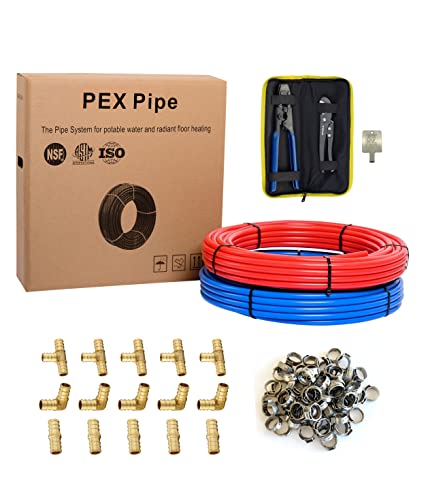
EFIELD 1/2-Inch PEX-B Pipe and Tubing, 200 Feet

Cedolio 24 x 12 x 1-Inch Ceramic Fiber Blanket

Badgerpipe 1-Inch 300-Foot 3-Wrap Insulated PEX Tubing
More On The Choices That Made The List
Direction changes are unavoidable when heat travels from a boiler room to radiators or domestic-water components. These EFIELD elbows turn a one-inch PEX line through a 90-degree bend without forcing a sharply kinked tube into the route.
The set works well for a multi-loop installation where several identical elbows are needed around corners and equipment. Compared with the EFIELD reducing tee, this package handles direction changes rather than branching pipe sizes, so you’ll need both pieces when the layout calls for them.
The Helpful Details
- Ten elbows support several bends across a larger routing project.
- Brass construction suits the high-temperature environment around a wood-fired system.
- Works with copper crimp rings and stainless-steel clamp systems.
- One-inch sizing fits a dedicated one-inch distribution line.
Practical Considerations
- You need compatible PEX tubing and the matching crimp ring or clamp tool.
- The elbow changes direction only, so tees are still required for branching routes.
Core Details
Made For Direction Changes
This package suits a hands-on installer routing several one-inch loops through a boiler room or adjacent building.
Where A Sibling Pick Shines
Choose the EFIELD reducing tee instead when your layout needs one-inch PEX to feed a half-inch branch.
A reducing tee creates a branch while changing pipe diameter in the same fitting. That makes these EFIELD tees useful at the point where a one-inch boiler loop supplies a smaller distribution line or auxiliary connection.
The five-piece pack gives you enough hardware for several branch points without forcing separate reducing connectors into the layout. Unlike the straight one-inch elbow, this fitting handles both a branch and a size transition, which can simplify a compact boiler-room assembly.
Good Reasons To Consider
- Combines a branch connection and diameter reduction.
- Five tees cover repeated branch points.
- Brass construction suits demanding plumbing environments.
- Accepts copper crimp rings and stainless-steel clamps.
Factors To Consider
- Each run must measure one inch, one inch, and one-half inch.
- You still need a compatible installation tool and tubing.
Key Product Details
Right Fit For Mixed-Size Routing
You’ll benefit most from this set when a one-inch primary loop must feed several half-inch branches.
Another Choice May Suit
The EFIELD one-inch elbow is the better fit for a route that changes direction without reducing pipe size.
Getting tubing around equipment and into tight corners is easier with flexible PEX-B pipe. This 100-foot red coil gives you a practical length for indoor distribution work, particularly on lines associated with heated water.
The tubing expands and contracts as its temperature changes, reducing stress where the line is fixed at both ends. That flexibility makes routing simpler than rigid pipe, although the boiler’s temperature rating remains the deciding factor for any connected system.
What Makes Sense
- One hundred feet supports several modest plumbing runs.
- Flexible construction bends around obstacles with fewer joints.
- Chlorine and ultraviolet resistance suit demanding water installations.
- Red tubing helps distinguish the intended hot-water route.
Things To Consider
- Half-inch sizing needs to match your branch layout and flow requirements.
- The coil takes up storage space until it is cut into runs.
- You still need compatible fittings and connection tools.
Who Will Love This
This tubing suits a DIY-focused installer handling indoor hot-water branches that bend around beams and equipment.
Look Elsewhere When
The VEVOR PEX-B pipe offers a longer 300-foot coil with a cutter and clamps when a long route dominates your project.
Long runs favor a large coil because you can set tubing lengths without repeatedly joining short pieces. This VEVOR package provides 300 feet of half-inch PEX-B pipe along with a cutter and clamps, covering several basic preparation needs.
Printed body markings help you identify the tube type, diameter, standards, and production date while working. Compared with the SharkBite coil, the package supports a much larger layout and includes project tools, making it more useful for a separate utility building or a wide distribution network.
Everyday Perks
- Three hundred feet fits long distribution routes.
- Included cutter helps create square, controlled cuts.
- Clamps support secure PEX connections during installation.
- Markings simplify identification on the pipe wall.
- Flexible construction eases routing through confined spaces.
Possible Compromises
- The non-oxygen-barrier construction requires careful system selection.
- A large coil needs storage space before installation.
Technical Highlights
Built With In Mind
This package fits a project planner who needs considerable half-inch tubing for several routes around a wood-fired heating system.
Reach For A Different Pick When
The Badgerpipe insulated tubing is a stronger fit when outdoor heat retention matters more than bare-pipe length.
Starting with loose tubing often turns into a long list of missing connectors and tools. This EFIELD bundle removes much of that friction by combining two 100-foot half-inch PEX-B rolls with brass fittings, clamps, a cinch tool, and a steel pipe cutter.
The blue and red rolls help organize separate routes, while the included fittings support common changes in direction and branching. It’s a more complete starting point than the VEVOR tube-and-tool package, though neither bare tubing nor fittings provide the added insulation of the Badgerpipe system.
Why It Works Well
- Two 100-foot rolls provide 200 feet of half-inch tubing.
- Couplings, elbows, and tees cover common layout changes.
- Fifteen stainless-steel clamps support PEX connections.
- Cinch tool and pipe cutter support preparation work.
- Blue and red rolls simplify route organization.
Small Caveats
- The included fittings have half-inch dimensions rather than one-inch connections.
- You’ll need additional pieces for larger pipe sizes or unusual routes.
Made For DIYers
This bundle suits a methodical DIY installer who wants tubing, fittings, clamps, and basic tools gathered in one place.
Consider Something Else When
The VEVOR PEX-B package is the better fit for a project that needs a longer single coil and fewer included fittings.
Not every heat-loss point is a straight length of pipe. A ceramic fiber blanket can cover a curved or irregular boiler component where pre-insulated tubing cannot form a neat fit.
This 24-by-12-inch sheet is flexible enough to cut and shape, and the stated 2,400°F rating makes it suitable for very high-temperature areas within its listed limits. In a wood-boiler setup, it’s more of a custom component layer than a complete distribution-line solution.
Well-Handled Touches
- Flexible construction follows irregular shapes.
- The blanket can be cut and stamped to fit.
- A one-inch thickness provides useful bulk for shaped areas.
- The stated temperature rating reaches 2,400°F.
Points To Note
- You must cut and fit the blanket around your specific component.
- It does not replace the tubing or fittings required for distribution lines.
Feature Facts
Whose Shelf It Belongs On
This blanket suits a hands-on installer customizing insulation around a curved vessel, flue component, or irregular boiler fitting.
A Better Fit Elsewhere
The Badgerpipe system is the better choice when your priority is continuous insulation along a complete one-inch outdoor run.
Outdoor lines lose useful heat before the fluid reaches its destination, especially across exposed walls and open utility spaces. This Badgerpipe package provides 300 feet of one-inch, three-wrap insulated tubing for moving heated or chilled fluid between remote equipment.
The bundle includes three layers of commercial-grade EPE insulation, corrugated tile, and blue and red PEX lines. Compared with bare PEX-B coils, its built-in insulation and protective wrap suit a longer exposed route, although fittings at exposed connections remain part of your system decision.
The Upside
- Three hundred feet supports substantial outdoor runs.
- Built-in EPE insulation surrounds the PEX lines.
- Corrugated tile adds a protective outer layer.
- One-inch lines suit full-size distribution routes.
- Blue and red lines support organized flow paths.
Honest Caveats
- The tubing is non-oxygen-barrier construction.
- You need compatible fittings for the one-inch lines and chosen connection system.
Important Details
Built For Exposed Runs
This system suits an installer running one-inch heat or service lines between a wood boiler and a remote building.
Swap It Out When
The EFIELD all-in-one kit is the better fit for an indoor half-inch network requiring fittings, clamps, and tools.
What Matters Before The Tubing Goes In
Match The Pipe To The Boiler
Start with the boiler manufacturer’s stated outlet temperature and your system’s pressure requirements. PEX-B describes the tubing’s manufacturing type, while an oxygen-barrier layer serves a different purpose in some closed-loop systems. Confirm the complete pipe specification rather than relying on diameter alone.
Plan The Route Before Ordering
Measure long outdoor runs, interior wall paths, and equipment clearances before choosing a coil length. Flexible PEX can bend around obstacles, but it still needs support and proper routing. One-inch lines suit larger circuits, while half-inch tubing works well for many domestic-water branches.
Choose One Connection Method
Crimp rings and stainless-steel clamps are different connection methods. Your tubing, fittings, rings or clamps, and installation tool must form a compatible set. This matters most around a wood boiler, where installation quality and operating temperatures deserve a deliberate plan.
Account For Insulation Separately
Pre-insulated tubing handles continuous pipe runs, while blanket insulation suits irregular components. The Cedolio ceramic fiber blanket can be shaped around a vessel or fitting, but it does not supply the fittings, pipe, or complete distribution network.
Avoiding Costly Pipe-Material Mistakes
Mistakes Worth Dodging
Choosing by pipe color alone can leave you with the wrong diameter or connection method. Measure every branch, confirm the boiler’s temperature limits, and add fittings for bends, reductions, and connections before the tubing arrives. Pre-insulated pipe also needs compatible fittings where the insulation ends.
Why Top Tier Costs More
Specialized tubing costs more because it adds layers, protective materials, or coordinated components rather than simply supplying bare pipe. The Badgerpipe system makes sense for long exposed routes, where insulation is part of the design. For shorter indoor runs, a bundled EFIELD kit may provide more useful value through its fittings and tools.
Frequently Asked Questions
Can PEX-B be used with a wood boiler?
PEX-B can suit a wood-boiler system when its temperature and pressure ratings match the boiler and loop design. Confirm the tubing specification, operating range, and local plumbing requirements before installation.
What size PEX is best for a wood boiler?
The correct diameter depends on flow, loop length, boiler output, and the connected load. One-inch tubing suits many larger distribution circuits, while half-inch lines commonly serve smaller branches.
Are crimp rings or clamps better for PEX fittings?
Neither method is inherently better because they use different systems. Choose the method your fittings are designed for, then use the matching tubing and correct tool for a consistent connection.
Does insulated PEX reduce heat loss?
Insulation is intended to reduce heat transfer along the covered pipe. The amount of retained heat depends on installation, exposure, flow temperature, and the insulation’s condition.
Can I cut the Badgerpipe tubing to fit?
Cutting changes the assembled length and may require you to reterminate the pipe and insulation at the cut point. Plan the route carefully and follow the manufacturer’s connection instructions for exposed ends.
Final Thoughts
The strongest choice depends on the job: Badgerpipe handles long, exposed one-inch runs, while the EFIELD bundle supports a broader half-inch installation. Use the ceramic fiber blanket for irregular components and the SharkBite, VEVOR, or EFIELD tubing for routes where bare PEX fits your plan. Match every dimension and connection method before the boiler goes online.