
A dedicated sauna can turn a spare room, basement, or unused corner into a private place to unwind, but the right cabin depends on space, heating style, and electrical setup. You’ll find options here for solo sessions, couples, families, traditional Finnish heat, infrared warmth, or a combination of both. The key differences come down to cabin dimensions, heater type, voltage, seating, and how thoughtfully each unit uses infrared panels.
The Leading Options At A Glance

4-6 Person Hybrid Sauna 9kW

2-Person Cedar Infrared Sauna
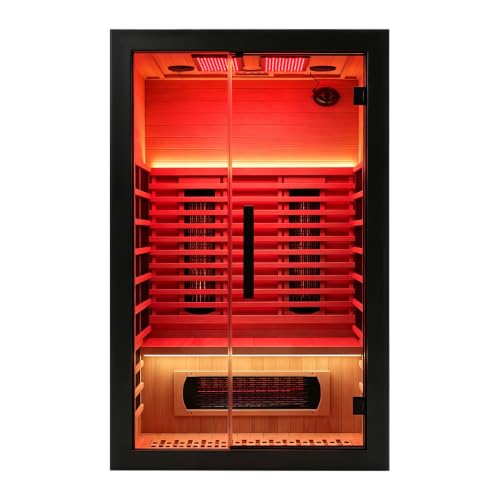
2-Person Full Spectrum Sauna

3-Person Finnish Sauna 4.5kW

4-6 Person Corner Sauna

3-Person Hybrid Sauna 6kW

1-2 Person Infrared Sauna
The roughly 71-by-71-by-83-inch cabin makes this one of the roomier choices here, with bench space for four to six adults. That scale suits families or groups taking turns during a weekend wellness session. Its hybrid system combines a 6kW Harvia Vega BC60E heater with roughly 3kW of infrared heating, giving you two heat styles in one structure.
Compared with the infrared-only Duthss 2-Person Cedar Infrared Sauna, this model offers substantially more seating and a conventional sauna heater. The honest trade-off is its 220V requirement and larger footprint. You need to treat it as a dedicated room installation rather than a casual furniture-sized accessory.
Useful Touches
- Wide bench seating supports shared family or guest sessions.
- The hybrid system lets you use traditional and infrared heat within one cabin.
- Six carbon panels and six red light elements spread warmth around multiple body zones.
- Dedicated foot heating adds warmth below the main panel level.
Practical Considerations
- Its near-square footprint needs more floor space than the compact two-person models.
- Confirm that your electrical service and room plan can support a 220V system.
Key Specs
Built With In Mind
This sauna fits households that regularly share a wellness space and value the option of changing heat styles.
A Better Fit Elsewhere
The Duthss 3-Person Hybrid Sauna 6kW suits you better when a smaller group and more varied seating matter more than six-person capacity.
A six-by-six-foot footprint sounds substantial, yet the two lounge-style chairs make this sauna feel designed for conversation rather than squeezing in extra guests. You can use one chair alone or share the cabin with a partner, and the 76-inch height leaves the interior feeling more open than its two-person rating suggests.
This model relies on infrared heating rather than a conventional sauna stove. Five carbon panels, five red light elements, and dedicated foot heating cover the walls and lower body, while 2300W of power keeps the installation distinct from the 220V hybrid systems elsewhere in the list.
Where It Helps
- Two separate lounge chairs create a comfortable setup for couples.
- The ten infrared elements distribute warmth around the cabin.
- Foot heating supports a more complete lower-body warming zone.
- Its square footprint can fit naturally into a dedicated wellness room.
Small Caveats
- The 72-by-72-inch floor area remains substantial despite the two-person capacity.
- You give up the adjustable traditional heater found in the Harvia-equipped models.
- Its 220V supply still calls for an electrical compatibility check.
Feature Snapshot
Made For
You’ll appreciate this cabin most as a two-person retreat with separate seating in a home gym or wellness room.
Consider Something Else When
The Duthss 1-2 Person Infrared Sauna offers a narrower footprint for hallways and tighter room layouts.
At roughly 47 by 41 inches, this is the smallest cabin in the group, which makes it easier to picture in a home gym, basement corner, or compact wellness area. The interior accommodates one or two people, so it can work for a private session or a couple with a little more space than a single chair.
Its 120V, 2300W electrical setup separates it from most of the 220V choices here. Four full spectrum carbon plates, three red light plates, and foot heating provide the infrared layout, while the listed temperature range runs from 32 to 149 degrees Fahrenheit.
Strengths Worth Knowing
- The narrow footprint reduces the space required for a private sauna.
- Full spectrum panels provide a broader infrared heating approach.
- 120V power may align better with some existing residential electrical setups.
- Foot heating adds coverage below the wall-mounted panels.
Points To Note
- Two people get a noticeably tighter arrangement than in the lounge-style cabins.
- Seven listed plates provide less panel coverage than the ten-element model in pick two.
- You don’t receive a traditional heater in this infrared-focused design.
Technical Highlights
The Right Fit
This sauna suits you best when floor space matters more than accommodating a group.
Swap It Out When
The Duthss 2-Person Cedar Infrared Sauna fits couples better when lounge seating and a roomier 72-inch square cabin matter most.
Traditional sauna enthusiasts get a more focused setup with the 4.5kW Harvia electric heater. Its roughly 60-by-44-by-76-inch footprint fits more neatly into a basement or garden-room conversion than the larger cabins here, while the one-level bench holds up to three adults.
That traditional approach means this isn’t an infrared model, despite its fit in a broader sauna comparison. You choose it for the Harvia heater and Finnish-style session rather than wall-mounted infrared panels, making it a different experience from the hybrid and infrared choices around it.
Real Benefits
- The 4.5kW Harvia heater anchors a traditional sauna experience.
- Its relatively narrow depth suits a dedicated room or conversion.
- One-level bench seating creates a simple shared area for three adults.
Possible Compromises
- You won’t receive infrared heating in this traditional configuration.
- The one-level bench offers less varied seating than lounge or tiered designs.
- Its 220V heater needs an electrical setup that matches that requirement.
Who Will Love This
You’ll love this sauna if traditional heat, a Harvia system, and a compact three-person footprint matter most.
Where A Sibling Pick Shines
The Duthss 3-Person Hybrid Sauna 6kW suits you better when you want both a conventional heater and infrared panels.
The pentagonal shape turns an indoor corner into the cabin’s organizing feature, while tiered benches support four to six adults. At about 71 by 71 by 83 inches, it has a similar overall scale to the hybrid sauna in pick one, but its layout places more emphasis on bench levels and corner placement.
A 6kW Harvia Vega system provides the heat, making this a traditional sauna rather than an infrared setup. For households with enough electrical capacity and a suitable corner, that gives you room for shared sessions without moving to a freestanding rectangular room arrangement.
A Favorable Mix
- Tiered seating gives taller users more usable bench positions.
- The corner layout reduces wasted space around the cabin footprint.
- The Harvia Vega heater supports traditional sauna sessions.
- Four-to-six-person capacity suits families and visiting guests.
Details To Watch
- The pentagonal shape requires careful measurement of the available corner.
- You’ll need to confirm room access and the required 220V connection.
- Infrared heating is absent from this traditional 6kW configuration.
Feature Facts
Built With In Mind
This corner sauna suits larger households with an indoor corner and a willingness to plan the electrical installation.
Reach For A Different Pick When
The Duthss 4-6 Person Hybrid Sauna 9kW fits you better when infrared heating is required alongside the Harvia heater.
A lounge chair, bench, and center stool give you more ways to sit within a roughly 71-by-71-by-75-inch cabin. That flexible arrangement works nicely for one person reclining, two people sharing a session, or three adults using separate seats. It feels more adaptable than the one-level bench in pick four.
The hybrid system pairs a 6kW Harvia Vega BC60E with infrared elements, creating a combined 9kW setup. Six full spectrum carbon panels and six red light elements expand the heating beyond what the traditional heater provides, giving you a reason to consider this model for mixed heat preferences.
Strong Points
- Three seating types suit solo relaxation and shared use.
- The hybrid arrangement supports both conventional and infrared heat.
- Twelve listed infrared elements offer broad coverage around the cabin.
- The 9kW combined system feels substantial for a three-person interior.
- Its 75-inch height is slightly lower than the 83-inch hybrid model.
Less-Strong Areas
- The broad 71-inch width still demands a sizable room.
- The 220V connection is more involved than the 120V compact sauna.
- Three adults may find the seating less relaxed than the two-chair cabin.
Who Should Grab It
You should consider this model for mixed-use sessions where traditional and infrared heat are equally appealing.
Another Choice May Suit
The Duthss 4-6 Person Hybrid Sauna 9kW better serves larger groups with more bench capacity.
A lounge-style chair and roughly 51-by-71-inch footprint make this an approachable cabin for one or two people. The inward right-opening door can make access feel less disruptive in a basement or wellness room, particularly when the cabin sits close to a wall on one side.
Four carbon panels, four red light plates, and dedicated foot heating cover the infrared side of the cabin. At 2300W and 220V, it uses more electrical voltage than the compact 120V sauna, but its seating plan feels less constrained for a relaxed solo session.
Where It Excels
- The lounge chair supports a comfortable personal wellness routine.
- The 51-inch width fits more easily than a square two-person cabin.
- Eight listed infrared elements cover the walls and lower body.
- The right-opening door offers a specific placement advantage.
Practical Considerations
- Two people receive a more confined arrangement than the separate-chair model.
- Door swing direction needs to be checked against the surrounding room.
- Its 220V supply requires attention before installation.
Core Details
Who Should Grab It
This sauna suits you best for one-person routines or couples who favor a lounge chair over a fully square cabin.
Not Your Match When
The Duthss 2-Person Cedar Infrared Sauna suits couples better when two separate lounge chairs take priority.
What Matters Before You Fill That Corner
Cabin size should guide your first decision because every extra inch affects the room, access path, ventilation, and electrical plan. Measure the usable floor area and ceiling clearance before focusing on heater wattage. Pay attention to door direction, bench arrangement, and the number of people who will use the sauna regularly.
Capacity and Seating
A stated capacity gives you a starting point, but seating style often tells you more about comfort. Lounge chairs suit solo relaxation and couples, tiered benches serve larger families, and a single level creates a more open shared area. Your household’s normal routine matters more than the largest advertised capacity.
Heating Style
Infrared panels provide distributed radiant heat, while a conventional electric heater recreates the hotter, drier experience associated with Finnish sauna. A hybrid cabin gives you both systems in one enclosure. Choose based on your preferred session style rather than treating the two approaches as interchangeable.
Power and Placement
Most models here require 220V, while the compact full-spectrum cabin uses 120V. Check your electrical service, required connection, and installation guidance before ordering. Door clearance and room access deserve equal attention, since a beautiful cabin can become difficult to use when it blocks a walkway or cannot be moved into position.
Common Mistakes In Sauna Selection
Where Shoppers Go Wrong
The most consequential mistake is focusing on wattage before measuring the room. Cabin dimensions, door access, seating needs, and electrical requirements determine whether the sauna works in your space. Another common error is assuming every infrared cabin includes a traditional heater; several use wall panels only.
What Separates Premium From Basic
Higher-tier cabins commonly add capacity, more infrared elements, flexible seating, or a combined heater system. The extra cost can be worthwhile when you regularly share the space or want multiple heat styles. A smaller, purpose-built sauna may suit you better when room dimensions and electrical access are the deciding factors.
Frequently Asked Questions
Do indoor infrared saunas need a 220V connection?
Most models in this roundup use 220V, while the compact Duthss 2-Person Full Spectrum Sauna uses 120V. Check the electrical requirements and installation guidance before placing your order.
Are hybrid saunas better than infrared-only models?
A hybrid sauna suits you when you want both conventional sauna heat and infrared panels in one cabin. An infrared-only model can be simpler and may leave more room for lounge seating or a smaller footprint.
How much space should you leave around a sauna?
Leave enough room for the stated cabin dimensions, door access, ventilation requirements, and safe movement around the unit. You’ll also need clearance for maintenance access and the electrical connection.
What is the difference between a 120V and 220V sauna?
A 120V sauna typically has a lower electrical demand and may fit more easily with some residential setups. A 220V sauna requires a higher-voltage supply and a more involved installation plan.
Can a one-person sauna accommodate two adults?
Compact models can accommodate two adults, but comfort depends heavily on seating and dimensions. The Duthss 2-Person Cedar Infrared Sauna provides separate lounge chairs, while narrower one-person designs feel more relaxed for solo use.
Final Verdict
Your best indoor infrared sauna is the one that fits the room, matches your preferred heating style, and supports your usual group size. Traditional heat calls for a Harvia-equipped cabin, infrared-only sessions favor panel models, and hybrid systems give you the widest choice. Measure first, confirm the electrical setup, then choose the seating arrangement that makes regular use comfortable.