
Mounting a TV often leaves a small tangle of HDMI, power, and network cables hanging below the screen. A cable raceway, which is a surface-mounted channel that conceals cords along a wall, can give your setup a finished look without opening the wall. These options suit different spaces, from a single compact media corner to a larger home theater with several cable runs.
A Quick View Of The Lineup
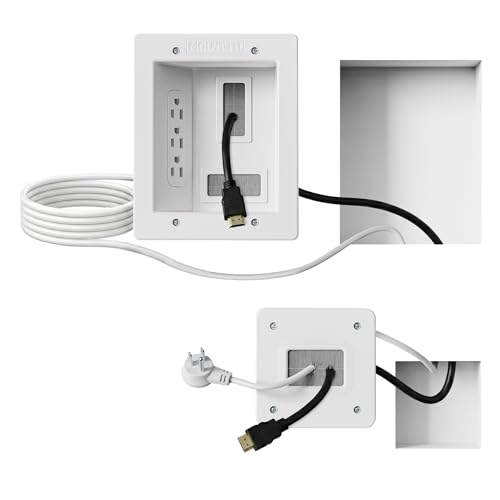
Mount-It! In-Wall TV Cable Concealer Kit with Recessed Power, 9-Foot Cord
YCLYC 62.8-Inch Paintable Cable Raceway, 0.98 x 0.5 Inches, White

YesBes 630-Inch Paintable Cable Raceway Kit, 40 x 15.7 Inches, White

Delamu 85-Inch Cord Hider for 3-4 Wires, 1.18 x 0.67 Inches, White

ZhiYo 126-Inch Paintable Cord Hider Kit, 8 x 15.7 Inches, Beige

YesBes 116-Inch Paintable Cable Raceway Kit, 0.96 x 0.57 Inches, White
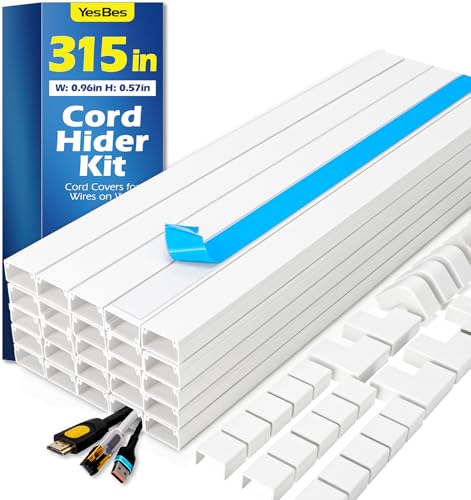
YesBes 315-Inch Paintable Cable Raceway Kit, 20 x 15.7 Inches, White
The Strengths Of Each Pick
The recessed approach is the most visually complete option here because the cable opening and power connection sit inside the wall. For a dedicated media wall, that can leave the TV area looking nearly free of loose wiring. The recessed box is designed to accept several HDMI, Ethernet, and A/V cables.
Compared with the surface-mounted channels later in the list, this kit trades easier installation for a neater finished appearance. The included hand saw points toward a cut-in installation, while the triple outlet and 9-foot extension cord reduce the need for a separate power arrangement.
A Favorable Mix
- Conceals signal and power connections inside the wall.
- Provides three outlets near the television.
- Accommodates several common media cables.
- Offers a cleaner result than an exposed raceway.
Worth Noting
- Requires cutting an opening in the wall and planning cable routes beforehand.
- The recessed power arrangement calls for careful installation and compatible wall space.
Key Specs
Who It Suits Best
This kit best suits a confident DIY installer creating a permanent, polished home theater wall.
Where Another Pick Suits Better
Choose the YCLYC 62.8-Inch Paintable Cable Raceway for a simpler surface-mounted installation.
Four 15.7-inch sections make this a practical choice for a single TV wall or entertainment console. The shallow white channel blends into a light-colored wall, and its paintable finish gives you the chance to match the surrounding surface more closely.
For most apartment setups, the 62.8-inch total is easier to plan around than the 630-inch YesBes kit reviewed later. It suits one defined cable route, although you may find it limiting in a room with separate wall directions or several devices.
Points In Its Favor
- Paintable surface helps the channel blend into the wall.
- Compact dimensions suit a focused media-console area.
- Four sections allow coverage across more than one short run.
Practical Considerations
- The 0.98-inch width and 0.5-inch height are better for a few slim cables than a bulky bundle.
- Surface mounting leaves the channel visible even when it is painted to match.
- The shorter total length may not cover a larger entertainment wall.
Made For
This raceway is a sensible fit for renters and homeowners organizing one TV in a compact room.
Consider Something Else When
Use the YesBes 630-Inch Paintable Cable Raceway Kit when you need a much longer run and more directional fittings.
The 52.5 feet of channel make this the broadest coverage option, especially for a home theater that spreads across several walls. Forty separate sections can also be positioned around corners, behind furniture, or along different sides of a room.
The connector selection matters more than the sheer length for complicated routes. This kit includes straight couplings, corner pieces, and branch fittings, giving you more ways to guide multiple cables without cutting every section to a custom size.
A Few Strong Suits
- Provides the longest total cable coverage in the group.
- Supports straight, corner, and branching routes.
- Paintable sections can blend with the wall finish.
- Suitable for cables traveling through several rooms.
- Offers enough components for a complex entertainment setup.
Small Caveats
- The extensive length may be unnecessary for a basic TV corner.
- Sorting through numerous fittings takes time before installation.
Feature Snapshot
Right Fit For
This kit suits households managing a large home theater with several screens, consoles, and network devices.
Not Your Match When
The Delamu 85-Inch Cord Hider is more manageable for one screen and a short cable route.
The wider Delamu channel is designed to gather three or four wires into one neater path, which helps when several thin cords drop behind a console. Its 1.18-inch width also gives it more internal room than the slimmer YCLYC raceway.
For a single mounted television, 85 inches may be the sweet spot between useful coverage and excess material. It looks less elaborate than the 315- and 630-inch kits, yet the roomier profile can make a modest setup feel noticeably tidier.
Bright Spots
- Accommodates three or four wires in one channel.
- Offers a wider profile than many slim raceways.
- Keeps a single television setup visually uncluttered.
Trade Offs
- The 85-inch length may not reach from a wall-mounted TV to an entertainment center.
- Its larger profile is more noticeable than a narrow paintable channel.
Quick Facts
Best Suited To
This cover works well for a bedroom TV, apartment media console, or one-screen gaming setup.
Look Elsewhere When
The ZhiYo 126-Inch Paintable Cord Hider Kit offers a longer route in a finish that suits beige walls.
Eight 15.7-inch sections give this kit about 10.5 feet of routing, a useful amount for joining a wall-mounted TV to a nearby console. The 0.95-by-0.55-inch channel is sized for two to four typical signal or power cables.
Beige gives the ZhiYo kit a warmer starting color than the white options, while the paintable surface adds flexibility. In a room with cream or warm neutral walls, you may find that it blends in with less preparation than expected.
What Earns Its Place
- Provides eight sections for a flexible TV-to-console route.
- Holds two to four commonly sized cables.
- Paintable finish supports a closer wall match.
Points To Note
- The beige color may contrast with a cool white wall.
- It offers less total coverage than the longer YesBes kits.
- Measure the cable bundle before installation to confirm the internal fit.
Who Will Love This
This kit is a good fit for someone with warm neutral walls and a medium-length television cable run.
A Better Fit Elsewhere
The YCLYC 62.8-Inch Paintable Cable Raceway is easier to manage for a shorter installation on a white wall.
This is a sensible middle ground between a short single-screen cover and a room-sized raceway system. The 116-inch total creates enough coverage for several joined sections, while the included fittings let a route turn or branch near the TV.
Its adhesive installation avoids screws and drilling, which is useful in a finished rental wall. The tradeoff is that the surface, wall texture, and cable weight deserve attention before you press the channel into place.
Real Benefits
- Creates a practical route without wall cutting.
- Includes couplings and directional fittings.
- Paintable white sections suit a broad range of walls.
- Supports straight, corner, and branching connections.
Less-Strong Areas
- The 116-inch length suits a medium route rather than a large entertainment wall.
- Adhesive installation depends on suitable wall contact.
Technical Highlights
The Right Fit
This kit suits apartment dwellers and beginners organizing a medium-length route on a finished wall.
Another Choice May Suit
The YesBes 315-Inch Paintable Cable Raceway Kit is more appropriate when several wall sections need coverage.
Twenty 15.7-inch sections create about 26 feet of cable coverage, enough for a substantial media wall without reaching the scale of the 630-inch system. You can place the sections in separate runs rather than forcing one continuous channel across the room.
The fittings also support more involved layouts, including straight extensions, L-shaped turns, T-shaped branches, and inside or outside corners. That makes this kit a sensible middle ground for a living room where cables travel behind the TV, around a corner, and toward another component.
Benefits That Matter
- Covers a large but manageable entertainment wall.
- Supports several types of directional connections.
- Lets you organize separate cable runs independently.
- Paintable finish helps the white channel blend into the wall.
A Few Limitations
- It may be excessive for a television with one short cable drop.
- The larger fitting set requires route planning before installation.
Core Details
Whose Shelf It Belongs On
This system belongs in a family room or home theater with a television wall and several connected devices.
Swap It Out When
The YCLYC 62.8-Inch Paintable Cable Raceway is the simpler choice for a single short cable run.
What to Match Before Covering Your TV Cables
Start with the cable route
Measure from the television toward each device and note where the route turns. A straight run needs little more than channel sections and couplings, while corners and branching points call for elbows or T-fittings. The 315- and 630-inch YesBes kits offer more routing hardware for that reason.
Match the channel to the bundle
Internal width and height determine which cables will fit comfortably. A slim HDMI and Ethernet bundle can work in a narrow raceway, but power cords and several thicker cables benefit from a wider channel such as the 1.18-inch Delamu model.
Choose a finish before installation
White and beige provide different starting points, and paintable surfaces let you adjust the result. Consider the wall color, nearby trim, and whether the cover should visually disappear or remain subtly visible.
Decide between surface and in-wall installation
Surface-mounted raceways avoid cutting the wall and suit temporary or rental setups. The Mount-It! in-wall kit provides a cleaner finished appearance, but it demands more involved installation and careful planning for the recessed power connection.
Making Cable-Cover Decisions With Fewer Surprises
Mistakes Worth Dodging
The most common mistake is measuring only the television width instead of the entire cable path. Check connector ends, tight corners, and the space needed behind the console before ordering. A bundle that fits the channel may still be difficult to insert after several fittings are closed.
What The Higher Tier Buys
More money usually buys greater length, more directional fittings, or an in-wall power arrangement. Those additions matter for complex home theaters and permanent installations, while a single short cable run rarely needs them. Match the system to the route rather than the amount of material.