
A mower can leave behind a layer of dead grass, pine needles, clippings, and loose thatch that dulls the lawn’s appearance. You need the right rake to collect that material without wasting time, straining your back, or choosing equipment your mower cannot handle. The options below cover hand rakes, thatching rakes, and tow-behind attachments for different lawn sizes and equipment setups.
The Picks In Brief
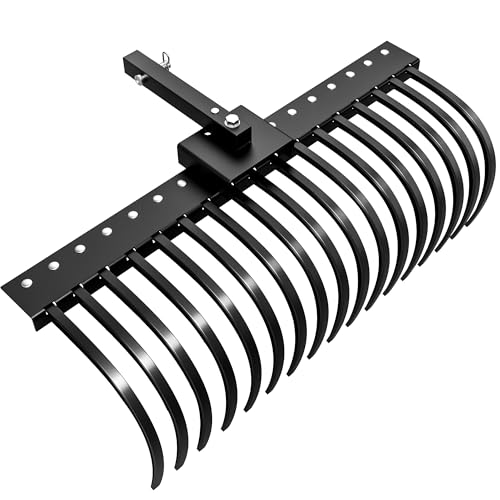
YITAMOTOR 48-Inch Tow-Behind Landscape Rake

LA ZINNIA 24-Tine Adjustable Leaf Rake

Coopvivi 17-Tine Metal Bow Rake
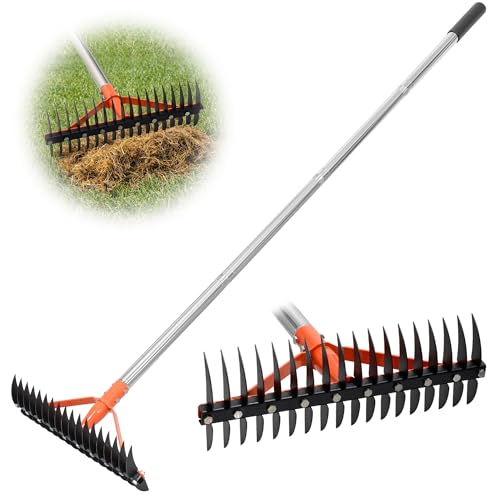
CKLT 18-Tine Dual-Sided Thatch Rake

YITAMOTOR ATV/UTV Landscape Rake

Coopvivi 25-Tine 6-Foot Leaf Rake

YITAMOTOR 40-Inch Tow-Behind Pine Needle Rake
Taking A Closer Look At The Options
Cleaning several acres after mowing calls for more reach than a handheld rake can provide. This 48-inch tow-behind rake spans a wide strip with each pass, making it useful for gathering pine needles, leaves, and grass clippings across lawns, paddocks, and pastures.
Unlike the narrower hand rakes later in the list, it works as an equipment attachment rather than a walking tool. It suits property owners with compatible machinery who want to collect debris, level soil, or spread gravel with less manual effort.
Standout Benefits
- The 48-inch working width reduces the number of passes across broad areas.
- Seventeen replaceable steel tines handle thatch, loose soil, and heavier yard debris.
- It accepts 2-inch receivers and standard 3-point hitch systems, including 48- or 60-inch toolbars.
- A powder-coated steel finish helps protect the attachment from moisture, abrasion, and vegetation residue.
- You can use it for lawn cleanup, seed-bed preparation, gravel distribution, and paddock maintenance.
Points To Note
- Your tractor or ATV/UTV must have the specified receiver or hitch connection.
- Storage and transport require room for a 48-inch attachment, particularly on a compact utility vehicle.
Key Specs
Made For
This rake fits property owners with compatible tractors or ATVs who maintain large lawns, paddocks, or rural grounds.
Where Another Pick Shines
The LA ZINNIA 24-Tine Adjustable Leaf Rake suits homeowners who want manual cleanup and compact storage instead of a powered attachment.
A rake that changes length can make leaf cleanup more comfortable from flower beds to open lawns. The LA ZINNIA model uses a three-section handle that adjusts to 33, 48.8, or 66.5 inches, letting you set the working height for your posture and the task.
The 24-tine head gives this manual rake more coverage than many compact garden rakes. It remains a practical choice for collecting leaves, grass clippings, mulch, pine cones, and small debris around a home.
Features That Help
- Three handle lengths let you work low around beds or upright across lawns.
- The wide 24-tine head gathers leaves and small debris in fewer passes.
- High-carbon steel construction provides a firmer alternative to lightweight wood rakes.
- A spiral joint connects the sections without requiring tools.
- Its detachable handle makes it practical for compact garage or shed storage.
Small Caveats
- Manual sweeping takes more time than a tow-behind attachment on a large property.
- The 66.5-inch setting may be cumbersome in narrow garden paths and storage areas.
Quick Facts
Right Fit For
This rake works well for home gardens, residential lawns, and anyone who values adjustable handling and compact storage.
Reach For A Different Pick When
The YITAMOTOR 48-Inch Tow-Behind Landscape Rake fits large properties where you prefer a vehicle-mounted cleanup tool.
Spreading soil and breaking up debris calls for a bow rake, a tool with rigid tines that comb through garden material instead of merely skimming the surface. This 17-inch head offers that stronger, more deliberate action around planting beds and prepared soil.
At 5.58 feet long, it also gives you more reach than a short garden rake. Compared with the LA ZINNIA adjustable model, it has a fixed form and a narrower head, favoring deliberate soil work over versatile leaf collection.
Useful Strengths
- Seventeen stainless-steel tines provide a firm tool for leveling soil and gathering yard debris.
- The 17-inch head concentrates on defined planting beds and work areas.
- A 5.58-foot handle reduces the need to bend deeply during ground-level work.
Trade Offs
- The fixed length offers fewer positioning options than the LA ZINNIA rake.
- Its narrower head covers less ground during broad leaf cleanup.
- Heavy soil and embedded stones may place more resistance on rigid tines than flexible spring-style tines.
Built With In Mind
This bow rake fits gardeners who need a rigid tool for leveling soil, spreading amendments, and clearing concentrated garden debris.
A Better Fit Elsewhere
The CKLT 18-Tine Dual-Sided Thatch Rake serves homeowners focused on removing dead grass and thatch from established lawns.
Dead grass has a way of building up at the base of an actively growing lawn. This 62.5-inch rake uses 18 sharp, tempered spring-steel tines to pull that material away, and its dual-sided head lets you adjust the depth of the cleanup.
The shorter side works through surface leaves, debris, and compacted soil, while the longer side reaches into deeper thatch. For Bermuda grass and similar dense lawns, that two-level approach is more useful than a one-sided lawn rake.
Why It Works Well
- Eighteen sharp tines lift dead grass, small shrubs, and ground cover from lawn surfaces.
- Two head lengths let you choose between surface cleanup and deeper thatch removal.
- Tempered spring steel gives the tines flex while maintaining their working shape.
- A sandblasted coating adds protection against rust and corrosion.
- The 62.5-inch length reduces bending during lawn maintenance.
Possible Compromises
- Deeper tines may be more demanding than a flexible rake for shallow leaf collection.
- The long handle needs adequate storage clearance and room to swing safely.
Feature Snapshot
Who Should Grab It
This rake suits homeowners maintaining dense lawns that need focused dead-grass and thatch removal.
Not Your Match When
The Coopvivi 25-Tine 6-Foot Leaf Rake fits large yards where collecting loose leaves is the main task.
Turning an ATV or UTV into a grounds-maintenance machine makes sense when your property includes more than a small lawn. This landscape rake supports leveling ground, clearing hay, moving debris, spreading rock, and preparing seed beds while you remain seated.
Its key advantage is compatibility with the YITAMOTOR manual implement lift and one-point lift system. That makes it most relevant to owners of matching equipment rather than a universal choice for every ATV or UTV.
The Practical Payoff
- Vehicle-mounted operation reduces the walking involved in large-area cleanup.
- The rake handles hay, debris, rock distribution, and seed-bed preparation.
- An adjustable working width lets you match the attachment to different terrain tasks.
- The all-steel body carries a rust-resistant coating for outdoor use.
Details To Watch
- Confirm that your ATV or UTV uses the compatible YITAMOTOR manual implement lift.
- Attachment width and ground clearance can limit access in confined areas.
Whose Shelf It Belongs On
This rake fits owners of a compatible YITAMOTOR ATV or UTV who routinely manage rural grounds and large work areas.
Swap It Out When
The YITAMOTOR 48-Inch Tow-Behind Landscape Rake offers a better match for tractors and 2-inch receiver systems.
Fall cleanup usually rewards a rake that can cover ground quickly without turning into a tractor attachment. The 25-tine metal head gathers leaves, clippings, and small yard debris, while the six-foot handle gives you a comfortable reach across open lawns.
Compared with the CKLT rake, this model emphasizes general-purpose leaf collection rather than deep thatch removal. Its steel construction and extended handle make it a practical choice for routine weekend maintenance around a suburban home.
Bright Spots
- The 25-tine head provides broad coverage for leaves, grass clippings, and garden debris.
- A six-foot handle reduces repeated bending during long sweeping sessions.
- Stainless steel suits outdoor exposure and repeated contact with yard debris.
- The tool handles lawns, gardens, and paths without powered equipment.
Where It May Fall Short
- Manual work remains slower than using the YITAMOTOR tow-behind rakes on broad acreage.
- A rigid rake is less specialized for separating embedded thatch from living grass roots.
Technical Highlights
Made For
This rake suits suburban homeowners who regularly gather leaves and clippings across a lawn, garden, or pathway.
Look Elsewhere When
The CKLT 18-Tine Dual-Sided Thatch Rake better fits a lawn needing targeted removal of dead grass and deeper thatch.
Pine trees can leave a dense carpet of needles that seems impractical to collect by hand. This 40-inch tow-behind rake covers more ground per pass, and its 20 heat-treated spring tines lift thatch, dead grass, and moss from beneath the surface.
Its tines also perform shallow aeration, which means they open the upper soil layer to improve access for water, air, and nutrients. Compared with the 48-inch YITAMOTOR landscape rake, it has a narrower working width but more spring tines, making it the more specialized thatch and needle option.
Everyday Wins
- Twenty heat-treated spring tines collect pine needles, thatch, dead grass, and moss.
- The 40-inch width covers a substantial lawn strip during each pass.
- Shallow aeration helps open the soil surface around grass roots.
- A tow-behind format reduces the manual effort required for large cleanup areas.
- The spring tines can flex under contact rather than behaving like fixed spikes.
Trade-Offs To Consider
- You need a compatible tow-behind setup and suitable space for transport and storage.
- The 40-inch width covers less area per pass than the YITAMOTOR 48-Inch Landscape Rake.
Core Details
Who Will Love This
This rake fits property owners with a compatible tow setup who face heavy pine needles, moss, or accumulated thatch.
Another Choice May Suit
The Coopvivi 17-Tine Metal Bow Rake suits gardeners who need a hand tool for controlled soil leveling instead.
What To Look For Before Buying A Lawn Cleanup Rake
Start with the material your mower leaves behind. Light leaf cover calls for flexible spring tines, while compacted soil and heavier debris benefit from a rigid bow rake. Dense dead grass requires a deeper thatching head, and a wide yard favors a longer handle or tow-behind format.
Tine Style And Head Shape
Spring tines flex as they pass through vegetation, making them practical for thatch and pine needles. Rigid metal tines provide more leverage for leveling soil and moving mulch. A dual-sided head gives you different working depths, while a broad single-sided head covers open lawns quickly.
Handle Length And Working Comfort
A longer handle keeps your torso more upright and reduces the amount of reaching required for each stroke. Adjustable shafts help when you alternate between flower beds and open grass. You also need enough clearance to swing the rake without striking nearby plants, fences, or vehicles.
Tow-Behind Compatibility
Tow-behind rakes save time on large grounds but demand correct attachment hardware. Confirm the receiver size, hitch type, toolbar width, or implement-lift system before purchasing. A broad working width offers faster coverage, while a narrower attachment may maneuver more easily around trees and property edges.
Storage And Maintenance Needs
Hand rakes should fit easily in a shed or garage, especially when the handle breaks into sections. Tow-behind attachments need secure transport space and more room to store. Steel construction suited to outdoor work should also be kept dry when possible, particularly with a detachable handle.
Common Mistakes In Lawn Rake Selection
Choosing a rake by tine count alone misses the task that matters most. You also need to consider head shape, tine flexibility, handle length, and the amount of ground you maintain. Match the tool to the debris rather than expecting every rake to handle leaves, thatch, and soil equally well.
When Paying More Pays Off
A higher-tier tool may provide a wider working area, tougher spring-steel tines, dual-sided construction, or specialized attachment connections. Those features matter most for large properties, persistent thatch, and frequent use. A simple adjustable hand rake remains more economical for a small yard with seasonal leaf cleanup.
Frequently Asked Questions
Are grass rakes for mowers worth it for a small lawn?
A hand rake is usually more practical for a small lawn because it costs less to store and handles modest areas without extra equipment. A tow-behind model becomes more useful as the property grows or cleanup demands increase.
What type of rake removes dead grass and thatch?
A thatch rake with sharp, spring-steel tines is designed to lift dead grass and embedded thatch from the soil surface. You should still work gently, since aggressive pulling can disturb healthy grass roots.
Is a wider rake better for collecting leaves?
A wider head covers more ground per stroke, which speeds up leaf collection on open lawns. Narrower rakes provide more control around flower beds, paths, and other obstacles.
Can one rake handle both leaves and soil?
Many lawn rakes can gather leaves, clippings, mulch, and light debris, but rigid bow rakes are better for leveling soil while spring tines suit softer thatch and vegetation. You can also keep separate tools for these distinct jobs.
What should I check before buying a tow-behind rake?
Check the receiver size, hitch type, toolbar width, or implement-lift connection specified for your equipment. You should also confirm that the attachment will fit your storage area and transport setup.
The Takeaway
The right lawn rake matches the debris, property size, and equipment you already own. A manual model such as the LA ZINNIA 24-Tine Adjustable Leaf Rake offers flexible storage and handling, while the CKLT and Coopvivi options serve more specialized soil and thatch tasks. For broad grounds, the YITAMOTOR attachments reduce labor but require careful compatibility checks.