
Repairing a polystyrene foam piece attached to plastic rarely comes down to adhesive strength alone. A thin cyanoacrylate can reach tight seams, hot glue offers easy handling, and two-part epoxy handles more demanding joints, but foam compatibility, application control, and surface preparation can determine whether the repair holds.
These options serve model makers, crafters, repair hobbyists, and workshop users working with materials such as PLA, ABS, PETG, acrylic, PVC, nylon, and vinyl. The right choice depends on the plastic type, joint design, and whether you need a nearly invisible bond or a structural connection.
The Essentials At A Glance

LEENEXUS Clear Liquid CA Adhesive for PLA, ABS, PETG and 3D Prints

YesBes 10-Pack Long Mini Hot Glue Sticks, 3 ft x 0.27 in for Mini Glue Guns

3M DP100 Plus Clear Epoxy 48.5 mL

Sdintar Clear Super Glue for Plastic, Models, PVC, Acrylic and Miniatures

Vereclue All-Purpose Clear Super Glue with Brush, 130 mL for Plastic Repairs

3M DP8010 Blue Adhesive 45 mL
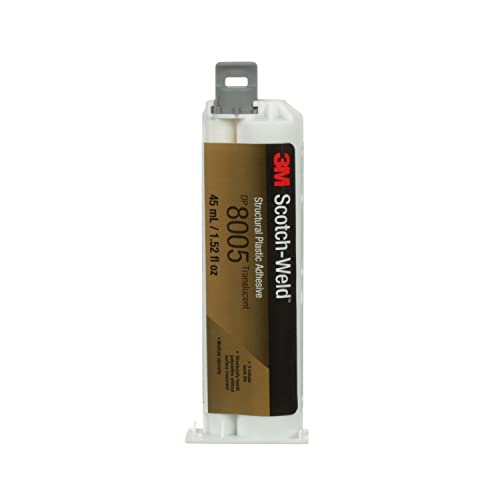
3M DP8005 Black 45 mL Duo-Pak
Taking A Closer Look At The Options
Hairline cracks in a printed shell can disappear beneath a low-viscosity adhesive. This liquid cyanoacrylate, or CA, flows into narrow spaces where thicker gel would remain on the surface, making it useful for PLA, ABS, PETG, and other listed plastics.
For miniature model work, that flow can reduce visible glue buildup around tight joints. The 40 mL bottle also suits repeated hobby repairs, though a fine needle or similar tip helps control such a thin formula.
Notable Gains
- Low viscosity reaches fine seams and hairline fractures.
- Clear curing keeps delicate model joints visually understated.
- Listed for PLA, ABS, PETG, PC, ASA, acrylic, and PVC.
- Water-resistant bonding suits damp craft environments.
- Low viscosity supports controlled pinpoint work.
Trade Offs
- The runny formula needs careful handling around intricate parts.
- CA chemistry can be aggressive toward expanded polystyrene foam.
- The 40 mL container offers less capacity than larger gel options.
At A Glance
Who It Suits Best
This fits model makers and 3D-print hobbyists repairing fine plastic seams where appearance and precise application matter.
Where Another Pick Suits Better
Sdintar Clear Super Glue for Plastic, Models, PVC, Acrylic and Miniatures offers a more approachable precision-tip format for detailed assembly work.
A cluttered desk often leaves little room for a full-size glue gun. These 0.27-inch mini sticks fit compact glue guns and give you a straightforward way to join light craft pieces without handling a larger tool.
The ten-roll pack provides plenty of material for repeated decorations, fabric accents, or small household craft tasks. You will need a compatible mini glue gun, and the heat involved makes this less convenient for delicate or heat-sensitive parts.
Why It Works Well
- Each roll provides three feet of adhesive material.
- Compact diameter suits mini glue guns and small workspaces.
- Compatible with high, low, dual, and multi-temperature guns.
- Ten sticks cover frequent crafting sessions.
- The heated application process gives you visible placement control.
Practical Considerations
- Your glue gun must accept 0.27-inch mini sticks.
- Heat can distort thin plastic or damage delicate foam pieces.
- The listed plastic compatibility does not establish performance on every plastic surface.
Quick Facts
Made For
This suits crafters with limited storage space who regularly use a mini hot-glue gun for lightweight decorative projects.
Consider Something Else When
LEENEXUS Clear Liquid CA Adhesive for PLA, ABS, PETG and 3D Prints fits fine plastic seams better than a heated glue stick.
Seams exposed to impact call for more than a thin cosmetic bond. This two-part epoxy combines a resin and hardener to form a rigid joint, making it more appropriate for assemblies that face vibration, impact, or movement.
The clear, self-leveling formula also supports plastics, metals, ceramics, and glass. You gain a versatile structural adhesive, but mixing and dispensing add steps compared with the ready-to-use CA options.
Benefits That Matter
- Two-part epoxy forms a rigid structural joint.
- Clear appearance suits transparent and decorative components.
- Self-leveling liquid helps fill close-fitting surfaces.
- High shear and peel strength suit demanding assemblies.
- Works with several plastics, metals, ceramics, and glass.
Factors To Consider
- Resin and hardener must be measured and mixed before use.
- Duo-Pak dispensing equipment is needed for accurate application.
- The epoxy is less convenient for tiny, immediate touch-ups than liquid CA.
Right Fit For
This suits experienced hobbyists creating load-bearing or impact-prone assemblies across mixed plastic and hard materials.
A Better Fit Elsewhere
Sdintar Clear Super Glue for Plastic, Models, PVC, Acrylic and Miniatures is easier for quick repairs that do not require epoxy mixing.
Plastic repair kits rarely contain one familiar material. This Sdintar adhesive covers PVC, vinyl, ABS, PBT, PS, PA, PC, acrylic, nylon, and several common model-building plastics, reducing the need to sort adhesive types by project.
Three precision tips make it practical for small parts, uneven surfaces, and vertical joints. It may feel like the more flexible everyday option, although foam compatibility still deserves a separate material check.
Strong Points
- Broad plastic coverage suits mixed-material model kits.
- Three tips support different application widths.
- Clear formula keeps many repair lines less conspicuous.
- Works on uneven, rough, and vertical surfaces.
- Water-resistant and heat-resistant properties suit varied indoor conditions.
Points To Note
- Expanded polystyrene foam is not among the listed compatible substrates.
- Fast-setting CA glue gives you limited repositioning time.
- Multiple plastic types can require different surface preparation.
Feature Snapshot
Best Suited To
This fits model builders and repair hobbyists who regularly switch among several plastic types within one project.
Not Your Match When
3M DP8010 Blue Adhesive 45 mL suits established plastic assemblies that need a structural two-part adhesive instead.
A brush applicator gives you a practical advantage on larger plastic panels or uneven repair areas. Instead of trying to balance a narrow nozzle over a broad seam, you can spread this clear gel across the bonding surface.
The 130 mL bottle also supports workshop maintenance and mixed-material fixes involving plastic, wood, ceramic, glass, leather, or rubber. The trade-off appears in fine detail work, where a gel and brush can place too much adhesive.
Reasons It Performs
- Brush applicator offers visible control over coverage.
- Large 130 mL bottle supports frequent repairs.
- Clear gel works with plastic and several other materials.
- Water-resistant formula suits moisture-exposed household jobs.
- Wide material range reduces clutter for mixed-material projects.
Small Caveats
- Expanded polystyrene compatibility is not established.
- Gel consistency is less suitable for penetrating hairline cracks.
- The brush needs careful cleaning after use to prevent drying at the tip.
Built With In Mind
This suits home repair hobbyists and workshop users who prefer controlled brush application and a generous container for frequent jobs.
Skip It When
LEENEXUS Clear Liquid CA Adhesive for PLA, ABS, PETG and 3D Prints serves narrow cracks more effectively than a brush-applied gel.
Plastics such as polyethylene and polypropylene can present a difficult bonding problem because their surfaces resist many ordinary adhesives. DP8010 is made for structural plastic work and can form bonds on low-surface-energy plastics without etching, flame treatment, corona treatment, or priming.
That makes it a serious option for durable assemblies rather than decorative touch-ups. The blue color also remains visible along a joint, while the 45 mL Duo-Pak format requires proper mixing and dispensing equipment.
Everyday Advantages
- Designed for structural bonds on low-energy plastics.
- No chemical etching, flame, corona treatment, or primer required.
- Blue adhesive makes the bonded line visible.
- Surface cleaning with isopropanol helps remove mold-release agents.
- Compact 45 mL package supports controlled workshop use.
Things To Consider
- Duo-Pak cartridges need equipment that meters, mixes, and dispenses both components.
- Mixing adds preparation compared with one-part super glue.
- Expanded polystyrene foam is not established as a compatible substrate.
Core Details
Whose Shelf It Belongs On
This belongs in a dedicated workshop where you build or repair plastic assemblies and can use accurate two-part dispensing equipment.
Another Choice May Suit
YesBes 10-Pack Long Mini Hot Glue Sticks, 3 ft x 0.27 in for Mini Glue Guns offers a simpler application method for lightweight craft work.
Dark components leave little room for a conspicuous adhesive line. The black DP8005 provides structural bonding for low-surface-energy plastics without requiring chemical etching, flame treatment, corona treatment, or priming, making it useful for black housings and internal parts.
Its Duo-Pak format separates the components until dispensing, which supports accurate mixing but demands suitable equipment. Compared with the blue DP8010, the decisive visible difference is color rather than a documented change in bonding performance.
A Strong Showing
- Black color blends into dark components and internal seams.
- Structural bonding targets difficult low-energy plastics.
- Special surface treatments are not required.
- Isopropanol cleaning removes mold-release agents before assembly.
- Separate components support controlled dispensing.
Details To Watch
- Accurate mixing and dispensing require suitable Duo-Pak equipment.
- Black adhesive will remain noticeable on light-colored surfaces.
- Styrofoam-to-plastic compatibility needs confirmation on a hidden sample.
Technical Highlights
The Right Fit
This suits makers repairing black plastic components with access to a dispenser for controlled two-part mixing and application.
Look Elsewhere When
3M DP8010 Blue Adhesive 45 mL is the better visual fit when you need to see the adhesive line during assembly or inspection.
Matching The Adhesive To The Materials
Check Foam Compatibility First
Expanded polystyrene foam can react differently to solvents found in cyanoacrylate adhesives. Make a small hidden sample with the exact foam and plastic before committing to a visible joint, and keep solvent-based glue away from the foam whenever possible.
Choose By Joint Type
Hairline cracks favor a low-viscosity liquid that can enter the gap. Broader surfaces work well with brush-applied gel, while heat-sensitive foam and plastic favor a room-temperature adhesive.
Understand Adhesive Chemistry
Cyanoacrylate glue sets quickly and suits small repairs. Epoxy combines separate resin and hardener components to form a rigid structural joint, but accurate mixing and dispensing make it more involved.
Consider The Surface
Low-surface-energy plastics can resist ordinary adhesives, so structural plastic adhesives may provide a better fit. Remove oils and mold-release agents, and follow the surface preparation specified for the chosen product.
Making Adhesive Purchases Work Harder
Mistakes Worth Dodging
Choosing by the word “super glue” can oversimplify the decision. Viscosity, application method, plastic compatibility, and foam sensitivity all affect the joint, so verify the substrate list and compare the actual repair conditions.
What Separates Premium From Basic
A larger container, finer tips, controlled dispensing, or stronger structural chemistry can justify an upgrade. The added expense matters most for repeated repairs, narrow joints, difficult plastics, or assemblies where convenient application reduces wasted material.
Frequently Asked Questions
Will Super Glue Work On Styrofoam?
Sometimes, but cyanoacrylate solvents can soften expanded polystyrene. Use a hidden sample and keep the adhesive away from the foam when possible.
Which Glue Is Best For Plastic Models?
LEENEXUS Clear Liquid CA Adhesive for PLA, ABS, PETG and 3D Prints suits fine seams and hairline cracks. Sdintar Clear Super Glue for Plastic, Models, PVC, Acrylic and Miniatures offers multiple precision tips for detailed assemblies.
Is Epoxy Better Than Hot Glue For Plastic Repairs?
Epoxy provides a rigid structural joint and accommodates demanding plastics. Hot glue is easier to apply and better suited to lightweight craft work, but heat can distort thin parts.
How Should Plastic And Foam Be Prepared?
Clean both surfaces with a suitable material-safe cleaner and remove oils or mold-release agents. Avoid roughening the foam because its cellular structure can tear.
Should I Choose A Brush Or Fine-Tip Applicator?
Use a fine tip for small parts, seams, and controlled placement. A brush works better for spreading adhesive across broad, uneven surfaces.
Final Thoughts
The safest match depends on the exact plastic and foam, not just the adhesive’s strength. Low-viscosity CA helps with fine seams, brush gel suits broader repairs, and two-part structural adhesives serve demanding plastic assemblies after careful surface preparation.