
A chipped tile or loose ceramic fitting rarely announces itself gradually. One crack can spread beneath the edge, while a failed joint may leave a decorative piece rattling inside a cabinet or disconnected from its base. You need an adhesive that bonds well to ceramic without turning a small repair into an oversized project.
The options below range from structural epoxies to precise gel adhesives. Each one serves a different job, from larger assemblies to tiny joints where neat application matters more than bulk coverage.
A Side-By-Side Look

3M Scotch-Weld DP420 Epoxy Off-White 50 mL

3M Scotch-Weld DP460NS Epoxy Off-White 50 mL

3M Scotch-Weld DP420NS Black Epoxy 400 mL
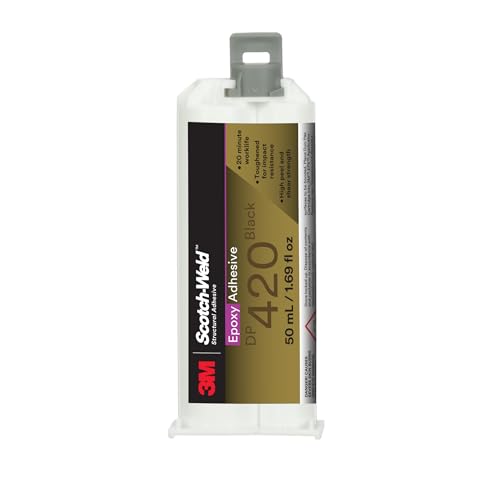
3M Scotch-Weld DP420 Black Epoxy 50 mL

3M Scotch-Weld DP100 Plus Clear Epoxy 48.5 mL

3M Scotch-Weld DP190 Gray Epoxy 48.5 mL

Gorilla Micro Precise Super Glue Gel Clear 2-Pack
Why These Options Stand Out
A ceramic trim piece that keeps breaking at the same joint usually needs more than a quick bead of household glue. DP420 is a two-part epoxy, meaning resin and hardener mix before curing to form a rigid structural bond. That makes it a sensible candidate for securing ceramic to metal, wood, glass, many composites, and some plastics.
Among these options, its broad material range offers a practical balance for mixed-material repairs. The off-white color suits light-colored assemblies, while the 50 mL Duo-Pak format gives you a smaller quantity than the 400 mL DP420NS package.
A Strong Showing
- Bonds ceramic with several common workshop materials.
- High shear strength supports loads applied parallel to the joint.
- Suitable for joining, potting, panels, and structural assemblies.
- The 50 mL package suits moderate repairs without excessive bulk.
Points To Keep In Mind
- The Duo-Pak format calls for accurate two-component dispensing equipment.
- Off-white may stand out more than black on a dark ceramic edge.
Feature Snapshot
Made For
DP420 suits DIYers and workshop hobbyists joining ceramic to several other materials.
Consider Something Else When
Choose 3M Scotch-Weld DP100 Plus Clear Epoxy when a nearly invisible joint matters more than broad structural applications.
DP460NS brings a longer adjustment window to ceramic work, which matters when several pieces need careful alignment before the epoxy sets. Unlike the faster-curing DP420NS, this formula provides a 60-minute work life and reaches handling strength in roughly four hours.
Its non-sag consistency resists running during application, a useful trait for vertical or overhanging joints. For demanding assemblies involving ceramics, metals, wood, glass, and some plastics, the combination of impact tolerance and controlled mixing gives it a distinctly professional angle.
Useful Touches
- The 60-minute work life allows extended positioning and adjustment.
- Non-sag behavior helps keep adhesive within vertical joints.
- Impact and stress resistance suit demanding assemblies.
- A measured 2:1 mix ratio supports repeatable component proportions.
Practical Considerations
- Accurate dispensing equipment is important for the Duo-Pak format.
- Compatibility with some plastics is less broad than DP420.
Technical Highlights
The Right Fit
DP460NS suits experienced DIYers assembling ceramic components that require careful alignment and a long working window.
A Better Fit Elsewhere
3M Scotch-Weld DP420NS Black Epoxy offers a shorter work life for projects where quick positioning is more useful.
Larger tile installations and workshop assemblies can quickly use up a small cartridge. DP420NS answers that scale with a 400 mL Duo-Pak, eight times the 50 mL quantity offered by the off-white DP420 and DP460NS packages.
The black formula remains a toughened, non-sag epoxy designed for impact and fatigue resistance. Its 20-minute work life is shorter than DP460NS’s 60 minutes, which can be helpful when you want limited time to reposition pieces.
The Helpful Details
- The 400 mL package suits larger assemblies and repeated repairs.
- High peel strength helps the joint resist pulling forces.
- High shear strength supports loads applied along the bond.
- Temperature resistance is specified across high and low conditions.
- Twenty-minute work life provides a defined positioning window.
Small Caveats
- The larger package requires accurate dispensing equipment and greater project planning.
- Its shorter work life offers less adjustment time than DP460NS.
Built With In Mind
This epoxy fits workshop hobbyists and tradespeople handling larger ceramic assemblies under impact or stress.
Look Elsewhere When
Choose 3M Scotch-Weld DP420 Off-White 50 mL for a smaller repair with mixed ceramic and plastic components.
DP420 in black shares the broad material compatibility of the off-white version but disappears more readily against dark ceramic or black trim. That makes it a practical workshop choice for reinforcing ceramic parts alongside metals, wood, glass, composites, and plastics.
Compared with the 400 mL DP420NS, this package is easier to match to a moderate repair. It also serves a broader set of everyday bonding tasks, including joining, potting, panel work, and structural assembly where ceramic is only one part of the connection.
Where It Helps
- Supports ceramic bonding across a varied group of substrates.
- High shear strength suits loaded structural applications.
- The black color blends more naturally with dark components.
Things To Weigh
- The Duo-Pak system requires accurate resin and hardener metering.
- A 50 mL package may be limited for repeated or larger assemblies.
- The black adhesive will not suit every light-colored ceramic joint.
Core Details
Whose Shelf It Belongs On
DP420 suits workshop hobbyists who want a compact, general-purpose epoxy for ceramic and mixed-material repairs.
Swap It Out When
Move to 3M Scotch-Weld DP420NS Black Epoxy when the scale of the job calls for a 400 mL package.
A visible repair joint can undo an otherwise careful ceramic restoration. DP100 Plus stays clear after curing, making it more discreet than the off-white and black structural epoxies in this roundup. Its low-viscosity formula also levels into fine gaps rather than remaining as a thick bead.
This adhesive suits display pieces, decorative ceramics, and assemblies involving glass or plastics where appearance carries weight. It is flexible and fast-setting, with high shear and peel strength for applications that may encounter vibration or impact.
Real-World Strengths
- The cured adhesive remains clear for discreet repairs.
- Low viscosity helps the epoxy enter fine gaps and level.
- Fast setting suits quick household fixes.
- Flexible bonding accommodates ceramic with glass and plastics.
Less-Strong Areas
- The low-viscosity formula is less suited to filling a wide, deep gap.
- Fast curing reduces the time available for repositioning ceramic pieces.
Made For
DP100 Plus suits DIYers restoring visible ceramic or glass pieces where a clear joint matters.
Reach For A Different Pick When
Choose 3M Scotch-Weld DP420 Off-White 50 mL for heavier mixed-material bonding with broader plastic compatibility.
Ceramic repairs rarely involve ceramic alone. DP190 accommodates metals, wood, fiberboard, glass, rubber, and many plastics, making it useful for assemblies that combine a tile fragment with a frame, trim piece, or mounting surface.
Its high shear and peel strength gives it a useful balance for both aligned joints and edges exposed to pulling forces. Compared with the clear DP100 Plus, DP190 offers a gray color that blends readily with neutral hardware and workshop parts.
Positive Takeaways
- Supports bonding across ceramic and many other materials.
- High peel strength suits joints that may experience pulling.
- High shear strength supports aligned structural loads.
- Gray color suits neutral or dark assemblies.
Details To Watch
- The Duo-Pak format requires accurate component dispensing.
- Gray remains noticeable on light ceramic surfaces.
Product Snapshot
Best Suited To
DP190 fits DIYers joining ceramic to metal, wood, glass, rubber, or plastic components.
Where Another Pick Shines
3M Scotch-Weld DP100 Plus Clear Epoxy is the better choice for a visible joint that needs to remain unobtrusive.
A tiny chip does not always justify mixing epoxy or operating dispensing equipment. Gorilla Micro Precise Super Glue Gel uses a thicker cyanoacrylate formula, a fast-setting adhesive applied from a precise applicator, for small and carefully controlled joints.
That makes it a practical choice for securing one small ceramic fragment, filling a narrow decorative crack, or joining tiny parts on a workbench. The clear formula keeps the repair visually restrained, and the two-pack format keeps a second unit available for another small task.
Everyday Wins
- The gel formula resists running in narrow joints.
- The applicator places adhesive directly at the repair point.
- Clear glue suits small visible ceramic touchpoints.
Potential Drawbacks
- The precise format is better suited to point applications than broad structural joints.
- Cyanoacrylate differs from the two-part epoxies in mixing and handling.
- Two separate units add convenience but occupy more storage space.
Quick Facts
Who Will Love This
This gel suits beginners handling tiny household ceramic repairs where controlled placement is the priority.
Skip It When
Choose 3M Scotch-Weld DP460NS Epoxy for a demanding assembly that needs longer alignment and structural bonding performance.
What Matters in Ceramic Tile Adhesives
Surface Compatibility and Load
A ceramic repair can involve more than two pieces of tile. Epoxies in this roundup bond with combinations of ceramic, metal, wood, glass, rubber, composites, and plastics, but coverage differs by product. Check every material entering the joint, especially the plastic, because DP460NS is specified for some plastics rather than the broader range supported by DP420.
Shear strength describes resistance to forces running along the bond, while peel strength describes the ability to resist an edge being pulled away. The combination matters most for ceramic trim, fixtures, panels, and assemblies exposed to handling or vibration.
Working Time and Joint Appearance
Work life is the period available for positioning components after the adhesive components are combined. DP460NS provides 60 minutes, DP420NS provides 20 minutes, and DP100 Plus is described as fast-setting, so your repair pace should guide the choice.
Color and consistency also affect the finished repair. Clear DP100 Plus suits visible joints, gray DP190 works with neutral parts, and the non-sag DP460NS and DP420NS formulas suit applications where adhesive movement would be inconvenient.
Dispensing and Project Scale
Duo-Pak products use separate components that require accurate metering, making dispensing equipment an important ownership consideration. A 50 mL package is more practical for a focused repair than a 400 mL package, while the larger DP420NS package suits repeated or extensive assembly work.
These products are structural bonding adhesives, not conventional tile-setting mortars. For a floor or wall installation, the tile and installation instructions should point you toward the appropriate setting product rather than a general-purpose epoxy.
Making the Right Call Between Adhesives
Mistakes Worth Dodging
Choosing by adhesive strength alone can lead to an awkward repair. A thin, high-strength formula may still be wrong for a wide gap, while a large cartridge may be unnecessary for a single chip. Match the adhesive to the joint size, materials, visible finish, and available dispensing equipment.
What Separates Premium From Basic
A higher cost may reflect tougher chemistry, a longer working window, precision dispensing, or a larger package. Paying more becomes worthwhile when the joint carries substantial loads, needs extended alignment, or requires controlled placement in a difficult assembly.
Frequently Asked Questions
Are These Epoxies Suitable for Setting Tile?
These adhesives suit bonding ceramic tile and related components, but they are not interchangeable with conventional tile-setting mortar. Use the product recommended by the tile and installation instructions for floor or wall installation.
Which Glue Is Best for a Clear Repair?
3M Scotch-Weld DP100 Plus Clear Epoxy is designed to remain clear after curing and has a low-viscosity formula for fine joints. Gorilla Micro Precise Super Glue Gel is another clear option for smaller point applications.
How Does Super Glue Gel Differ From Epoxy?
Gorilla Micro Precise Super Glue Gel is a cyanoacrylate that applies from a precision dispenser without separate mixing. The 3M options are two-part epoxies that combine resin and hardener before curing.
Can These Adhesives Bond Plastic to Ceramic?
Several options can bond ceramic with plastics, including DP420, DP190, and DP100 Plus. DP460NS supports some plastics rather than every plastic type, so check the material list before applying it.
Which Package Size Fits a Small Repair?
The 48.5 mL and 50 mL packages suit focused repairs and smaller assemblies. The 400 mL DP420NS package is more relevant to larger projects or repeated bonding work.
Final Verdict
Your best decision starts with the joint rather than the label. Gorilla handles tiny, precise household repairs, DP100 Plus keeps visible joints clear, and the remaining epoxies serve more demanding structural assemblies. Match the adhesive to your materials, project size, and tolerance for color before making the final choice.