
A treadmill in an apartment can turn every workout step into a vibration that reaches the room below. Exercise flooring softens those impacts, protects the finished floor, and reduces the transfer of equipment noise, though it doesn’t replace acoustic treatment for airborne sound. The right choice depends on your space, equipment, and preferred surface feel.
Foam, rubber-like TPE, and rubber-topped composite floors handle impact differently. Thick mats favor cushioning and quiet movement, while firmer tiles support heavy lifting and gym equipment. The seven options below cover everything from compact walking-pad setups to expansive home gym areas.
An Overview Of The Picks

SUPERJARE 0.79-Inch Gym Mats

Baselayer Performance 1/2-Inch Interlocking Tiles, 15 Sq. Ft. Black

Baselayer CORE 1/2-Inch Interlocking Tiles, 15 Sq. Ft. Black
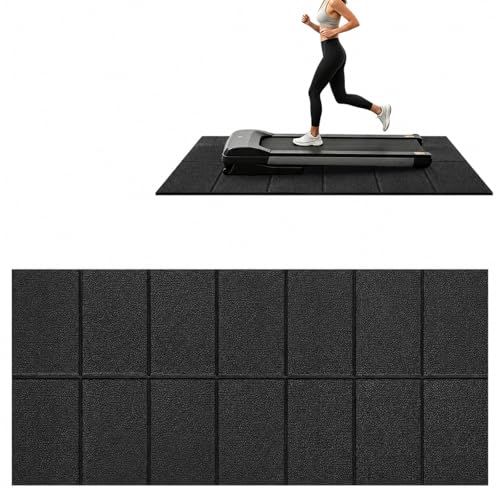
WERCHO 6mm Foldable PVC Equipment Mat, 55 x 25 Inches for Treadmills and More

Baselayer Balance 1/2-Inch Interlocking Tiles, 15 Sq. Ft. Black

Dalmbox 0.56-Inch 12 Tiles

CAP 3/4-Inch EVA Interlocking Exercise Mats
The Details Behind The Selections
A layered floor can handle both impact cushioning and a stable surface for weights. The SUPERJARE set uses a high-density EVA foam base beneath an EPDM rubber top, creating a 0.79-inch build designed for heavy exercise equipment and vigorous movement.
For impact noise, that depth may help lessen the vibration transmitted by dropped weights, footfalls, and machinery. You get 48 pieces covering 192 square feet, so a garage gym can spread the material across a generous workout zone rather than isolating one machine.
A Few Strong Suits
- The 0.79-inch thickness adds meaningful cushioning under equipment.
- A rubber top gives exercise gear a more secure resting surface.
- Coverage across 192 square feet suits expansive home gyms.
- The layered construction balances shock absorption with support.
Trade Offs
- Forty-eight individual pieces require more handling and storage than a single foldable mat.
- You may have more material than a small apartment or dedicated cardio corner needs.
Quick Facts
Made For
You benefit most from this set in a large home gym containing weights, cardio equipment, and high-impact exercise.
Where Another Pick Suits Better
The WERCHO 6mm Foldable PVC Equipment Mat suits a traveler or apartment resident who prioritizes compact storage over deep cushioning.
Weight rooms need a firmer floor than a stretching area, and the Performance Series is built around that distinction. Its half-inch TPE construction, a thermoplastic elastomer with a rubber-like feel, offers a resilient surface for weights, high-impact training, and heavy equipment.
Unlike the much larger SUPERJARE set, this Baselayer pack gives you a manageable 15-square-foot starting area made from six 19-inch tiles. The firmer density should transmit less movement than softer foam, making it a sensible choice for rooms where equipment stability matters.
Practical Advantages
- Firmer density suits barbells, dumbbells, and weight-bearing exercises.
- TPE provides a rubber-like surface without the stronger smell associated with some rubber mats.
- Interlocking tiles let you expand beyond the initial pack.
- Made in the USA for home and professional-style training spaces.
Points To Note
- Edges and corner pieces are separate, so a finished room outline may require additional pieces.
- The firmer feel offers less softness for barefoot yoga and mobility work.
Technical Highlights
Best Suited To
You benefit most from a dedicated lifting zone where heavy equipment needs a firm, stable base.
Consider Something Else When
The Baselayer CORE 1/2-Inch Interlocking Tiles suit you better when slow stretching and barefoot comfort take priority over weight support.
A softer tile makes more sense when your routine spends more time on the floor than under a barbell. The Baselayer CORE Series uses half-inch TPE construction for yoga, stretching, Pilates, and flexibility work, with a cushioned response that differs from the firmer Performance tiles.
That softer surface may reduce the sharpness of kneeling and quick floor transitions, which helps in a busy apartment or shared workout room. Six interlocking 19-inch tiles create 15 square feet, enough for a personal movement zone or a supplemental area within a larger gym.
Benefits That Matter
- The softer density is better suited to bare feet and repeated floor movements.
- TPE offers resilience and a no-odor alternative to conventional foam.
- A textured surface adds grip for stretches and balance poses.
- Interlocking edges support later expansion of the workout area.
Softer Spots
- Softness can feel less stable beneath free weights than the Performance Series.
- Edges and corners require separate planning for a fully bordered room.
Core Details
Who Will Love This
You benefit most from this set if yoga, Pilates, stretching, and floor-based mobility training dominate your routine.
A Better Fit Elsewhere
The Baselayer Performance 1/2-Inch Interlocking Tiles offer a better fit for a weight room where equipment stability takes priority over softer movement work.
A single machine in a small room calls for a mat you can put away after each session. The WERCHO equipment mat uses 6mm high-density PVC and folds to roughly 14.4 by 7.8 by 4.2 inches, making it far easier to carry than a rigid grid of tiles.
The listed size is 55 by 25 inches with a thickness of 0.24 inches, and several size formats are offered for walking pads, spin bikes, ellipticals, and rowing machines. Compared with the thicker foam options, it provides less impact cushioning, but its main advantage is focused floor protection and compact storage.
Notable Gains
- The folded shape fits into a backpack, closet, or drawer between workouts.
- PVC creates a firm barrier between moving equipment and carpet or hardwood.
- Multiple dimensions accommodate different walking pads and cardio machines.
- The low-profile shape suits compact apartments and dorm rooms.
Practical Considerations
- The 6mm profile offers less cushioning than the half-inch and three-quarter-inch foam options.
- You should compare the available size with your equipment’s base before ordering.
The Right Fit
You benefit most from this mat in a small home or temporary workout space where folding and carrying matter more than deep shock absorption.
Look Elsewhere When
The CAP 3/4-Inch EVA Interlocking Exercise Mats suit a larger area where cushioning and broad coverage matter more than compact storage.
The Balance Series sits between the soft CORE tiles and the firmer Performance tiles. Its medium-density half-inch TPE construction is intended for cardio equipment and gymnastics, giving you a surface that is less soft than a mobility mat without the heavy-training focus of the Performance line.
That middle ground works well in a multipurpose room with a treadmill, stationary bike, elliptical, or rowing machine. The 15-square-foot pack can define one equipment station, and the interlocking layout gives you room to expand without changing floor types.
Well-Handled Touches
- Medium density suits a varied mix of cardio and gymnastics activity.
- The TPE surface provides resilience without a strong rubber odor.
- Half-inch tiles add useful separation from the finished floor.
- Interlocking pieces make it practical to build outward from one corner.
Minor Gripes
- The density is less specialized than the Performance Series for heavy weights.
- A polished room edge calls for separately sold edge and corner pieces.
Feature Snapshot
Built With In Mind
You benefit most from this set in a multipurpose workout room that combines cardio machines with lighter movement training.
Not Your Match When
The Baselayer Performance 1/2-Inch Interlocking Tiles suit a lifting-focused home gym where dense weights require a firmer foundation.
Layered construction can deliver two useful surface qualities in one tile. Dalmbox combines a cushioned foam core with a textured rubber top, and the finished tiles measure 0.56 inches thick. The result suits everyday workouts where both impact cushioning and equipment protection matter.
Unlike the uniform TPE construction used by the Baselayer tiles, this build places a firmer skin over a softer interior. The upper surface is designed to resist sliding, while the foam below can soften landing and movement impacts. You get a 12-tile set for assembling a practical home gym area.
Points In Its Favor
- The rubber top provides a stable, textured base for exercise equipment.
- The foam core adds cushioning for everyday movement and landing.
- Interlocking tiles let you build a layout around your available space.
- The mixed construction balances grip and comfort.
Possible Compromises
- This is foam-based construction rather than a solid or uniform rubber tile.
- You may prefer the more consistent surface feel of the Baselayer TPE options.
Whose Shelf It Belongs On
You benefit most from this set in a home gym that combines daily cardio, strength accessories, and general floor exercises.
Another Choice May Suit
The Baselayer CORE 1/2-Inch Interlocking Tiles suit a dedicated yoga room where barefoot comfort and a uniform TPE surface matter more.
Three-quarter-inch EVA foam gives you a substantial cushioning layer without reaching the footprint of the 192-square-foot SUPERJARE set. The CAP package includes 12 interlocking 24-by-24-inch tiles, creating 48 square feet that you can arrange around equipment or shape around room edges.
EVA, or ethylene-vinyl acetate, is a resilient foam used here to absorb shock beneath footsteps, exercise equipment, and dropped weights. That cushioning may reduce impact transmission to the floor below, while the puzzle connections make it easier to expand or reorganize the layout as your routine changes.
The Helpful Details
- The 48-square-foot area provides generous coverage for a home gym.
- Three-quarter-inch thickness offers substantial shock absorption.
- Interlocking puzzle edges let you customize the arrangement.
- Large 24-inch tiles cover the floor with relatively few pieces.
Things To Consider
- The 48-square-foot set needs more room than the compact 15-square-foot tile packs.
- Puzzle-shaped edges can require careful alignment along walls and around equipment.
The Main Details
Who Should Grab It
You benefit most from this set in a dedicated workout room that needs broad, shock-absorbing coverage.
Where A Sibling Pick Shines
The SUPERJARE 0.79-Inch Gym Mats suit a larger garage gym where you need 192 square feet and a rubber top for heavy equipment.
Match The Floor To The Noise
Impact Noise Versus Airborne Sound
Exercise flooring mainly reduces impact noise created by footsteps, dropped weights, and vibrating equipment. It won’t control voices, television sound, or street noise, so apartments with shared walls may still need separate acoustic treatment for airborne sound.
Material Changes The Response
EVA foam provides the deepest cushioning, while TPE offers a firmer, more consistent surface for equipment. Rubber-topped composites add grip and a different feel, and thin PVC prioritizes portability and floor protection over shock absorption. Choose according to the mix of movement and machinery in your room.
Size And Layout Matter
Measure the available floor before selecting a coverage amount. Interlocking tiles work well around fixed equipment, while a foldable mat makes more sense for one machine in a compact room. Also check whether edge and corner pieces are needed before planning a finished layout.
Two Details That Change The Decision
Where Shoppers Go Wrong
Choosing by thickness alone can leave you with a surface that feels too soft for weights or too firm for yoga. Measure the equipment footprint and consider storage before buying, especially in an apartment where a broad tile set can be difficult to put away.
What Separates Premium From Basic
Higher-tier tiles often refine density, surface consistency, and connection design. You pay more for a material that better matches your routine, so the upgrade matters when heavy equipment, frequent use, or precise comfort influences your training experience.
Frequently Asked Questions
Do these mats reduce every kind of noise?
No. They mainly reduce impact noise from footsteps, dropped weights, and equipment vibration, while airborne sound needs separate room treatment.
Which Baselayer tiles suit heavy weights?
The Baselayer Performance 1/2-Inch Interlocking Tiles offer the firmest construction of the three, making them the most relevant choice for weight-focused training.
Which option works best in a small apartment?
The WERCHO 6mm Foldable PVC Equipment Mat suits a compact space because it folds for storage, although its cushioning is shallower than the foam and TPE tiles.
Should you choose EVA foam or TPE?
Choose EVA foam for deeper cushioning and a softer landing. Choose TPE for a firmer, more uniform surface suited to strength training and mixed gym equipment.
Do interlocking tile sets need edge pieces?
Several Baselayer sets require separately sold edges and corners for a finished room boundary. Interior layouts can be assembled without them, though exposed edges remain part of the floor.
Wrap Up
The right exercise floor reduces impact rather than replacing room acoustics. Heavy lifting calls for firm TPE, mobility work favors softer foam, and compact rooms benefit from a foldable mat, so match the surface to your equipment and the space you actually have.