
A bedroom fan has to move enough air without taking over the nightstand, rattling through a video call, or making sleep harder. Most of the options here include a remote, oscillation, and multiple speed settings, so the practical differences come down to height, noise rating, airflow, controls, and floor space. I focus on the details that matter after dark, including bedside placement and room size.
A Closer Look At The Lineup

Lasko Ascend OST100 Quiet Tower Fan, 36-Inch Black

Lasko T42951 Oscillating Tower Fan with Remote, Silver
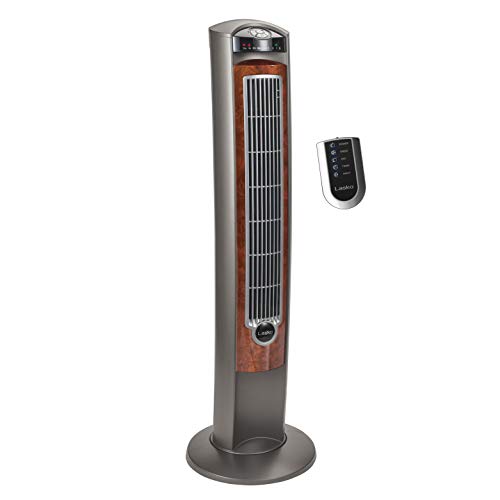
Lasko T42954 Quiet Oscillating Tower Fan, 42-Inch Gray

Lasko 2510 Oscillating Tower Fan with Remote, 36-Inch White

Lasko Elevation EST100 Adjustable Tower Fan, Black

Lasko Pinnacle DST115 Quiet DC Tower Fan, 40-Inch Gray

Lasko Pinnacle DST100 Quiet DC Tower Fan, 40-Inch Black

Lasko Apex RST200 Oscillating Tower Fan, 42-Inch Black
Taking A Closer Look At The Options
The Ascend OST100 makes more sense than a bulky bedside fan when floor space is tight. Its 36-inch body stands on an 11-by-9.7-inch base, a manageable footprint for a bedroom corner or beside a desk. The remote keeps four speed and wind modes within reach, which is useful after settling into bed.
Oscillation means the fan sweeps back and forth, spreading air across a wider section of the room rather than directing one fixed stream. At 29 dBA, a decibel-A noise rating, it is designed for relatively low background sound. I would favor it for compact rooms where useful controls matter more than a tall frame or finely divided speed settings.
Advantages To Know
- The remote supports convenient bedside control.
- Four speeds and wind modes offer useful variation.
- A 90-degree sweep covers more of the sleeping area.
- The narrow base preserves floor space.
- The mesh filter is a practical removable maintenance point.
Points To Note
- Very sound-sensitive sleepers may still notice a 29 dBA fan in a silent room.
- The remote needs a reasonably clear path to the fan controls.
Feature Snapshot
Made For
I see this model fitting compact bedrooms, dorm rooms, and home offices where a remote and narrow base carry more weight than extensive height adjustment.
A Better Fit Elsewhere
The Lasko Elevation EST100 suits shared rooms better because its telescoping body and eight speed settings offer greater placement flexibility.
The T42951 stands out for the moment the bedroom lights go out. Its nighttime setting dims the LED controls and reduces the fan speed, a thoughtful detail for someone who does not want a bright panel glowing beside the bed. That automatic behavior makes this model more bedtime-focused than the Ascend OST100.
The 42-inch silver tower adds a little more height, while 60-degree oscillation carries the breeze through a small or medium room. I would choose it for a conventional bedroom that needs one remote-controlled fan with restrained nighttime controls. The feature feels more purposeful than simply adding another illuminated display.
Benefits That Matter
- Automatic nighttime dimming reduces visual distraction.
- The remote makes bedtime speed changes simple.
- Nighttime mode lowers the operating speed automatically.
- Sixty-degree oscillation suits small and medium rooms.
- The silver finish blends easily with neutral bedroom furniture.
Worth Noting
- The 42-inch frame may feel tall beneath a low window or sloping ceiling.
- Automatic dimming is helpful at night but less significant in a home office.
Right Fit For
I recommend the T42951 to sleepers who value subdued controls and automatic nighttime behavior in a small or medium bedroom.
Another Choice May Suit
The Lasko 2510 is a stronger match for a compact room because its 36-inch frame takes less vertical and floor space.
A bladeless tower design gives the T42954 a clean profile around a desk, treadmill, or narrow bedroom wall. Its three speeds cover the basic adjustment needs without turning the remote into a complicated control panel. I appreciate that restraint in a room used for both resting and exercise.
The 60-degree oscillation keeps moving air across more than one fixed direction, which helps during a home workout or a warm night. Compared with the T42951, this model shares a similar height and oscillating format, but the gray and woodgrain finish gives it a somewhat more decorative presence. For straightforward airflow control, it is an easy recommendation.
Good Reasons To Consider
- The bladeless tower profile suits modern rooms.
- Three speeds provide uncomplicated daily control.
- Remote operation supports sofa and bed placement.
- Oscillation suits exercise sessions and shared rooms.
Minor Gripes
- Three speeds offer less adjustment than the Elevation EST100.
- The 42-inch height may crowd smaller bedside areas.
- The wider oscillating pattern may be unnecessary in a very small room.
Quick Facts
Who Will Love This
The T42954 fits people who want one uncomplicated fan for bedroom sleep, desk work, and regular home exercise.
Where A Sibling Pick Shines
The Lasko Elevation EST100 offers more control for households that value eight speeds, four modes, and adjustable height.
The 2510 keeps the footprint manageable at 36 inches, making it easier to place beside a bed or dresser than a 42-inch tower. White suits light interiors, and the remote removes the need to cross the room for adjustments. I would favor this straightforward model for a smaller bedroom with restrained decor.
Three quiet speed levels and 60-degree oscillation provide the essentials without an elaborate interface. Unlike the taller T42954, the shorter frame may feel more proportionate in a compact room. The trade-off is less physical adjustment, so I would pay attention to the placement and room dimensions before settling on it.
The Upside
- The 36-inch frame saves vertical space.
- Three quiet speeds support gentle bedtime use.
- Remote control improves bedside convenience.
- The white finish suits pale, minimalist rooms.
Things To Consider
- Only three speeds are available for fine-grained adjustment.
- The white finish may stand out more in a dark or highly colored room.
- The shorter body may require closer placement to be effective.
Built With In Mind
This model makes the most sense for compact bedrooms, children’s rooms, and offices where a restrained frame and simple remote matter most.
Consider Something Else When
The Lasko T42951 suits nighttime use better because its controls dim automatically and the fan speed lowers in nighttime mode.
The Elevation EST100 solves a practical problem the fixed-height towers cannot: placement changes over time. Its body adjusts from 42 to 54 inches, letting the fan sit lower beside furniture or extend higher for broader distribution. That versatility also works during renovation projects and warm home offices.
A direct-current, or DC, motor supports controlled airflow, while eight speeds and four modes create more tuning options than the simpler three-speed models. Airflow reaches up to 40 feet per second within a 90-degree oscillation pattern, and a child lock adds useful control in family spaces. I see this as the feature-rich option for varied household needs.
Useful Strengths
- Telescoping height fits multiple room layouts.
- Eight speeds provide precise comfort control.
- Four fan modes suit changing activity levels.
- The child lock helps with family spaces.
- Wide oscillation covers a large floor area.
Practical Considerations
- The full extension may be excessive in a low-ceiling room.
- More settings can make the remote less intuitive at first.
- Its size and feature set may exceed the needs of a very small room.
Technical Highlights
The Right Fit
The EST100 fits shared rooms, family spaces, offices, and renovation projects where adjustable height and detailed control are valuable.
Swap It Out When
The Lasko Pinnacle DST115 is the quieter choice for a bedroom where low operating noise takes priority over height adjustment.
The Pinnacle DST115 is built around a 24 dBA operating level, making it the quietest stated figure in this group. That low sound target suits a bedroom where conversation, work calls, or sleep makes fan noise more noticeable. Its 40-inch frame sits between the 36-inch compact models and the taller 42-inch towers.
WhisperForce DC technology circulates 30% more air while using 40% less energy than traditional AC fans, according to the stated manufacturer comparison. I would focus on that efficient motor design and low sound target rather than treating the percentage as a room-cooling guarantee. For a bedside office or sleeping space, the combination looks sensible.
A Few Strong Suits
- The 24 dBA figure supports low-noise use.
- DC motor technology emphasizes efficient operation.
- The remote keeps adjustments convenient at bedtime.
- Gray finish suits many neutral room palettes.
Small Caveats
- Room acoustics can make any operating sound more noticeable.
- The 40-inch body still needs adequate bedside clearance.
Core Details
Whose Shelf It Belongs On
The DST115 fits light sleepers, video-call users, and home workers who want a remote-controlled fan with a low stated operating level.
Reach For A Different Pick When
The Lasko Elevation EST100 suits larger shared spaces better because its adjustable height, eight speeds, and 90-degree oscillation provide greater placement control.
The DST100 carries the same quiet DC-motor concept as the gray DST115, but the black finish gives it a more decisive presence beside dark furniture. At 40 inches tall, it fits many bedrooms without reaching the full height of the 42-inch models. I would consider it when bedroom comfort and visual coordination both matter.
The 24 dBA operating level remains the central attraction, especially for a room where background noise would compete with sleep or concentrated work. A remote keeps the fan accessible from bed, while the DC motor is designed to move air efficiently. The practical difference from the DST115 is finish rather than core fan performance.
Everyday Perks
- Low 24 dBA operation supports quieter rooms.
- The black finish coordinates with dark furniture.
- Remote control simplifies bedside adjustments.
- The 40-inch frame fits many bedroom layouts.
Trade Offs
- The 40-inch height still requires sufficient clearance.
- Gray may coordinate more easily with a lighter, neutral room.
Who Should Grab It
The DST100 fits modern bedrooms, dorm rooms, and offices where a black tower and a low stated noise level suit the decor and routine.
Look Elsewhere When
The Lasko Pinnacle DST115 suits a bedroom with lighter furnishings better because its gray finish blends more readily with neutral interiors.
The Apex RST200 brings a wider 90-degree sweep than the 60-degree oscillation used by the T42951, T42954, and 2510. That makes it a sensible option for a family room, bedroom shared by two people, or home workout space where a stationary stream could leave parts of the room untouched. The remote keeps that wide coverage easy to manage.
Airflow velocity reaches up to 29 feet per second, giving the 42-inch fan a defined cooling stream for the skin. Quiet operation makes it more suitable for evening use than a louder pedestal fan. I would choose the Apex for room-wide movement, while recognizing that the Elevation EST100 offers faster stated airflow and height adjustment.
Where It Helps
- Ninety-degree oscillation covers a broad room area.
- The remote simplifies distant control.
- Airflow reaches up to 29 feet per second.
- Quiet operation supports rest and focus.
- The 42-inch frame suits larger floor spaces.
Potential Compromises
- The stated airflow velocity is lower than the Elevation EST100.
- The fixed height may be less adaptable in changing layouts.
Feature Breakdown
Best Suited To
The RST200 fits families, fitness enthusiasts, and light sleepers who want wide oscillating coverage in a bedroom or shared room.
Skip It When
The Lasko Pinnacle DST100 suits a sleep-focused room better because its stated 24 dBA operating level emphasizes lower background noise.
What Matters Most In A Bedroom Tower Fan
Noise Comes Before Feature Count
A low noise figure deserves attention because bedroom use amplifies small distractions. The Pinnacle DST115 and DST100 list 24 dBA, while the Ascend OST100 states 29 dBA. A decibel-A rating describes sound level on a weighted scale, but room acoustics, bedding, and personal hearing still affect how noticeable a fan feels.
Height Changes The Placement Decision
The Elevation EST100 adjusts between 42 and 54 inches, which solves clearance and placement problems that fixed frames cannot. The 2510 and Ascend OST100 stand at 36 inches, making them easier to place beside lower furniture. I would measure the intended corner and the path from bed to controls before settling on a taller model.
Oscillation And Speed Serve Different Purposes
Oscillation moves the airflow across a broader area, while speed controls determine how strongly that air feels. Models with three speeds offer simpler operation, whereas the EST100 provides eight speeds and four modes. A wide sweep works well for shared spaces, and a narrower pattern can concentrate cooling near one bed or desk.
Remote Control Changes Bedside Routine
A remote removes the need to leave bed or a desk after settling in. It also introduces a small practical consideration: the controls need a reasonably unobstructed line of sight. Automatic nighttime dimming, found on the T42951, goes further by reducing both the display brightness and fan speed after dark.
Avoiding Bedroom Fan Missteps
Pitfalls Shoppers Hit
Oversizing is the most common room-planning mistake. A tall tower may provide broad airflow while also taking more visual and physical space than a compact model requires. I would measure the bedside corner and check the fan at its intended operating height before ordering.
Another common mistake is focusing on airflow figures without considering noise. A stronger breeze does not automatically make a model easier to sleep beside. The stated sound rating, bedroom acoustics, and sensitivity to background noise deserve equal attention.
What Separates Premium From Basic
The higher-tier models spend that difference on adjustable height, finer speed control, quieter motors, and automatic nighttime behavior. The Elevation EST100 gains placement flexibility, while the T42951 reduces light and sound after dark. Those improvements matter most in shared rooms or when the fan is used every night.
Frequently Asked Questions
Are Tower Fans Better Than Traditional Fans For Bedrooms?
Tower fans suit bedrooms with limited floor space because their narrow frames fit beside furniture. Traditional fans often provide a stronger concentrated breeze, while tower models distribute moving air more broadly.
Which Lasko Tower Fan Is Quietest For Sleeping?
The Lasko Pinnacle DST115 and DST100 both list a 24 dBA operating level. Personal sensitivity and room acoustics still influence whether either model feels quiet enough at bedtime.
What Size Tower Fan Works Best In A Bedroom?
A 36-inch model works well in compact rooms, while 40-inch and 42-inch models provide more presence and fit larger spaces. The Elevation EST100 suits changing layouts because its height adjusts from 42 to 54 inches.
Do I Need A Fan With A Remote Control?
A remote is convenient for bedside and desk use because adjustments do not require walking across the room. Automatic nighttime dimming on the T42951 offers an additional benefit for light-sensitive sleepers.
Is Oscillation Important In A Bedroom Fan?
Oscillation matters in shared rooms because the moving airflow covers more than one sleeping or working position. A fixed direction can feel more concentrated but leaves other areas without the same breeze.
Final Verdict
I would choose the T42951 for a conventional bedroom that values quiet nighttime controls, the EST100 for flexible placement, or the DST115 for the lowest stated operating level. The 2510 remains a sensible compact option, while the RST200 offers wider room coverage. Match the frame, noise level, and controls to the actual sleeping space rather than chasing the longest feature list.