
A bedroom feels warmer than the rest of the house, a home office overheats after lunch, and the garage feels stuffy even with the door open. I considered eight different cooling options for these real household problems, from portable air conditioners to bladeless tower fans and permanent through-wall air transfer systems. Each one solves a different kind of heat, so the right choice comes down to whether the goal is cooling the air, moving it between rooms, or adding year-round comfort.
A Side-By-Side Look

suplife 8-Inch Through-Wall Fan with Remote, 320 CFM

suplife 8-Inch Reversible Through-Wall Fan, 320 CFM

GrowthWing 14,000 BTU Smart Portable Air Conditioner

Levoit 36-Inch Bladeless Tower Fan, 28dB, 5 Speeds, 12H Timer
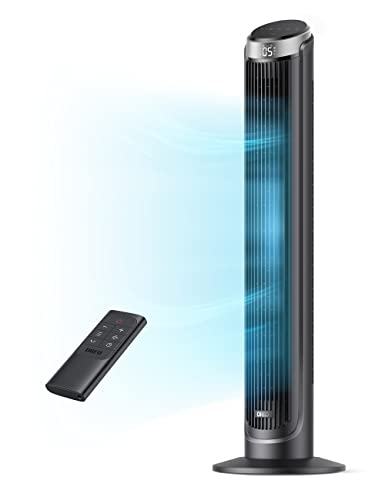
DREO 90-Degree Oscillating Tower Fan

DREO 42-Inch Tower Fan, 28 ft/s, 9 Speeds

DREO 28 ft/s Tower Fan, Ultra Quiet, 8 Speeds

Eduzita TP09Pro Bladeless Tower Fan with Heater, Gray
Meet The Standout Selections
Moving hot air between two uneven rooms requires more than an ordinary floor fan, and this through-wall model handles that job with a stated 320 CFM airflow rate. CFM means cubic feet of air moved per minute, which gives shoppers a more useful measure than a vague “strong breeze” claim. I favor it for connecting a warm office to a cooler living area or moving air through a garage, closet, or laundry space.
Unlike the portable towers later in this list, this unit is built into a wall and needs holes cut on both sides. The payoff is continuous air circulation without a floor appliance taking up space, although the installation makes it a better fit for a planned renovation than a quick seasonal remedy.
What It Does Well
- The 320 CFM rating supports meaningful air movement between rooms.
- A 33-foot remote controls power, speed, direction, and the timer.
- Ten speed settings and cycle programming provide more precise control.
- An electronically commutated motor uses pulse-width modulation to regulate speed quietly.
- Dual ball bearings and a debris-resistant frame suit sustained operation.
Points To Note
- Wall cutting and either a six-foot cord connection or hardwiring complicate setup.
- Its 10.15-by-10.15-inch housing needs adequate wall clearance.
Technical Highlights
Built With In Mind
This model suits homeowners with two connected spaces, a workshop, or a utility area where a permanent air-transfer system will fit.
Where A Sibling Pick Shines
The GrowthWing 14,000 BTU Smart Portable Air Conditioner fits rooms that need active cooling rather than air movement alone.
This second suplife through-wall fan shares the 320 CFM capacity and 8-inch fan size of the first model, but its temperature sensor adds a more useful layer of automation. I see it as the better choice for households that want the system to make decisions based on the temperature in the room instead of relying entirely on manual speed changes.
Two-button airflow reversal lets the unit pull air in or push it out, which matters in homes where the preferred direction changes with the season. As with any permanently installed transfer fan, the wall opening is the deciding factor, not the fan itself.
Practical Pluses
- Reversible airflow supports both intake and exhaust positioning.
- The temperature display enables condition-based operation.
- Ten speeds, cycle programming, and a timer offer flexible scheduling.
Trade Offs
- Installation still requires a through-wall opening and careful measurement.
- Remote control and automatic programming add complexity for very simple rooms.
The Right Fit
This model best fits homeowners seeking reversible, temperature-responsive circulation between permanently connected rooms.
Another Choice May Suit
The first suplife 8-Inch Through-Wall Fan is the simpler choice for anyone who mainly needs remote-controlled airflow in both directions.
A tower fan moves air around, while a portable air conditioner also removes heat from it. For a room that stays warm after the evening cools down, that distinction matters, which is why I see the GrowthWing as the most capable cooling option here. Its 14,000 BTU rating, meaning British thermal units of cooling capacity, is intended for spaces up to 700 square feet.
The wide 77-degree outlet, upgraded compressor, and R32 refrigerant support faster room cooling, while smart controls allow remote or voice-based adjustment. I would still treat the 700-square-foot figure as a useful planning limit rather than a promise of uniform cooling in every room layout.
Where It Helps
- Active cooling addresses warm air rather than merely circulating it.
- The stated 14,000 BTU capacity targets rooms up to 700 square feet.
- Smart, voice, and remote control simplify changes throughout the day.
- Auto-evaporation and three operating modes add flexible room management.
Worth Noting
- A portable air conditioner is more involved than setting up a floor fan.
- The 700-square-foot coverage is less suitable for very large or open-plan spaces.
Feature Snapshot
Who Will Love This
This air conditioner suits households that need genuine heat removal in a bedroom, office, or living room up to the stated coverage.
Reach For A Different Pick When
The Levoit 36-Inch Bladeless Tower Fan is easier for someone who mainly wants moving air without a portable cooling system.
The Levoit balances airflow, quiet operation, and bedroom-friendly controls without taking on the installation demands of a through-wall fan. Its 28-decibel low-speed operation and 12-hour timer make it particularly appealing for overnight use, while the 90-degree oscillation spreads the breeze beyond a single fixed direction. I favor it for home offices and bedrooms where airflow is needed more than active heat removal.
Five speeds and four modes provide enough control for daytime work and nighttime rest, and the temperature sensor adds another layer of convenience. The bladeless 36-inch design is visually tidy, although the listed height deserves consideration beside a desk or narrow bedside area.
A Favorable Mix
- Low-speed operation is listed at 28 dB for quieter bedroom use.
- The 12-hour timer supports an entire night without manual shutdown.
- Five speeds and four modes cover different airflow preferences.
- A 90-degree oscillation distributes air across a wider area.
- The remote and temperature sensor improve bedside or desk-side control.
Small Caveats
- It circulates air rather than lowering the room temperature.
- The 36-inch height requires adequate floor and furniture clearance.
Quick Facts
Made For
Light sleepers, remote workers, and bedroom occupants who need quiet, directed airflow will get the most from this model.
A Better Fit Elsewhere
The GrowthWing 14,000 BTU Smart Portable Air Conditioner is the stronger fit for a room that remains hot enough to need heat removal.
The DREO 90-Degree Oscillating Tower Fan is a straightforward choice for a bedroom where the main need is a moving breeze. A timer adjustable from one to 12 hours simplifies nightly use, and the listed 28-decibel low setting keeps the fan gentle during quieter hours. I appreciate the uncomplicated feature set for a space that simply needs consistent airflow.
Compare it with the Levoit 36-Inch Bladeless Tower Fan: the DREO focuses on oscillation and scheduling, while the Levoit adds a temperature sensor and more clearly listed operating modes. Neither removes heat from the room, so the DREO works best when ventilation and air movement are enough.
Bright Spots
- The 90-degree oscillation spreads the airflow across the room.
- A 28 dB low setting suits quiet evening and nighttime periods.
- The 1-to-12-hour timer offers useful scheduling flexibility.
Possible Compromises
- It moves air without actively cooling the room.
- The more detailed Levoit model offers additional modes and a temperature sensor.
Who Should Grab It
This tower fan fits uncomplicated bedroom use, especially for people who mainly value oscillation and a programmable bedtime routine.
Consider Something Else When
The DREO 42-Inch Tower Fan, 28 ft/s, 9 Speeds better serves people who want finer speed adjustments and a taller airflow profile.
At 42 inches tall, this DREO places more emphasis on powerful, adjustable tower airflow than compact convenience. Its listed 28-foot-per-second velocity and 1,397 CFM airflow volume distinguish it from the more basic DREO model, while nine speeds allow fine adjustments between a gentle breeze and a forceful stream. I would choose it for a large bedroom, shared living area, or active home office.
The brushless DC motor is designed to support quiet operation, which matters during concentrated desk work or sleep. Nine settings can seem excessive, yet that range is useful in a room that alternates between quiet evening use and busier daytime activity.
Where It Excels
- Up to 28 ft/s supports strong airflow in larger spaces.
- The listed 1,397 CFM volume suits rooms needing substantial air movement.
- Nine speeds offer finer control than the eight-speed DREO alternative.
- A brushless DC motor supports efficient, quiet operation.
Details To Watch
- The 42-inch height needs room for proper placement.
- It still circulates air rather than actively cooling the space.
Feature Rundown
Best Suited To
This model suits larger rooms, shared spaces, and people who want precise airflow control without active cooling.
Not My Match When
The DREO 28 ft/s Tower Fan, Ultra Quiet, 8 Speeds is a more compact-feeling choice for a focused personal cooling area.
This DREO concentrates on a compact feature set centered on airflow: up to 28 feet per second, a 34-foot projection distance, and eight speed settings. That makes it a practical fit for a desk, bedside table, or smaller personal space where a concentrated stream is more useful than wide room circulation. The algorithmic impeller and brushless DC motor are intended to support quiet operation.
Compared with the 42-inch, nine-speed DREO, this model offers fewer settings but a more focused proposition. I would lean toward this one for personal cooling, while the larger tower makes more sense for shared spaces and broader air distribution.
Notable Gains
- Up to 28 ft/s delivers a strong directed airflow.
- The 34-foot projection reaches across a desk or bedside distance.
- Eight speeds cover quiet and more forceful settings.
- The DC motor and algorithmic impeller prioritize smooth, quiet operation.
Less Ideal Details
- It moves air without actively cooling the room.
- Eight speeds provide less adjustment than the nine-speed DREO model.
Who Will Love This
This tower fan suits people seeking a directed, quiet breeze for a workstation, reading chair, or bedside setup.
Swap It Out When
The DREO 42-Inch Tower Fan, 28 ft/s, 9 Speeds fits better when air must reach farther across a larger shared room.
The TP09Pro brings together a bladeless fan, a heater, and an H13-grade HEPA air purifier in one gray tower. HEPA is a filtration designation for capturing fine airborne particles, while the heater adds gentle warmth during cooler months. I see this as the most versatile seasonal option for a bedroom, living room, or home office that needs more than summer airflow.
Remote and touch-panel controls cover fan speed, heating, and oscillation, keeping operation away from the tower when it stands against a wall. The combined functions reduce the need for separate appliances, although the housing and controls may feel busier than a single-purpose fan.
Practical Advantages
- Three functions cover airflow, heating, and particle filtration.
- The H13-grade HEPA filter adds a filtration function to the fan.
- Remote and touch-panel controls simplify adjustments.
- Oscillation broadens the area served by the moving air.
- One tower can handle both warm and cool seasons.
Things That May Matter
- Three operating functions make the controls more involved than a basic fan.
- It still does not provide the active cooling of a portable air conditioner.
Feature Facts
The Right Fit
This model suits households wanting one bladeless tower to handle summer airflow, cooler-months warmth, and routine particle filtration.
Look Elsewhere When
The GrowthWing 14,000 BTU Smart Portable Air Conditioner is the better match for a room that genuinely needs heat removal rather than seasonal air movement.
Cooling Choices That Match the Room
Air movement or active cooling
A standard fan changes how air feels by moving it across the skin. It does not lower the air temperature, so a tower fan works well in a room that becomes uncomfortable mainly because ventilation is poor. A portable air conditioner adds a cooling process, making it the relevant choice for a consistently warm room.
Through-wall fans sit in a third category. They move substantial air between two spaces, which helps with uneven temperatures but requires construction and a suitable wall location.
Capacity and room dimensions
The stated coverage is a useful starting point, not a guarantee. A 700-square-foot portable air conditioner faces a different task from a 42-inch tower serving one workstation, so furniture layout, ceiling height, sun exposure, and heat sources all affect the result.
Controls and operating schedules
Remote controls make a fan easier to manage from bed or a desk, while timers prevent unnecessary overnight operation. Temperature sensing and cycle programming add convenience in a through-wall installation, where adjusting airflow manually is less convenient.
Two Details Easy to Miss
Hidden Buying Traps
Mistaking a powerful breeze for real cooling is the easiest mistake. Fans improve perceived comfort, while an air conditioner removes heat. I also compare the actual installation footprint, since a 42-inch tower and a wall-cut through-wall fan create very different storage and placement demands.
The Upgrade Payoff
Higher-tier models add sensors, finer speed control, or combined functions such as heating and filtration. Those extras earn their place when a room changes throughout the day, though a single-purpose fan remains the simpler option for straightforward seasonal airflow.
Frequently Asked Questions
What type of fan cools a room the most?
A portable air conditioner provides active cooling, while an ordinary fan mainly moves air. A room that remains warm benefits more from the air conditioner, especially when ventilation alone does not solve the heat.
Are tower fans suitable for bedrooms?
Tower fans work well in bedrooms when the priority is quiet airflow and scheduled operation. The Levoit 36-Inch Bladeless Tower Fan and the DREO 90-Degree Oscillating Tower Fan both include low-noise settings and timers.
How do through-wall fans improve uneven room temperatures?
A through-wall fan transfers air between adjacent spaces, helping balance temperatures that differ because of sun exposure or room use. Installation requires a suitable wall, an opening on both sides, and suitable electrical connection.
Is a bladeless fan better for cleaning?
A bladeless tower has fewer exposed moving blades, which can make routine wiping simpler. Airflow quality still depends on the motor, impeller, blade-free outlet, and overall design, so bladeless construction alone does not determine performance.
Can one fan cool an upstairs and downstairs area?
A portable fan can serve one focused area at a time, while a through-wall model can permanently connect nearby rooms. The latter is better for balancing temperatures across a home, but only when the wall location and installation are practical.
Final Verdict
The best option depends on the actual problem: choose the GrowthWing for active room cooling, a through-wall suplife model for permanent air transfer, and a tower fan for portable airflow. For quiet bedrooms, I favor the Levoit, while the DREO choices cover tighter budgets and simpler routines. The Eduzita TP09Pro adds the most year-round functions in a single tower.