
A crack in a garage floor, a damaged shelf, or a tired concrete wall each calls for a different repair approach. You need to match the epoxy format, application method, and substrate to the job, while separating genuine concrete fillers from repair kits designed for pumps, vehicles, and other equipment.
How The Shortlist Stacks Up
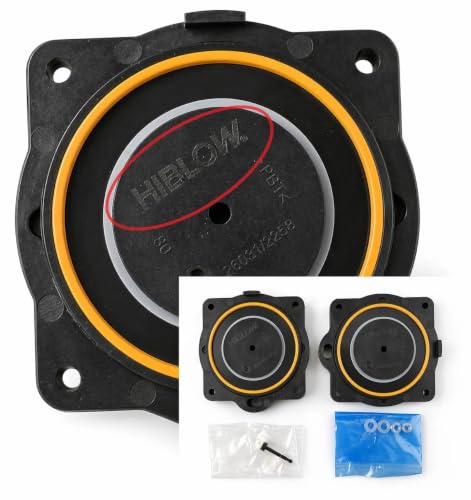
HIBLOW HP 60/80 Diaphragm Kit

HIBLOW HP-60/80 Rebuild Kit with Gaskets

SIMIRON 800CF 100% Solids Epoxy Crack Filler for Concrete Repair

TAKJUMP Steel Epoxy Putty

HIBLOW HP-60/80 Rebuild Kit

LLPTA Front Upper Door Hinge Roller Pin

StitchDog 4000 Epoxy Crack Repair Kit
The Picks, Examined More Closely
This is a focused air-pump maintenance kit rather than an epoxy crack repair product. It gives you two replacement diaphragms, their mounting hardware, and the safety screw and nut needed for HIBLOW HP-60 and HP-80 pumps, which makes it useful when the pump needs internal maintenance rather than concrete restoration.
The installation estimate of 15 to 20 minutes appeals to handy homeowners maintaining a pond, fountain, or water garden. You still need a few common household tools and a clear installation tutorial, and the molded HIBLOW logo on the diaphragms helps distinguish the replacement parts.
Good Reasons To Consider
- Two diaphragms support a routine replacement without requiring you to source matching parts separately.
- Mounting hardware, a black safety screw, and a safety nut are included for the repair.
- The stated 15-to-20-minute installation keeps the maintenance task within reach of a careful DIY hobbyist.
- Molded branding provides a visible clue that the diaphragms are intended for HIBLOW equipment.
Practical Considerations
- This kit does not contain epoxy, concrete filler, or a patching compound, so it cannot repair cracks in floors or walls.
- Confirm that your pump is an HP-60 or HP-80 before ordering, and keep the household tools needed for disassembly close at hand.
Key Specs
Who It Suits Best
You benefit most from this option as an HP-60 or HP-80 pump owner who has identified a diaphragm replacement and wants the specified parts together.
Where Another Pick Suits Better
SIMIRON 800CF suits you better for repairing cracks and defects in concrete floors or walls.
Unlike the diaphragm-only HIBLOW kit, this package supports a broader pump rebuild. It includes diaphragms, casing blocks with valves, an air filter, a filter-cover gasket, a base gasket, and installation hardware for HP-60 and HP-80 pumps, including standard and alarm versions.
That wider component list makes it the more practical option for a pond or fountain pump receiving a more complete service. The installation estimate remains around 15 to 20 minutes, although the number of components means you should organize the parts before dismantling the pump.
Why It Works Well
- The combination of diaphragms, valve-equipped casing blocks, filter, gaskets, and hardware covers the main replaceable areas of the pump.
- Compatibility with both standard and alarm HP-60 and HP-80 units broadens its usefulness within those model families.
- A complete parts set reduces the need to hunt down several separate maintenance components.
Trade Offs
- This remains an air-pump rebuild kit, not an epoxy or concrete repair product.
- The additional casing blocks, filter, and gaskets require more careful organization than a diaphragm-only replacement.
- Your pump must fall within the listed HP-60 and HP-80 model range.
Right Fit For
This choice fits you best when you want a fuller HIBLOW pump service and can organize several small components during disassembly.
A Better Fit Elsewhere
StitchDog 4000 makes more sense for you when the repair target is a flat concrete crack and you already use a dual-component applicator gun.
SIMIRON 800CF is the most directly relevant choice here for floors and walls. Its two-component epoxy formula addresses cracks, holes, pitting, gouges, and other concrete defects, while the thickened consistency allows placement on horizontal and vertical surfaces without excessive sagging.
Contractors and serious DIY users benefit from the 1:1 mix ratio and short working window. The stated 8,710 PSI compressive strength describes resistance to compression, while the 350 PSI adhesion figure measures the bond to concrete; both make the compound a practical choice for preparing a damaged floor before another coating system.
The Helpful Details
- The 1:1 volume ratio keeps measuring straightforward for consistent mixing.
- A two-to-three-minute gel time gives you a short application window for efficient repairs.
- Thickened epoxy remains in place during application to horizontal and vertical surfaces.
- The two-gallon kit is intended for larger crack-filling and floor-preparation projects.
- It can prepare concrete for epoxy, polyaspartic, or polyurea coating systems.
Small Caveats
- Fast setting leaves little margin for correcting placement after the components are combined.
- Coverage varies with crack width, depth, and surface condition, so the stated linear-foot figure is not a fixed area promise.
- You must mix the two components correctly before application to obtain the intended material properties.
Feature Snapshot
Who Will Love This
You will find this option most useful when restoring concrete before a floor coating and can work quickly with a putty knife or trowel.
Consider Something Else When
TAKJUMP Steel Epoxy Putty suits you better for a small, irregular chip on metal, wood, ceramic, tile, or another household material.
TAKJUMP takes a different approach from SIMIRON by using a hand-mixed, moldable epoxy putty instead of a fast-setting concrete filler. You cut and knead the two components together, then shape the blended material around uneven edges, which makes it practical for small household damage rather than a floor-wide restoration.
The steel-reinforced formula is described for cracks, chips, and broken areas on metal, wood, ceramic, stone, tile, glass, and plastic. For a broken shelf bracket, chipped ceramic piece, or worn furniture edge, that range of compatible surfaces is the main reason to consider it.
What Helps Most
- Hand mixing and molding let you fit the putty directly around irregular chips, edges, and detailed surfaces.
- Its multi-surface compatibility makes one compound useful for repairs spread across a household or workshop.
Where It May Fall Short
- The listing does not position it as a concrete-floor crack filler or a coating-ready floor repair system.
- Mixing by hand takes more physical work than a pump-fed applicator system, and you must blend the two parts thoroughly.
Quick Facts
Built With In Mind
This putty fits you best for small household or workshop repairs where shaping a steel-reinforced compound by hand is more useful than covering a broad concrete crack.
Not Your Match When
SIMIRON 800CF fits you better when you need fast placement in concrete cracks or plan to apply a floor-coating system afterward.
This HIBLOW rebuild kit serves standard and alarm versions of the HP-60 and HP-80 air pumps. Its parts include diaphragms, casing blocks with valves, an O-ring, and installation hardware, giving you a broader service option than the separate diaphragm kit reviewed earlier.
You can handle the rebuild in an estimated 15 to 20 minutes with common household tools, and a manufacturer tutorial provides visual guidance for the sequence. That setup suits pond and fountain owners who want to restore pump operation while keeping the replacement components organized.
Notable Gains
- Diaphragms, valve-equipped casing blocks, an O-ring, and hardware provide the core parts for a pump rebuild.
- The kit applies to both standard and alarm versions of the listed pump models.
- The short stated installation time makes this manageable for a careful home maintenance session.
Points To Note
- This is equipment maintenance rather than an epoxy crack-filling product, and none of its parts repair concrete or masonry.
The Right Fit
You benefit most from this rebuild kit when you own a compatible HIBLOW air pump and need diaphragms, casing blocks, valves, an O-ring, and hardware together.
Another Choice May Suit
The HIBLOW HP 60/80 Diaphragm Kit suits you better when the pump only needs replacement diaphragms and you want to avoid a broader teardown.
This pin belongs in the vehicle-repair portion of the shortlist, not the epoxy category. You can use it to replace the front upper door hinge roller on selected Chevrolet and GMC C/K-series trucks, Suburbans, Blazers, Tahoes, Yukons, and Escalades from the listed model years.
The single zinc-plated steel pin targets a specific mechanical part, which makes model verification the most important part of the decision. For older work vehicles, replacing the designated pin can restore movement at the upper door hinge without purchasing a broader hinge assembly.
The Upside
- One focused component simplifies the repair of a worn upper door hinge roller.
- The listed compatibility covers several Chevrolet and GMC trucks, SUVs, and related vehicles.
- Zinc-plated steel provides corrosion resistance suited to exposed vehicle hardware.
Some Limits To Know
- Year, model, trim, and engine details must be checked because the compatibility list includes specific ranges and one 5.7-liter limitation.
- The package contains one roller pin rather than a complete hinge or epoxy repair system.
Technical Highlights
Whose Shelf It Belongs On
This component fits you best when restoring a compatible vintage Chevrolet or GMC upper door hinge and your vehicle matches the listed year and model range.
Reach For A Different Pick When
You should reach for StitchDog 4000 instead when your repair target is a flat concrete crack rather than a vehicle hinge.
StitchDog 4000 takes the applicator-gun route for flat concrete crack repair. Its epoxy and carbon-fiber format is intended for structural work in concrete, and compatibility with dual-component applicator guns gives you a choice of application equipment rather than tying the repair to one specific gun model.
This approach is appealing for a garage slab, basement, or driveway crack where controlled dispensing may help you work along a narrow opening. You need access to a compatible dual-component gun, and the flat-crack focus makes it less directly aligned with broad surface patching.
Where It Helps
- The epoxy and carbon-fiber format provides a dedicated approach to structural concrete crack work.
- Compatibility with dual-component applicator guns gives you flexibility in equipment selection.
- The flat-crack design targets narrow defects that can be treated along their length.
Factors To Consider
- You need a separate dual-component applicator gun to perform the repair.
- The product is aimed at flat cracks rather than holes, pitting, or broad damaged areas.
- Concrete remains the relevant substrate, so this is not the choice for a wood, metal, or ceramic repair.
At A Glance
Made For
You benefit most from StitchDog 4000 when repairing a flat concrete crack, already own a compatible applicator gun, and value controlled placement.
Swap It Out When
SIMIRON 800CF is a better fit for you when the repair includes holes, pitting, vertical surfaces, or preparation for a floor coating.
What Matters Before You Mix The Repair
Match The Compound To The Defect
Epoxy is a thermosetting resin that hardens after its components react. Your choice should match the size and shape of the damage: SIMIRON 800CF handles cracks, holes, pitting, and gouges in concrete, while TAKJUMP Steel Epoxy Putty is more useful for shaping around small chips on several household materials.
Understand The Application Method
A putty knife and trowel suit hand placement, while a dual-component applicator gun suits controlled dispensing through a nozzle. Fast-setting compounds demand quick work, so measure and prepare the surface before mixing. A slower hand-mixed putty gives you more time to shape the material, though it still requires thorough blending.
Check Fit And Compatibility First
Confirm the material, model, and repair location before ordering. Concrete repair choices need a compatible substrate, the HIBLOW kits must match HP-60 or HP-80 pumps, and the LLPTA pin requires an exact vehicle fit. The size of the project also matters, since a small chip and a large floor-preparation job call for different quantities and delivery methods.
Check The Next Layer
A repair system may need to work with another coating rather than serve as the final surface. SIMIRON 800CF is intended to prepare concrete for epoxy, polyaspartic, or polyurea systems. Verify compatibility between each layer before application so the repair remains consistent with the coating planned for the floor.
Avoiding Repair-Material Mismatches
Common Shopping Slip Ups
The easiest mistake is choosing by the word “epoxy” while ignoring the substrate and repair shape. A truck hinge pin and a pump rebuild kit cannot fill concrete, while a floor filler may be excessive for a chipped ceramic cup. Match the damage location, material, and application method before considering container size.
What Separates Premium From Basic
A more advanced kit may add stronger reinforcement, higher coverage, faster setting, or a specialized dispensing method. Those extras matter for large floor preparation, narrow structural cracks, or repeated professional work. A small hand-molded household repair may need little more than a straightforward two-part putty.
Frequently Asked Questions
Can I Use Epoxy Crack Filler On A Vertical Wall?
SIMIRON 800CF is designed for horizontal and vertical concrete surfaces. Its thickened formula helps it stay in place during application, although the short working window requires prompt preparation and placement.
Do I Need An Applicator Gun For StitchDog 4000?
Yes, you need a dual-component applicator gun for StitchDog 4000. The kit is compatible with dual-component guns, making the tool an additional requirement for the repair.
Is The HIBLOW Diaphragm Kit An Epoxy Repair Kit?
No, the HIBLOW HP 60/80 Diaphragm Kit contains pump replacement parts rather than epoxy. You can use it to service compatible HP-60 and HP-80 air pumps.
Is TAKJUMP Putty Better Than SIMIRON For Concrete?
SIMIRON 800CF is the stronger fit for concrete floors and walls, with a fast-setting formula and specified strength and adhesion figures. TAKJUMP Steel Epoxy Putty is more useful for small, shapeable repairs across metal, wood, ceramic, and other materials.
Which Repair Works Best Before A Floor Coating?
SIMIRON 800CF is designed to prepare concrete for epoxy, polyaspartic, and polyurea coating systems. Confirm the coating requirements before application so both products are compatible with the planned floor build-up.
Final Verdict
SIMIRON 800CF stands out for concrete crack repair, while TAKJUMP Steel Epoxy Putty handles smaller, shapeable household damage. StitchDog 4000 suits flat cracks when you have a dual-component applicator gun, and the HIBLOW and LLPTA products serve equipment repairs rather than masonry. Choose by the actual substrate, defect, and application method, and the right kit becomes much easier to identify.