
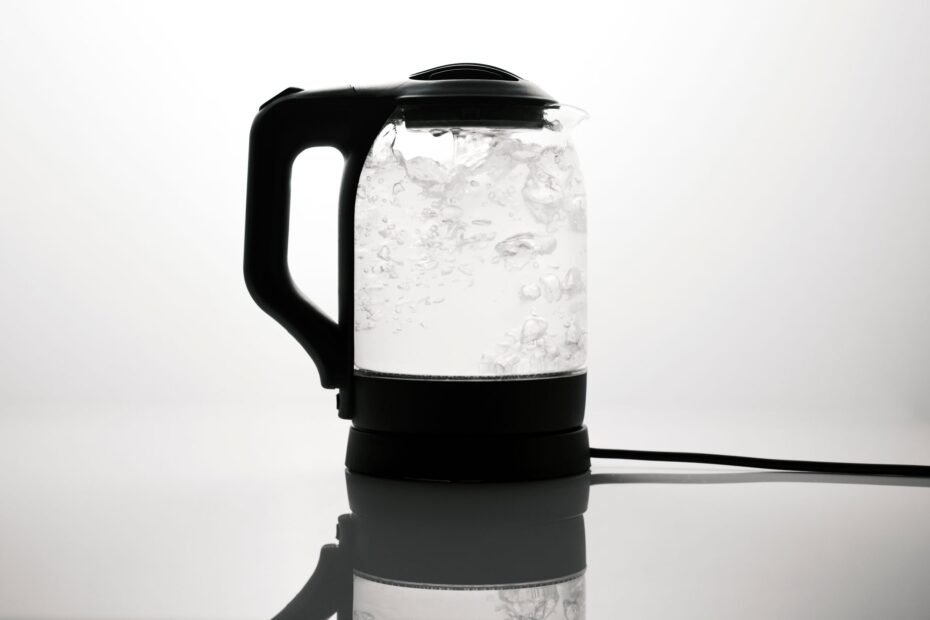
A measured white vinegar or citric acid solution loosens mineral deposits after 15 to 30 minutes of soaking, followed by rinsing and boiling clean water before use. The white chalky residue comes from hard water and can leave flakes in tea or coffee.
You can choose a suitable descaling method, measure solutions for your kettle, rinse away residue, clean the filter, and set a practical cleaning schedule for your water supply.
Hard Water Leaves Mineral Deposits Inside the Kettle
White crust on the kettle floor is mineral residue rather than dirt. Hard water carries dissolved calcium and magnesium, and repeated heating leaves those minerals behind as a dull film, loose flakes, or a hard ring near the heating element.
Scale can slow heating as deposits cover the heating element or base plate. Thick buildup can also cloud poured water, collect around the spout, and leave pale flakes in your cup.
Safe preparation protects electrical parts
Unplug the electric kettle and allow it to cool before cleaning. Check the manufacturer instructions, especially for Breville, Cuisinart, Russell Hobbs, OXO, or Keurig models with coated interiors, special filters, or stated descaling directions.
Keep the base, power cord, and electrical connector dry. Never immerse the kettle base in water during cleaning.
Fill above the visible scale line and below the maximum-fill mark. Never operate an empty kettle, and avoid steel wool, abrasive pads, knives, or metal spoons; scratches give minerals more places to cling and can damage an interior coating.
Your preparation sets the limit for every cleaning method. The acid solution should contact the mineral crust without reaching the electrical base or exceeding the fill mark.
Those safety limits also make the cleaner’s strength and handling characteristics consequential.
Descaling Acids Differ in Strength, Odor, and Cleanup
Acid loosens the alkaline mineral layer, yet each option leaves a different cleanup task. White vinegar works well on ordinary crust, while citric acid gives you a lower-odor routine for regular descaling.
| Method | Scale-removing strength | Odor and taste carryover | Cost | Suitable situation |
|---|---|---|---|---|
| White vinegar | Strong for ordinary crust | Sharp odor; extra rinsing needed | Low household cost | Visible buildup in a plain stainless-steel kettle |
| Citric acid | Strong for routine deposits | Low odor | Moderate household cost | Regular descaling or vinegar-free cleaning |
| Lemon juice | Mild | Fresh scent; mild flavor carryover | Varies by kitchen supply | Thin film or light white flakes |
| Commercial descaler | Varies by formula | Follow label rinse directions | Varies by formula | Heavy buildup or maker-specified cleaning |
White vinegar works on ordinary mineral crust
You can clean a kettle with vinegar by mixing equal parts plain white vinegar and water. That blend works on a chalky ring, though its vapor and lingering taste mean your rinse routine needs extra care.
Citric acid offers a practical way to remove kettle limescale without vinegar. Dissolved citric acid powder has little odor and suits monthly cleaning in a hard-water home.
Lemon juice suits light deposits
Lemon juice contains acid, but less than a measured citric acid solution. Reserve it for a faint white film or scattered flakes rather than a thick ridge that resembles plaster around the heating area.
Commercial formulas such as Durgol follow their own dilution and contact-time directions. Follow the kettle maker’s named product or stated method for coated surfaces, specialty filters, or models that restrict household acids.
- Choose white vinegar for visible mineral crust where a longer rinse is acceptable.
- Choose citric acid for regular cleaning with less odor around your countertop.
- Choose lemon juice for a mild refresh on light deposits rather than thick scale.
- Choose labeled descaler for stubborn buildup or material-specific manufacturer directions.
The chosen acid matters less than concentration and fill level. A solution that sits below the scale line cannot reach deposits higher inside the kettle.
Measured Solution Ratios Reach the Entire Scale Line
Scale dissolves only where liquid touches it, so fill past visible deposits without crossing the maximum-fill line. A 1.5-liter kettle with buildup near its base can hold 750 milliliters of white vinegar and 750 milliliters of water.
Citric acid changes with kettle capacity
Use 1 tablespoon of citric acid powder per liter of water, stirring until no grains remain. Your 1.7-liter kettle needs about 1 3/4 tablespoons, while a 1-liter travel kettle needs 1 tablespoon.
For another capacity, multiply the kettle’s liter capacity by 1 tablespoon. A 0.5-liter model needs 1/2 tablespoon, while a 2-liter kettle needs 2 tablespoons in enough water to cover the mineral line.
Light deposits do not always need a full boil. A warm soak can loosen a thin film, while thicker crust benefits from heating until the automatic shutoff ends the cycle.
Heat and soak loosen deposits safely
- Fill carefully Add vinegar-water or dissolved citric acid above the deposits and below the fill mark.
- Heat once Switch on the kettle and allow automatic shutoff to stop the heating cycle.
- Leave it standing Leave the warm descaling solution inside for 15 to 30 minutes without reheating.
- Pour it away Empty the solution into the sink after the mineral layer loosens from the interior.
- Repeat gently Run one more cycle for heavy crust rather than scraping with metal tools.
Your fastest practical route is a heated vinegar or citric acid cycle followed by a 15-minute soak. Thick deposits can need two gentle rounds because the outer layer must lift before acid reaches mineral beneath it.
Boiling diluted vinegar in an electric kettle suits a standard stainless-steel interior where manufacturer instructions permit it. Do not boil undiluted vinegar or leave an acid solution sitting overnight.
Heat helps the solution work through a dense crust, but extra heat does not replace contact time. Once the chalky layer releases, rinsing clears the water path for your next drink.
Rinsing Removes Cleaner Residue From the Water Path
Clean water clears dissolved minerals and cleaner residue from the same surfaces that touch tea or coffee. Rinse the interior several times, then fill the kettle with water, boil it, and discard that water.
Run a second boil-and-discard cycle after white vinegar cleaning, especially where you still smell vinegar near the spout. Your kettle is ready for drinks once the water smells neutral and no cleaner flavor remains.
The filter and spout need separate care
Remove a detachable kettle filter only where manufacturer instructions permit removal. Rinse loose flakes under running water, soak the mesh briefly in the same diluted descaling solution, then rinse thoroughly before placing it back.
Use a soft cloth, soft brush, or nonabrasive sponge around the spout and visible heating area. Keep the cloth damp rather than dripping, and keep liquid away from your electrical base and connector.
- Rinse several times Swirl clean water through the interior until no acid scent remains near the lid.
- Boil clean water Run one full water-only cycle after every descaling session.
- Discard rinse water Pour out the rinse boil rather than using it for tea or cooking.
- Check the filter Clear mesh openings so flakes do not return to your cup.
- Wipe the exterior Dry the kettle body and base with a clean cloth after cleaning.
A neutral-smelling kettle marks the end of a cleaning cycle. Hard-water habits determine how quickly the white residue returns.
Water Hardness and Daily Use Set the Cleaning Schedule
A monthly look inside the kettle catches scale before it becomes a hard ring. Daily heating with hard water calls for closer attention than a kettle used on weekends with softer water.
| Your water and use pattern | Descaling rhythm | What to watch for |
|---|---|---|
| Soft water, occasional use | Every 3 to 6 months | Thin haze or a few flakes |
| Moderate water hardness, daily use | Every 6 to 8 weeks | Visible ring near the base |
| Hard water, daily use | About every month | Flakes, crust, or slower heating |
| Very hard water, heavy use | Every 2 to 4 weeks | Rapid crust after a recent cleaning |
Small habits leave fewer minerals behind
Filtered water can reduce the minerals entering your kettle, though it does not remove the need for descaling. Empty unused water after each heating cycle because evaporation leaves another layer of calcium and magnesium behind.
Give the interior a quick clean-water rinse before setting the kettle back on its base. Your routine should move sooner after new flakes appear, the interior looks dull, or boiling takes longer.
How often to descale a kettle depends on water hardness, the amount of water heated, and how long water sits inside. A white crust that returns within a month points to hard water and a shorter cleaning interval.
Those habits slow buildup, yet they cannot repair a damaged interior. Peeling coatings, deep pits, and rust-colored marks call for a different response than loose mineral scale.
Damaged Surfaces Need More Than Home Descaling
A thick crust that remains after one cycle calls for repetition rather than harsher tools. Run a fresh measured vinegar or citric acid solution, then leave it for another 15 to 30 minutes before judging the result.
Surface damage changes the cleaning plan
Stop using household acids where you see peeling coating, pitting, rust-colored corrosion, or residue that stays fixed after two gentle cycles. Those signs point beyond loose mineral deposits and call for manufacturer-specific care or replacement of damaged parts.
Your manufacturer instructions take priority for a coated interior, plastic water window, built-in kettle filter, or specialty model. Some kettles name a particular descaling formula, and that direction protects the materials inside the appliance.
Harsh scrubbing causes further damage
- Skip metal utensils Scraping can gouge stainless steel and damage a concealed heating plate.
- Skip abrasive pads Rough fibers scratch coatings and leave surfaces where deposits grip more tightly.
- Skip stronger mixtures Extra acid does not repair damaged surfaces and can leave a stronger odor.
- Stop at corrosion Rust spots, flaking coatings, and deep pits call for service or replacement.
At that stage, a clean surface is no longer the only concern. You need a kettle interior that remains intact and suitable for heating drinking water.
Avoiding abrasive or overly aggressive treatment helps preserve that safe, intact interior between cleaning cycles.
Careful Descaling Keeps Scale From Becoming a Crust
Safe descaling relies on measured steps rather than aggressive scrubbing: cover scale with diluted white vinegar or citric acid, heat once, leave it briefly, and rinse with two clean-water boils. You can remove limescale from an electric kettle more reliably by acting on the earliest white ring before deposits harden around the heating area.
FAQ
Which method removes limescale from an electric kettle most quickly?
A heated citric acid or equal-parts white vinegar and water solution works quickly on visible scale. Leave the warm solution for 15 to 30 minutes, empty it, rinse several times, and run at least one clean-water boil before using your kettle.
Can you use white vinegar to descale an electric kettle?
Yes, diluted white vinegar works well in many stainless-steel electric kettles. Use equal parts vinegar and water, stay below the maximum-fill line, heat until shutoff, and follow with two boil-and-discard cycles where vinegar smell or taste remains.
How much vinegar or citric acid belongs in a kettle?
For white vinegar, mix equal parts vinegar and water in enough volume to cover the scale line. For citric acid, dissolve 1 tablespoon per liter of water; a 1.5-liter kettle needs 1 1/2 tablespoons.
Do you need to boil the descaling solution?
A warm soak can loosen a thin mineral film without boiling. Thick crust around the heating element benefits from one heated cycle because warmth helps the acid reach and loosen the mineral layer.
How do you get vinegar taste and smell out after cleaning?
Rinse the interior several times, then boil clean water and discard it. Run a second water-only boil where any vinegar odor remains near the lid or spout.
Can lemon juice remove limescale from a kettle?
Lemon juice can loosen a faint white film or light flakes. It has less acid than measured citric acid, so it is less suited to a thick crust along the kettle floor or heating area.