
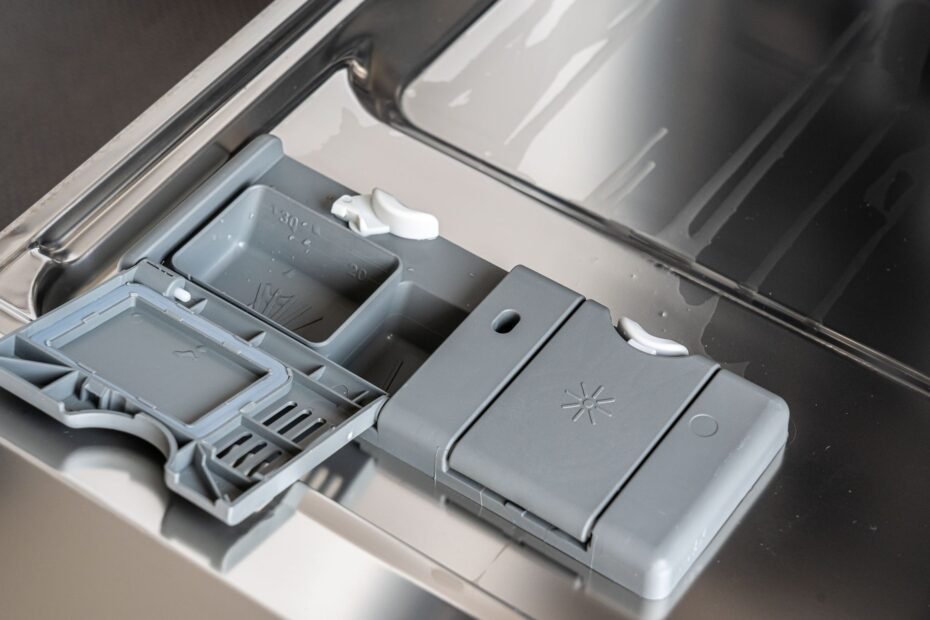
Dirty water left in the tub after the drain cycle signals that the dishwasher is not draining properly. A thin layer of clean water below the filter can be normal, while water covering the filter signals a blocked route, a sink-side restriction, or a drain-pump fault.
This practical walkthrough follows your symptom from the tub to the sink connection, then marks the point where a service technician makes more sense for your dishwasher.
Standing Water Shows Where the Drainage Path Fails
Dirty water covering the filter area after a completed cycle points to a real drainage fault. Clear water sitting only in the sump, the recessed area below your dishwasher filter, can protect internal pump seals and does not always signal trouble.
Your dishwasher moves wastewater through the filter, sump, drain pump, check valve, dishwasher drain hose, garbage disposal or sink connection, and sink drain. A blockage, kink, jam, or plumbing backup anywhere along that route can leave water behind.
| What you see | What it suggests | Your next step |
|---|---|---|
| Dirty water remains after every cycle | The filter, sump, hose, or pump route has a restriction. | Begin inside your dishwasher. |
| Water leaves slowly or drains inconsistently | A partial clog or hose bend is restricting flow. | Inspect the filter and hose routing. |
| Water rises in the sink | The disposal, sink drain, or branch line is restricted. | Run the disposal and observe sink drainage. |
| A hum occurs with no water movement | The pump inlet or impeller has debris, or the pump has failed. | Clear reachable debris before arranging service. |
A dishwasher that drains only after you run the garbage disposal points away from the tub and toward the sink connection. Wastewater cannot leave your appliance where disposal debris, a blocked inlet, or a slow sink drain blocks the exit path.
Once the outlet path is identified, isolating power and handling pooled water carefully reduces exposure before disassembly.
Safe Preparation Limits Wastewater Exposure
Standing wastewater contains food residue and detergent film, so remove electrical power before your hands enter the sump area. Unplug the appliance where the cord is accessible, or switch off the dishwasher breaker at the electrical panel.
Close the water supply only for work that could disturb a supply connection. Filter cleaning and sump debris removal do not require water shutoff.
Water Removal Keeps the Work Area Controlled
Scoop pooled water into a container with a cup, sponge, or wet-dry vacuum set for liquids. Lay towels along the toe-kick and cabinet edge because even a small amount of wastewater can reach flooring during hose removal.
- Wear gloves: Protect your hands from food residue, sharp fragments, and stagnant water.
- Set a shallow pan: Catch water beneath a hose fitting or air gap connection.
- Place towels nearby: Dry cabinet flooring before water reaches wood trim or wall edges.
- Hold small parts: Put filter pieces and screws in a cup beside your work area.
- Leave wiring covered: Stop before removing panels that expose electrical connections.
Chemical drain cleaners do not belong inside your dishwasher. They can harm seals and plastic parts, create hazardous splashing during disassembly, and will not clear a chicken bone lodged near the pump inlet.
With caustic cleaners ruled out, inspecting removable components is the safer way to locate a physical obstruction.
The Filter and Sump Reveal Accessible Blockages
A greasy filter can slow water flow well before a full tub develops. Remove the lower rack, unlock the filter according to your appliance manual, and rinse the mesh and plastic channels under warm running water.
Visible Debris Blocks the Sump Opening
Food scraps, jar labels, grease, broken glass, toothpicks, and small utensils can collect below the drain filter. A dishwasher filter clogged with grease may look clear from above while its underside still restricts the sump opening.
Look into the sump with a flashlight after removing the filter. You can lift out loose items that are fully visible and reachable, but broken glass calls for gloves, paper towels, and slow movements around the opening.
The Pump Inlet Needs Model-Specific Access
Some Bosch, Whirlpool, GE Appliances, KitchenAid, and Maytag models have a pump cover below the filter. Your manual shows whether that cover lifts, twists, or needs service access, so avoid forcing a molded plastic tab.
A clear filter does not prove the full route is open. Debris can lodge at the pump inlet or check valve, blocking water movement much like a pebble caught in a small water wheel.
Stop after removing reachable debris. A stuck cover, deep obstruction, or damaged plastic latch marks a service boundary rather than a reason to force the part.
Sink Connections Can Block Dishwasher Drainage
Water cannot leave the dishwasher where the sink connection is blocked. Run the garbage disposal briefly with cold water, then fill the sink partway and watch whether water leaves at a steady pace.
The Disposal Inlet Must Be Open
A new InSinkErator or similar garbage disposal needs its dishwasher inlet knockout plug removed before hose connection. That plastic disk blocks the inlet by design, so a hose attached behind it cannot pass wastewater into the disposal.
Dishwasher backing up into sink water points more strongly to a disposal, sink trap, or branch-drain restriction than to a filter fault. Your next plumbing step belongs with a plumber where the sink stays slow after disposal debris has cleared.
Air Gaps and High Loops Limit Backflow
An air gap is the small fitting near the sink rim with two hose connections below it. Water spilling from that fitting during draining means debris is blocking the air-gap passage or one of its attached hoses.
| Sink-side part | Failure sign | Your practical response |
|---|---|---|
| Garbage disposal | Your dishwasher drains after disposal use. | Clear disposal waste and inspect the inlet opening. |
| Air gap | Water spills near the faucet during draining. | Remove the cap and clear visible residue. |
| Drain hose | The drain cycle sounds strained or inconsistent. | Look for crushing, kinks, and low sagging. |
| Sink drain | The sink drains slowly or backs up. | Address the plumbing restriction before appliance work. |
A secured high loop raises the dishwasher drain hose beneath the countertop before it drops to the disposal or tailpiece. That rise, or an air gap, limits dirty sink water flowing backward into your dishwasher tub.
Drain Hose Clearing Requires Careful Reassembly
Disconnect the hose only after the filter, sump, disposal, and visible air-gap path are clear. Put a shallow pan and towels below the disposal connection, then loosen the clamp at the accessible hose end.
Gentle Flushing Protects the Hose Wall
Detach the dishwasher drain hose carefully and hold its end over the pan. Flush with water or loosen soft grease with a flexible brush; sharp wire can puncture the hose wall and leave water inside the cabinet.
Replace a hose that is split, permanently crushed, or blocked beyond gentle flushing. A hose routed behind a sharp cabinet edge can flatten over time, forcing your drain pump to push against a narrowed passage.
A Brief Rinse Reveals Connection Leaks
- Seat the hose: Push your hose fully over the disposal, tailpiece, or air-gap fitting.
- Position the clamp: Place your clamp behind the fitting ridge so it grips evenly.
- Restore power: Turn on the breaker or reconnect the plug after connections are dry.
- Run a rinse: Start a short cycle and listen for steady drain-pump operation.
- Inspect the cabinet: Look at hose ends and the cabinet floor for drips before reinstalling panels.
Water leaving the tub during that rinse points to an accessible blockage. Repeated pooling after hose work points toward the pump, check valve, float switch, wiring, or electrical control.
Pump Symptoms Set the Service Boundary
A dishwasher drain pump not working becomes more likely after accessible routes are clear. A hum with no water movement can mean a jammed impeller, while silence during the drain portion can point to wiring, a control fault, or a failed pump.
Error Codes Need More Than a Single Cleaning Step
Repeated drain error codes can involve the pump, check valve, float switch, wiring, or control board. The float switch tracks water level, and a fault there can send the wrong signal despite a clear hose and filter.
| Symptom | DIY boundary | Service boundary |
|---|---|---|
| Visible glass in the sump | Remove reachable pieces with gloves. | Arrange service for debris below a fixed cover. |
| Humming drain pump | Clear the filter and accessible inlet. | Arrange service for impeller or pump replacement. |
| Returning error code | Clean accessible drainage parts once. | Arrange service after the code returns. |
| Wet cabinet floor | Stop the cycle and dry the area. | Arrange service for hose, pump, or seal leaks. |
Renters should contact property maintenance before disconnecting plumbing or removing access panels. Homeowners should stop at damaged wiring, recurring backups, inaccessible clogs, leak risk, or dishwasher not draining properly after the full cleaning sequence.
Final Drainage Decisions Follow the Water Path
Dirty water after a completed cycle points to a blocked route until proven otherwise. Start with your filter and sump, then follow the route through the hose, air gap, garbage disposal, and sink drain.
A clear route paired with humming, silence, leaks, or returning error codes marks the end of hands-on cleaning. At that point, your dishwasher needs component diagnosis rather than another filter rinse.
FAQ
Why is there standing water in the bottom of my dishwasher?
Dirty, smelly water after the drain cycle points to a clog, hose restriction, sink-side blockage, or pump fault. Dishwasher standing water in bottom areas needs attention where it covers the filter screen or reaches the lower rack.
Is a small amount of water in the dishwasher sump normal?
Clear water below the filter can be normal because the sump retains water near internal seals. Water that is dirty, deep, or sitting above the filter indicates that wastewater did not leave the tub.
How do I unclog a dishwasher that will not drain?
Turn off power, remove pooled water, clean the filter, and remove visible sump debris. Then run your garbage disposal, inspect the sink drain and air gap, and look for hose crushing or kinks before pump work.
How do I unclog a dishwasher drain hose?
Place a pan below the hose fitting, disconnect the accessible end, and flush the hose with water. A flexible brush can loosen soft buildup, but sharp wire can damage the hose and cause a cabinet leak.
Can a clogged garbage disposal stop a dishwasher from draining?
Yes. Your dishwasher hose commonly enters the garbage disposal, so packed disposal waste or a blocked inlet can stop wastewater from leaving. A newly installed disposal also needs its dishwasher inlet knockout plug removed before the hose can drain.
How do I know if my dishwasher drain pump is bad?
A bad pump can hum without moving water, stay silent during draining, leak, or trigger drain-related error codes after accessible routes are clear. A check valve, float switch, wire, or control board can cause similar symptoms, so professional diagnosis is sensible.