
A ceiling fan can make a bedroom feel usable on a humid afternoon, but choosing by diameter alone often leads to an awkward fit or disappointing airflow. I compare these eight options by room size, blade construction, motor behavior, lighting, controls, and where each fan is meant to live. The result is a practical shortlist for small bedrooms, large living spaces, covered patios, and high-ceiling rooms.
The Lineup, Simplified
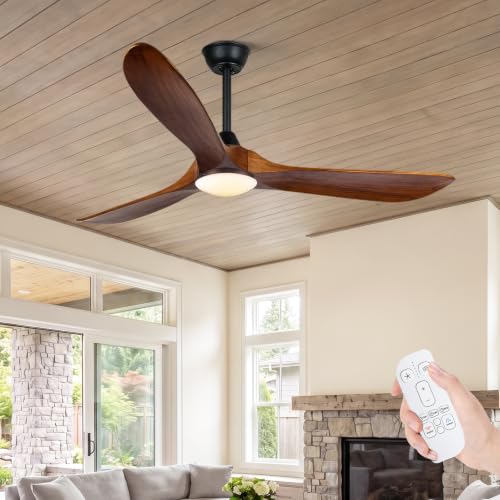
AUNLPB 36-Inch Farmhouse Ceiling Fan with Light

AUNLPB 70-Inch Patio Ceiling Fan with Light
AUNLPB 60-Inch Farmhouse Ceiling Fan

AUNLPB 60-Inch Smart Ceiling Fan

AUNLPB 60-Inch Black Wood Ceiling Fan

AUNLPB 42-Inch Propeller Ceiling Fan

AUNLPB 52-Inch Wood Ceiling Fan

AUNLPB 70-Inch Wood Ceiling Fan
The Strengths Of Each Pick
The 36-inch format makes this a sensible fit for a bedroom, apartment, or compact living room where a larger fan would crowd the ceiling. Its modern farmhouse profile adds character without requiring the heavy visual weight of a 60- or 70-inch model.
The remote-controlled light and fan keep daily operation simple at bedtime. I also appreciate the brushless direct-current motor, which operates below 30 decibels and uses up to 70% less energy than conventional air-conditioning motor technology.
Good Reasons To Consider
- A 36-inch diameter suits smaller rooms better than the wider models in this lineup.
- The combined light and remote control reduces the need to reach separate wall controls.
- Operation below 30 decibels makes sense for bedrooms and quiet evening routines.
- The farmhouse styling brings warmth to rooms with neutral or rustic decor.
Practical Considerations
- A smaller fan will feel less forceful than the 60- and 70-inch options in a large room.
- I would check ceiling clearance and blade sweep against nearby furniture before installation.
Feature Snapshot
Who It Suits Best
This model best suits apartment residents, couples, and families seeking a compact fan with light, remote access, and gentle bedroom airflow.
Consider Something Else When
The AUNLPB 52-Inch Wood Ceiling Fan offers a roomier format for larger living areas while retaining remote control and wood blades.
A covered patio needs a different balance than a bedroom, and this 70-inch fan is built to move more air across a generous outdoor living area. Solid wood blades and a copper direct-current motor give it a substantial appearance while keeping operation close to silent.
The stated coverage of 150 to 320 square feet makes the scale more practical than the diameter alone suggests. For me, the rustic wood finish works best where the ceiling structure remains visible as part of the patio design.
Where It Helps
- The 70-inch span suits broad covered patios and open-air seating areas.
- Solid wood blades complement farmhouse, rustic, and natural outdoor palettes.
- The copper DC motor supports strong airflow with quiet operation.
Small Caveats
- I would confirm the exact installation environment and exposed-weather limits before using this fan on an uncovered patio.
Quick Facts
Made For
This fan best suits homeowners with a roomy covered patio, a visible wood ceiling, and a need for moving air over a sizable seating area.
A Better Fit Elsewhere
The AUNLPB 36-Inch Farmhouse Ceiling Fan with Light is easier to accommodate in a compact bedroom or sheltered indoor space.
Three walnut-colored wood blades give this 60-inch fan a decorative farmhouse character that feels more intentional than a plain utility fan. It works nicely in a living room, primary bedroom, or dining space with timber furniture and warm finishes.
The listed airflow of 6,411 cubic feet per minute, or CFM, gives me a clearer sense of its large-room purpose than appearance alone. The light adds practical function, while the blade count creates a bold, sculptural profile.
What Stands Out
- Three solid wood blades create a distinctive farmhouse silhouette.
- The walnut color adds warmth to pale walls and natural furnishings.
- High listed airflow supports large living rooms and primary bedrooms.
- The included light makes this a practical two-function fixture.
- Its decorative character remains visible from across the room.
Where It May Fall Short
- A 60-inch fan needs enough ceiling clearance to avoid a cramped appearance.
- The three-blade design may feel less transitional than the seven-blade smart model.
- Remote control is not listed, making wall-switch operation the likely starting point.
Right Fit For
This fan suits people decorating a large rustic, farmhouse, or modern-organic room where blade styling matters as much as airflow.
Not Your Match When
The AUNLPB 60-Inch Smart Ceiling Fan better serves connected households that prioritize app, voice, and remote operation.
A connected fan makes sense in a busy household where several family members share one room and nobody wants to pass around a remote. This 60-inch model supports app, voice, and remote control, with a light included for everyday use.
Its seven-blade, direct-current design produces 9,321 CFM and is described as operating below 30 decibels. I see it as the most feature-oriented choice here for a large room where convenience matters alongside strong air movement.
Real Benefits
- Three control options suit different routines and household preferences.
- Seven blades create a balanced, modern profile with broad air movement.
- The 9,321 CFM rating supports spacious living rooms and open areas.
- Quiet operation suits bedrooms, offices, and shared living spaces.
Things To Consider
- Voice and app setup may require compatibility checks with the household phone and voice platform.
- The 60-inch frame still needs adequate ceiling clearance and room width.
Technical Highlights
Best Suited To
This model fits connected families and home-office occupants who want flexible controls with large-room airflow.
Another Choice May Suit
The AUNLPB 70-Inch Wood Ceiling Fan serves expansive great rooms better, particularly where high ceilings and extra airflow are priorities.
Black finishes pair easily with metal, glass, and neutral furnishings, yet this fan adds warmth through three solid wood blades. That mix makes it a good fit for modern or transitional rooms where an all-dark fixture could feel overly stark.
The blades use an 18-degree pitch to spread air across a wider area, while the direct-current motor is listed at under 30 decibels. Its light-emitting diode (LED) also remembers preferred brightness and color temperature settings, which is a small but useful routine-saver.
Strengths Worth Knowing
- Solid wood blades soften the sharper appearance of the black finish.
- The wide airflow design suits open-plan living and dining areas.
- Quiet motor operation supports bedrooms and evening rooms.
- Lighting memory avoids resetting the preferred setting after each use.
Worth Noting
- The dark finish is a deliberate aesthetic choice that may not suit lighter cottage or coastal interiors.
Who Will Love This
This fan suits people who want a strong modern silhouette softened by natural wood and adaptable lighting settings.
Look Elsewhere When
The AUNLPB 60-Inch Farmhouse Ceiling Fan carries more overt rustic character for a room built around warm, traditional details.
Forty-two inches lands in the useful middle ground between a small bedroom fan and a visually dominant 60-inch model. The three walnut-colored solid wood blades give this compact design a warm propeller-style appearance that works with farmhouse or transitional decor.
Six speed settings provide finer control than a basic three-speed model, and the reversible direct-current motor supports seasonal circulation. I would particularly appreciate the wall-mounted remote in a bedroom where reaching the pull chain after settling in is inconvenient.
A Strong Showing
- The 42-inch diameter is easier to place in medium-sized rooms.
- Walnut-colored wood blades bring warmth to compact interiors.
- Six speeds allow airflow adjustments throughout the day.
- The reversible motor supports year-round air circulation.
- Remote access simplifies operation from bed or a nearby chair.
Areas To Watch
- Large rooms may benefit from the wider coverage of a 52- or 60-inch fan.
- The walnut tone fits warm decor more naturally than cool gray or stark white schemes.
Core Details
The Right Fit
This model fits apartment residents and couples seeking warm wood styling, remote access, and a footprint that remains manageable indoors.
Swap It Out When
The AUNLPB 52-Inch Wood Ceiling Fan offers a broader air-moving profile for a larger living room or open-plan area.
A 52-inch fan occupies the middle of this lineup, making it easier to place than the 60- and 70-inch models without feeling undersized in a generous room. Three solid wood blades and a direct-current motor combine familiar residential styling with straightforward air movement.
The remote and integrated light make this a practical fixture for bedrooms, living rooms, dining areas, garages, barns, and covered patios. For classroom or commercial use, I would still check mounting requirements and local conditions before treating it as a universal commercial fixture.
Practical Pluses
- The 52-inch diameter works across several common room sizes.
- Remote control and a light simplify everyday operation.
- Solid wood blades complement residential, workshop, and rustic settings.
Details To Watch
- Covered patio use is more appropriate than a location exposed directly to rain.
- Some decorators may prefer the more detailed seven-blade profile of the smart model.
- Remote and light features add more components than a basic fan-and-light setup.
Built With In Mind
This fan suits households needing a flexible middle-size fixture for the bedroom, living room, garage, barn, or covered outdoor room.
Reach For A Different Pick When
The AUNLPB 36-Inch Farmhouse Ceiling Fan with Light is the easier fit for a compact bedroom or apartment with limited ceiling space.
A 70-inch fan becomes sensible when the room is genuinely expansive, such as a great room, high-ceiling home gym, or large lobby. The listed 8,852 CFM output and intended 500-to-700-square-foot range give this model a clear role in wide, open spaces.
Three handcrafted Paulownia blades carry a walnut-toned wood finish, combining a bold profile with a natural material. I would treat the scale as the main design feature: it can anchor a tall room beautifully, but it may look oversized in anything more modest.
The Good Stuff
- High airflow suits expansive rooms and tall ceilings.
- Paulownia blades bring a natural finish to large spaces.
- The remote-controlled light improves convenience in a great room.
- Walnut coloring complements warm architectural details.
Trade-Offs To Consider
- The 70-inch diameter needs significant ceiling height and open floor area.
- Its indoor focus makes it a less natural fit for an outdoor installation.
Key Product Details
Whose Shelf It Belongs On
This fan belongs in a home with a large great room, high ceilings, or a spacious gym where the fixture can serve as a central design feature.
Where A Sibling Pick Shines
The AUNLPB 60-Inch Smart Ceiling Fan is easier to scale down and brings app and voice control to connected living spaces.
Match Fan Size to the Room
I start with the room rather than the finish. A 36-inch model fits bedrooms and apartments, while 52- and 60-inch fans suit more generous living spaces. A 70-inch fan needs substantial ceiling height and floor area to avoid looking crowded.
Diameter alone does not tell the whole story. CFM, or cubic feet per minute, measures a fan’s stated air volume, giving useful context for larger rooms. Blade material and count also affect the visual character, from a bold three-blade propeller profile to a smoother seven-blade arrangement.
Controls and Seasonal Use
Remote control offers simple everyday operation, while app and voice support can suit connected households. Reversible motors are useful for changing airflow direction with the season. Integrated lighting adds convenience, though fixture brightness and color settings deserve a closer look.
Check the Installation Context
I measure ceiling clearance, blade sweep, and the distance from walls before settling on a size. Covered patios and indoor living areas have different exposure conditions, so the listed location matters. For large rooms, I also compare the fan’s airflow figure with the room’s actual dimensions.
Follow These Fan-Size Checks
Mistakes Worth Dodging
The most common error is treating every ceiling fan as interchangeable. Diameter, room size, ceiling height, and control needs must work together. I also avoid assuming a patio label covers every kind of exposed outdoor installation.
Where The Extra Money Goes
Higher-priced models may add smarter controls, more blade shaping, refined lighting, or stronger airflow figures. Those features matter most in large rooms and connected homes. For a compact bedroom, a simpler remote-controlled model may deliver more practical value.
Frequently Asked Questions
How big should a ceiling fan be for a small bedroom?
A 36-inch ceiling fan is a sensible starting point for many small bedrooms because it provides more moving air than a compact table fan without overwhelming the room. Ceiling height and blade clearance still determine whether the diameter fits comfortably.
Are wood blades better than metal blades?
Wood blades create a warmer, more decorative appearance, while metal blades often suit industrial or minimalist rooms. Blade material is not the only airflow factor, since motor design, blade pitch, and blade shape also influence performance.
Is a 70-inch ceiling fan too large?
A 70-inch fan is too large for many normal bedrooms, but it makes sense in a great room, gym, loft, or lobby spanning roughly 500 to 700 square feet. Ceiling height and open floor space determine whether the fixture looks proportionate.
Do smart ceiling fans require an app?
Smart ceiling fans that support app or voice control may require setup through a compatible phone and voice platform. A remote remains useful for daily operation, so I would confirm both control options before installing the fixture.
Can a ceiling fan be used on a covered patio?
A ceiling fan listed for patio use can suit a covered outdoor space, subject to the model’s installation conditions. Direct exposure to rain calls for a separate check of outdoor suitability before installation.
Final Verdict
I find the clearest division by room size and controls: the AUNLPB 36-Inch model suits compact bedrooms, the 42- and 52-inch options bridge the middle, and the 60- and 70-inch fans serve expansive spaces. Style and control preferences then narrow the field. A careful ceiling measurement matters more than any specification on its own.