
After a long day at your desk, the idea of lying face down and letting gravity stretch your back sounds appealing. An inversion table at home can serve that purpose, but the right model depends on your space, comfort preferences, and how much support you want while getting inverted.
A Side-By-Side Look

TEETER FitSpine X3 Inversion Table with Accessories, 300 lb Capacity

TEETER EP-560 Inversion Table with Accessories, 300 lb Capacity
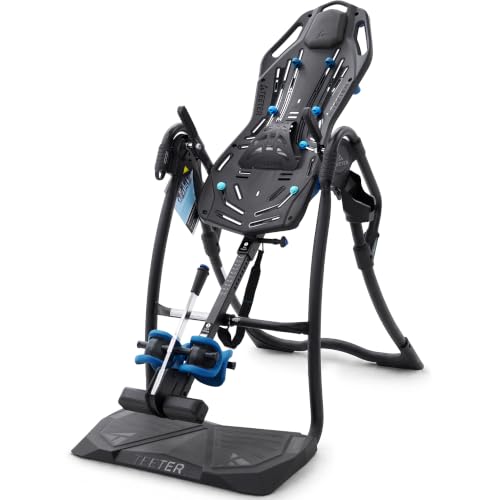
TEETER FitSpine LX9 Inversion Table with Accessories and Easy-Reach Ankle Lock

YOLEO Gravity Inversion Table

BODY RHYTHM Yoga Headstand Bench and Inversion Chair for Home Strength Training

Teclor Inversion Table with Heat, Massage, and 350 lb Capacity

DERACY Mini Inversion Table
More Details On Our Top Picks
The FitSpine X3 puts a flexible backrest at the center of the experience, which matters during long inversion sessions in a dedicated workout area. Its floating suspension moves with your torso instead of holding every part of the back against a rigid panel.
That makes it a sensible middle ground for people who want accessories and adjustable support without moving to a specialized yoga chair. Compared with the TEETER EP-560, this model leans toward a more mobile backrest, while the EP-560 puts greater emphasis on ankle and foot positioning.
The Case For It
- The FitSpine backrest uses an eight-point floating suspension for body movement during inversion.
- An easy-reach ankle lock simplifies access to the restraint once you are lying down.
- Grip-and-Stretch handholds add options for upper-body stretching movements.
- Acupressure nodes provide varied contact points during supported inversion.
- Covered repairs can include parts, labor, and shipping, although plan details vary.
Points To Keep In Mind
- The floating backrest appeals more to users comfortable with a flexible surface than to anyone wanting a rigid platform.
- You still need enough floor space to lie down, invert, and return the table to its resting position.
Key Specs
Built With In Mind
You benefit most from this model when you want a full-size table with a flexible back and multiple ways to customize your session.
Where A Sibling Pick Shines
The TEETER EP-560 suits you better when ankle-cup and foot-platform adjustments matter more than a floating backrest.
The EP-560 approaches comfort through the points where your body meets the frame. Wrap-around ankle cups and a two-position foot platform let you settle your lower body before rotating, which may feel more purposeful than a generic ankle strap.
Its ComforTrak backrest flexes as you move, giving you a more responsive surface than a rigid panel. Unlike the FitSpine X3, this table places particular emphasis on foot placement and ankle enclosure rather than suspension points.
Benefits That Matter
- Wrap-around ankle cups provide a more enclosing contact point during inversion.
- The easy-dial foot platform offers two positions for adjusting your stance.
- A flexing ComforTrak backrest follows torso movement during supported stretches.
- Grip-and-Stretch handholds support a broader range of upper-body movements.
Small Caveats
- The various contact adjustments can take time to configure during your first few sessions.
- A full-size inversion table requires more usable floor area than a bench or mini model.
Feature Snapshot
The Right Fit
This table suits users who want an enclosed ankle fit and adjustable foot placement for conventional inversion routines.
Another Choice May Suit
The TEETER FitSpine X3 is a better match for you when a more mobile, floating backrest is your priority.
The LX9 builds on the FitSpine concept with a floating backrest, eight suspension points, and a collection of inversion accessories. For a home gym where you want varied stations rather than one basic table, that broader feature set has obvious appeal.
Its easy-reach ankle lock follows the same practical idea as the FitSpine X3. Compared with the EP-560, however, this model concentrates more attention on the backrest’s range of motion and the accessory package.
What Stands Out
- Eight-point floating suspension gives the backrest flexible movement during inversion.
- Integrated accessories make it easier to vary stretching positions without separate equipment.
- The easy-reach ankle lock reduces the need to twist while securing the restraint.
- A 300 lb capacity covers a broad range of home users.
Worth Noting
- More accessories can make storage and setup slightly more involved than a simpler table.
- Its 300 lb limit sits below the 350 lb capacity listed for the Teclor model.
- You may find the full-size format unsuitable for a compact workout corner.
Made For
You get the most from the LX9 when your home gym supports multiple stretching options and you prefer a flexible backrest.
Reach For A Different Pick When
The TEETER EP-560 is the better fit when ankle enclosure and foot-position adjustment guide your choice.
The YOLEO Gravity table is built around an integrated steel frame and layered mechanical restraints. That combination gives it a different character from the flexible Teeter models, which concentrate on body conformity through their backrests.
An adjustable ratchet ankle system handles the foot and ankle position, while separate locking pins reinforce the table’s mechanical security. Arm-assisted return mechanics may also appeal in a home gym where smooth repositioning matters to your routine.
The Good Stuff
- The integrated steel frame provides a rigid base for full-size inversion.
- An adjustable ratchet ankle lock allows you to change the ankle position.
- Separate safety-lock pins add another mechanical control to the inversion mechanism.
- Simple arm movements assist with returning the table to an upright position.
Possible Compromises
- A rigid steel frame and multiple locking controls take up more room than a compact trainer.
- The mechanical restraint system gives you fewer fit choices than the EP-560’s two-position foot platform.
Quick Facts
Who Will Love This
This model suits people who value a rigid steel frame, mechanical restraint controls, and assisted return operation.
A Better Fit Elsewhere
The BODY RHYTHM Yoga Headstand Bench fits you better when compact support and a lower inversion angle matter more.
A headstand bench changes the inversion experience by supporting your head and upper body instead of hanging entirely from the ankles. That makes the BODY RHYTHM option more approachable for yoga practice, home mobility work, and strength exercises involving an inverted position.
The bench format is the central advantage here. Compared with the YOLEO Gravity table, it offers a lower, more compact approach to inversion, although it does not provide the same ankle-based full-table experience.
What Earns Its Place
- Head and upper-body support reduces the load placed on the neck, arms, and shoulders during headstand work.
- The chair-style design offers a more controlled introduction to inverted positioning.
- It supports yoga headstands, inversion practice, and home strength training in one station.
- The bench format suits homes unable to accommodate a large full-size inversion table.
Practical Considerations
- You will need enough clearance to position the bench and move into and out of the inverted posture.
- This is a yoga headstand station rather than a conventional ankle-secured inversion table.
At A Glance
Best Suited To
You benefit most from this bench when you want supported yoga inversions in a compact home workout area.
Look Elsewhere When
The DERACY Mini Inversion Table suits you better when ankle-supported inversion and rolling mobility are your priorities.
The Teclor table turns the inversion surface into a comfort station with a thick 3D memory-foam backrest, removable heating, and massage functions. That combination is meaningful in a home setup where you plan to spend several minutes in the inverted position.
Its listed 350 lb capacity exceeds the 300 lb figures associated with the three Teeter tables here. You also gain a remote-controlled backrest setup, though these added functions make the model more complex than a basic mechanical table.
Notable Gains
- Thick 3D memory foam gives the backrest a more cushioned contact surface.
- Removable heat and massage functions add adjustable comfort during longer sessions.
- A remote control lets you manage the backrest functions without reaching behind you.
- A 350 lb listed capacity is higher than the 300 lb figures for the TEETER models.
- Three gear positions lock the table after adjustment.
Less-Strong Areas
- The heating and massage hardware adds setup and care considerations beyond a plain backrest.
- Remote-controlled functions require access to the removable control unit during use.
Technical Highlights
Whose Shelf It Belongs On
This table suits you when cushioned support, heat, massage, and a higher listed capacity guide your decision.
Swap It Out When
The TEETER FitSpine LX9 fits you better when a floating backrest and accessory variety matter more than heat and massage.
The DERACY Mini Inversion Table targets people who want inversion training without the footprint of a full-length table. Its compact form is intended to make the transition into an inverted position less abrupt than a traditional table that sends you fully upside down at once.
Rollers add a practical mobility advantage, allowing the machine to be repositioned rather than permanently occupying one corner. It is still an inversion table with an ankle-based setup, so it offers a different experience from the head-supported BODY RHYTHM bench.
Points In Its Favor
- The mini format reduces the amount of floor space needed for inversion training.
- Built-in rollers make the unit easier to move within a home workout area.
- Its gradual approach suits people who are less comfortable with a sudden full inversion.
- The back-extension function adds another movement option beyond hanging inversion.
Where It May Fall Short
- Compact dimensions limit room for large movements and fully extended positioning.
- You may find the smaller frame less suitable for longer holds than the full-size TEETER options.
Who Should Grab It
This mini table suits you when limited floor space, portability, and a gradual inversion entry point are your priorities.
Skip It When
The TEETER EP-560 suits you better when wrap-around ankle support and a two-position foot platform are essential to your setup.
What Matters Before You Set Up Your Inversion Station
Floor Space and Storage
Measure the space needed to lie down, invert, and return the table before purchasing. A full-size model needs a clear approach and safe standing area, while the DERACY Mini Inversion Table and BODY RHYTHM bench require less room.
Fit and Restraint
A secure fit starts with the ankle or head support. The TEETER EP-560 uses wrap-around cups and a two-position foot platform, while the YOLEO Gravity table uses an adjustable ratchet system.
Back Contact and Comfort
A floating backrest moves with the torso, a flexing backrest changes with body movement, and thick memory foam adds cushioning. Choose according to the contact you prefer rather than assuming one style suits every session.
Capacity and Accessories
Check the stated capacity against your weight and the way you plan to use the equipment. Accessories such as handholds, acupressure nodes, heat, and massage can improve variety, but they also increase setup and storage needs.
Common Mistakes Worth Avoiding
Wrong Turns To Avoid
The most common mistake is measuring only the folded frame instead of the space needed to mount and invert. Another is choosing a complicated adjustment system before learning how each control works.
Avoid comparing support styles as if they serve the same purpose. A floating backrest, a flexing panel, memory foam, and a head-support bench create different positions and movement patterns.
What Separates Premium From Basic
Higher-tier tables often add flexible suspension, shaped ankle support, cushioned surfaces, or electronic comfort functions. Those upgrades make sense when you value frequent, longer sessions or need more precise positioning.
For occasional, compact practice, a simpler model may be more practical. Pay for adjustments you will use rather than features that merely add hardware.
Frequently Asked Questions
How Much Space Does an Inversion Table Need?
Allow enough room to lie flat, invert, and return the frame upright. Compact models need less clearance than full-size tables with long rails and wide bases.
Do I Need a Full Inversion Table?
No. A headstand bench supports the upper body, while a mini inversion table offers a shorter, less abrupt inversion path. A conventional table fits standard ankle-secured inversion.
What Capacity Should I Look For?
Choose a model whose listed capacity comfortably exceeds your weight. The TEETER models list 300 lb, while the Teclor model lists 350 lb.
Which Backrest Feels Most Adjustable?
A floating backrest moves across multiple suspension points, while a flexing panel bends with the torso. Thick memory foam prioritizes cushioning over the same responsive movement.
Are Inversion Tables Suitable for Beginners?
Beginners may find the BODY RHYTHM bench more approachable because it supports the head and upper body. The DERACY Mini Inversion Table offers another gradual entry point with a compact frame.
Final Verdict
The TEETER FitSpine X3 offers a balanced starting point with a flexible backrest, while the EP-560 focuses more closely on ankle and foot comfort. The Teclor model suits sessions built around cushioning, heat, and massage, and the BODY RHYTHM bench serves supported yoga practice.
Choose the format that fits your room and movement style, then confirm the restraint and capacity before setting it up.