
Footsteps, voices, and furniture movement can travel straight through a home’s floor structure, especially in older properties or converted buildings. You need materials that either add mass, absorb airborne sound, or dampen vibration rather than simply covering the noise. The picks below separate automotive butyl dampers from wall-mounted acoustic panels so you can match each material to the surface and noise problem you actually face.
A Fast Comparison Of The Options

uxcell 80mil Butyl Sound Deadening Mat, 18 sqft, 17 Sheets

SoundSkins 180mil Butyl Sheet

SGM Silver 80mil Butyl Car Sound Deadening Mat, 18 sqft, Self-Adhesive
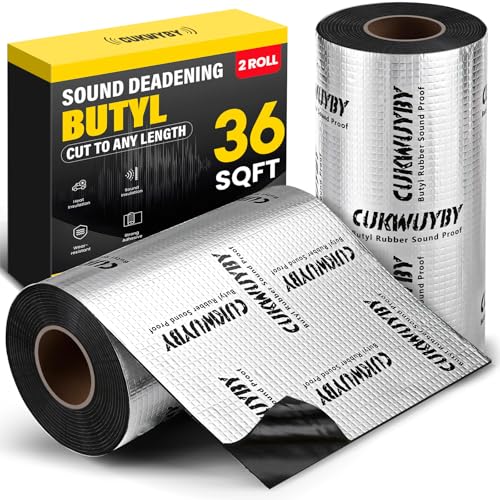
CUKWUYBY Butyl Sound Deadening Roll, 36 sqft, Aluminum Composite for Cars

ROOME 18-Pack Acoustic Panels

ROOME 18-Pack 12 x 12 x 0.4-In Self-Adhesive Acoustic Panels, Blue
ROOME 18-Pack 12 x 12 x 0.4-In Self-Adhesive Acoustic Panels, White
A Deeper Look At The Lineup
Flat metal in a vehicle can turn road impacts into rattles, vibration, and cabin noise. These 80mil butyl sheets add damping material to doors, floors, roofs, and similar panels, with butyl rubber carrying a thin aluminum facing. For automotive floor work, that combination makes this a practical way to treat several moderate-sized sections without committing to one large roll.
Butyl is a rubber-based damping material that reduces how freely a panel vibrates. Compared with the heavier SoundSkins format, uxcell offers more individual sheets and less material per square foot, which may suit a project involving separate floor sections. The material also carries a flame-retardant description, although installation remains an automotive application rather than a residential floor assembly.
A Strong Showing
- Seventeen separate sheets let you work across disconnected vehicle panels.
- The 18-square-foot total suits moderate projects without a large roll.
- Each 400 by 250mm sheet fits around many molded contours.
- Self-adhesive backing simplifies placement on clean metal surfaces.
Things To Consider
- A roller is not included, so you need a separate pressing tool for a secure bond.
- These mats are intended for vehicle panels, not residential floor joists.
Quick Facts
Made For
You need a flexible damping option for several vehicle floor sections and prefer individual sheets over a continuous roll.
Consider Something Else When
CUKWUYBY Butyl Sound Deadening Roll, 36 sqft, Aluminum Composite for Cars suits you better when maximum coverage takes priority over smaller pieces.
Heavy road rumble becomes most distracting when it reaches the floor and lower door panels as a low-frequency vibration. SoundSkins uses a 180mil butyl construction to add mass and damping across 11 square feet, making it a sensible option for a vehicle upgrade focused on road noise, panel vibration, and rattles. Its thicker format is the key difference from the 80mil uxcell package.
You gain a denser damping layer, but you also cover less area per package. Depending on the panel shape, 11 square feet may be enough for a cabin floor section without reaching across the full vehicle. The multi-layer construction is designed for combined sound and heat control, so it suits daily commuters who want one material to address several panel-related issues.
Where It Excels
- The 180mil construction offers a heavier mass layer than the 80mil options.
- Butyl damping targets vibration before it spreads through connected panels.
Trade Offs
- Eleven square feet provides less coverage than the 18- and 36-square-foot choices.
- The heavier format can be less convenient for small, highly contoured sections.
- It remains automotive-focused rather than a residential floor barrier.
Right Fit For
You are damping a limited vehicle area and favor a thicker butyl layer over maximum coverage.
Swap It Out When
uxcell 80mil Butyl Sound Deadening Mat, 18 sqft, 17 Sheets fits you better when separate, manageable pieces matter more than added thickness.
A noisy car floor rarely needs the heaviest material available. It needs a layer that bonds to metal, follows common contours, and reduces vibration without taking over your available coverage. SGM Silver provides 18 square feet of 80mil butyl mat, giving you the same nominal thickness and area as uxcell but with a different pliability and finish.
The pliable butyl mastic is intended to conform around metal sections, and the self-adhesive format can be useful on a vehicle floor with channels or changes in elevation. You still need to prepare the metal carefully for contact, so the result depends on a clean surface and firm pressure. The honest read is that this is a balanced package for a focused cabin project.
Features That Help
- Self-adhesive butyl simplifies installation on prepared metal.
- Pliable material follows irregular floor shapes and channels.
- Eighteen square feet covers a meaningful cabin section.
- The 80mil layer adds mass without the weight of a 180mil product.
- Silver facing provides a clean visual finish inside the vehicle.
Minor Gripes
- Surface preparation and firm pressing remain important for a proper bond.
Feature Snapshot
Who It Suits Best
You want a pliable 80mil mat for a vehicle cabin and value simple adhesion more than a heavier 180mil construction.
Another Choice May Suit
SoundSkins 180mil Butyl Sheet suits you better when added mass for road vibration matters more than coverage area.
Large vehicle panels can make sheet layouts feel fragmented. CUKWUYBY takes a different approach with a 36-square-foot roll of butyl and aluminum composite material, giving you more continuous material for floors, doors, and roofs. The roll format can be more convenient when you want fewer joints across a broad metal section.
This choice favors coverage rather than extra thickness. It conforms closely to vehicle metal to control vibration while also providing a thermal barrier against engine and exterior heat. You may find the roll harder to maneuver inside a confined cabin, so measure the available space and plan cuts before beginning. It is well suited to extensive projects, not a single small repair.
A Favorable Mix
- Thirty-six square feet offers the largest coverage area in the lineup.
- A roll reduces the number of separate sections needed for broad panels.
- Aluminum composite construction supports both damping and heat control.
Practical Considerations
- A large roll may be cumbersome in a confined vehicle cabin.
- It is a coverage-first choice, not a thicker 180mil alternative.
Technical Sheet
Built With In Mind
You are treating several large vehicle panels and want a continuous roll that prioritizes total area.
Look Elsewhere When
ROOME 18-Pack 12 x 12 x 0.4-In Self-Adhesive Acoustic Panels, Blue fits you better for improving reflections inside a home studio rather than damping vehicle metal.
Echo can make a home recording space sound hollow long before sound reaches the room next door. These self-adhesive acoustic panels are made to absorb unwanted reflections, echo, and standing waves within a room. Their stated sound absorption coefficient of 0.95 makes them more relevant to controlling what you hear inside the space than blocking transmission through a floor assembly.
Eighteen panels give you flexibility to cover several reflection points, such as walls near a desk or speakers. You can reposition them as the room changes, which is useful in a small studio where a permanent built-in treatment may be impractical. They are not a substitute for structural isolation between residential floors.
Real-World Strengths
- The panels reduce echo and standing-wave reflections within a room.
- Self-adhesive placement makes them easy to arrange around a workspace.
Points To Note
- Absorption inside a room does not create a complete barrier between floors.
- Panel dimensions are not stated, so measure the intended wall area before installation.
Who Will Love This
You are refining recordings or reducing reflections in a home studio and need a simple wall treatment.
Not Your Match When
CUKWUYBY Butyl Sound Deadening Roll, 36 sqft, Aluminum Composite for Cars suits you better when you need to damp vibration in a vehicle rather than absorb echoes.
A shared office or home studio often has a simpler problem than sound traveling through a floor: voices and equipment create reflections within the room. The blue ROOME panels provide eighteen 12-inch squares with a stated thickness of 0.4 inches, making their scale and placement easier to plan than an unspecified foam format. Their blue finish also gives a recording space a more distinctive look.
These panels absorb sound within the room, which can improve clarity around a microphone or desk. They do not add meaningful mass to a floor or wall assembly, so do not expect them to stop transmission from the space above. For a home office, place them where reflections interfere with speech or calls rather than applying them across every available surface.
Everyday Wins
- Twelve-inch squares are easy to arrange in rows or staggered layouts.
- The 0.4-inch thickness gives you a defined profile for wall planning.
- Adhesive backing removes the need for a separate mounting frame.
- The blue finish adds color to a studio or office wall.
Where It May Fall Short
- They absorb room reflections but do not form a dense transmission barrier.
Core Details
Made For
You are treating a home office or studio wall where reflection control and a blue accent both matter.
Where A Sibling Pick Shines
ROOME 18-Pack 12 x 12 x 0.4-In Self-Adhesive Acoustic Panels, White suits you better when a neutral white appearance blends more easily with your existing room.
White panels suit recording rooms, offices, and media spaces that already have a restrained visual scheme. This ROOME set keeps the same eighteen-panel, 12-inch-square format and 0.4-inch thickness as the blue version, so acoustic placement and room coverage stay comparable. You are choosing the finish rather than a different physical performance.
For a minimalist studio, the white surface can look less visually dominant than a saturated color. The panels still work by absorbing internal reflections, helping reduce echo and standing-wave buildup around your listening or recording area. They remain a room treatment, not a complete solution for sound moving through residential floor joists.
Real Benefits
- White panels coordinate easily with pale walls and studio furniture.
- The compact squares support flexible placement around reflective surfaces.
- Adhesive installation keeps the setup straightforward.
Where It Is Less Suited
- Visible scuffs may stand out more clearly on a white surface.
- Wall absorption does not block sound transmission through a floor assembly.
- Eighteen separate panels can leave small gaps if the layout is not planned.
Details At A Glance
The Right Fit
You want acoustical treatment that blends into a bright, neutral home studio or office interior.
Reach For A Different Pick When
uxcell 80mil Butyl Sound Deadening Mat, 18 sqft, 17 Sheets suits you better when you need vibration damping on a vehicle floor instead of reflection control on a wall.
What Matters In A Floor Sound-Control Plan
Identify The Sound Path
Airborne sound travels through the air and building structure, while impact noise begins with footsteps or furniture striking a floor. Butyl damping is best suited to vibrating metal panels, such as a vehicle floor, whereas wall foam controls echoes inside a room. Neither approach alone creates a complete residential floor barrier, so you need to separate impact noise from airborne transmission before selecting material.
Match The Material To The Surface
The automotive mats in this lineup adhere to prepared metal and use butyl to control panel vibration. The ROOME products attach to walls and absorb reflections within a room. For floor joists or subfloors, check the surface, adhesive compatibility, building requirements, and the existing floor assembly before applying any automotive or foam material.
Compare Coverage And Thickness
The range runs from 11 square feet at 180mil to 36 square feet in a roll, with two 18-square-foot options around 80mil. Greater thickness can add mass and damping, while larger coverage reduces the number of pieces needed. Choose the balance your project actually requires rather than assuming the heavier format will handle every surface.
Common Mistakes In Floor Noise Projects
Confusing Absorption With Isolation
Absorption reduces reflections within a room, but it does not necessarily stop sound crossing a floor. A wall panel can improve clarity in a studio without preventing footsteps from reaching the apartment below.
Applying Automotive Mats Beyond Their Design
Butyl mats are described for vehicle panels and bonding to metal. A residential floor has different materials, edges, fasteners, and structural requirements, so surface compatibility comes before coverage calculations.
What Separates Premium From Basic
The Value Of Added Mass
A thicker butyl layer can provide more damping than an 80mil mat, especially for vibration-prone vehicle panels. The 180mil option is worth considering for a focused road-noise project, while the extra weight is less attractive when you need broad coverage or have a confined workspace.
Frequently Asked Questions
Can These Products Be Installed Between Residential Floors?
Not as a complete floor-isolation system. The automotive mats target vibrating metal panels, while the ROOME panels absorb reflections from walls and similar room surfaces.
Does Thicker Material Always Reduce More Noise?
No. Greater thickness can increase mass and damping, but adhesion, seams, panel shape, and the existing floor structure also affect performance.
Are The Blue And White ROOME Panels Different?
The blue and white sets share the same stated 18-panel count, 12 x 12-inch dimensions, and 0.4-inch thickness. Their main distinction is the finish.
Can ROOME Panels Improve A Home Studio?
Yes, for echo, standing waves, and reflections within the room. They do not replace structural isolation for sound traveling through floors or walls.
Which Option Covers The Largest Vehicle Area?
CUKWUYBY Butyl Sound Deadening Roll, 36 sqft, Aluminum Composite for Cars provides the greatest stated coverage in this lineup. Its roll format also favors large, continuous panel sections.
Final Verdict
Start with the type of noise you need to control. Automotive butyl mats suit vibrating vehicle panels, while ROOME acoustic panels help manage echoes and reflections on walls in studios and offices. For residential sound passing between floors, a broader structural plan is still necessary, so use these picks for the specific surfaces they are designed to address.