
A basement ceiling can become uncomfortable when damp air meets cold joists, exposed ducts, and poorly supported insulation. The right combination depends on whether your priority is thermal control, moisture management, lighting, or sealing gaps around penetrations. These seven options cover distinct parts of a basement-ceiling project, from reflective barriers and vapor-barrier tape to support wire, recessed lights, and expanding foam. Each fits a specific job, so matching the material to your basement’s conditions matters more than treating every assembly the same.
The Essentials At A Glance

U0U 16 Inch Stainless Steel Insulation Support Wire and Hangers, 30 Pcs
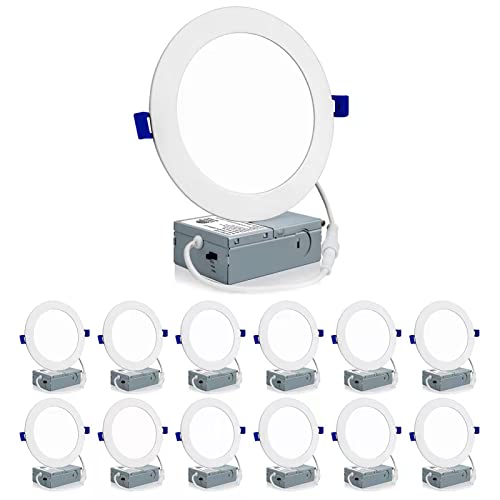
Meconard 6-Inch 3CCT LED Downlights, 12-Pack

AlloyStory 12-Roll Barrier Tape

AlloyStory 4×180 Seam Tape, 3 Rolls

US Energy Products R8 Reflective Foil

SEALTECH Heavy-Duty 5mm Reflective Foam Roll, 24 x 25 Feet

ixirpro 12-Pack Spray Foam Insulation Kit
A Deeper Look At The Lineup
Insulation that sags away from the joists leaves air pockets and reduces the consistency of your ceiling assembly. These 16-inch stainless steel support wires provide a simple way to hold insulation against framing in a basement, attic, or garage.
The flexible wire is useful where rigid clips would be awkward, and the 30-piece count gives you enough material for multiple runs or replacement pieces. Unlike the reflective products later in the lineup, this item does not add thermal resistance; it supports the insulation you already have.
Good Reasons To Consider
- Stainless steel construction suits damp basement and garage environments.
- Flexible wire can follow uneven framing more readily than rigid supports.
- Thirty pieces provide useful coverage for a multi-bay ceiling.
- The slim 16-inch length can span narrow gaps between attachment points.
Things To Consider
- Check joist spacing and your chosen attachment method before purchasing.
- It supports insulation but does not seal air or moisture pathways.
Key Specs
Made For
This works well for homeowners supporting flexible insulation between basement-ceiling joists or for installers who want spare support pieces on hand.
A Better Fit Elsewhere
SEALTECH Heavy-Duty 5mm Reflective Foam Roll suits projects that need an actual radiant-insulation layer rather than wire supports.
Lighting fixtures have to coexist with ceiling insulation, which makes the Meconard downlights more relevant to this project than their appearance first suggests. Their IC rating permits contact with insulation, helping them fit a properly insulated ceiling assembly.
Three color temperatures give you different lighting characters without changing fixtures. Compared with the support wire, this product contributes illumination rather than holding insulation in place, so it solves a separate part of the basement ceiling.
What It Does Well
- Selectable 3000K, 4000K, and 5000K color temperatures.
- Twelve lights suit a basement with several finished rooms or work areas.
- IC-rated construction is designed for use with ceiling insulation.
- The 12-watt output provides 1,050 lumens for practical illumination.
Worth Noting
- Color temperature is selected at the junction box rather than adjusted from the room.
- Confirm that your ceiling opening accommodates a 6-inch canless fixture.
Technical Sheet
Right Fit For
These downlights suit homeowners adding or refining lighting in a finished basement where the ceiling contains insulation.
Another Choice May Suit
US Energy Products R8 Reflective Foil is a better fit when your priority is the insulation layer rather than the lighting fixture.
Large crawl-space liners rarely fail in one dramatic spot. Their weak points are usually seams, overlaps, and areas where moisture can begin working through a joint, which makes seam tape a practical part of the assembly.
Each AlloyStory roll measures 4 inches by 180 feet and is 9 mils thick. The 12-roll format favors broad coverage, especially for a basement or crawl space with several connected walls.
Everyday Perks
- Twelve rolls support extensive seam coverage in larger crawl spaces.
- The wide format covers joints and overlapping plastic edges.
- UV resistance helps the seal withstand exposed crawl-space conditions.
- A water-resistant seal limits moisture entry along vulnerable seams.
Trade Offs
- Twelve full rolls require room to store and carry them to the work area.
- Tape supports a complete barrier system but does not replace the barrier material itself.
Who Will Love This
This format works especially well for homeowners enclosing a sizable crawl space or completing several rooms with a shared polyethylene liner.
Look Elsewhere When
AlloyStory 4×180 Seam Tape, 3 Rolls offers a more compact option for a small repair area or a limited number of joints.
The three-roll AlloyStory package targets the focused part of a basement moisture-control project. It is a more manageable amount of tape than the 12-roll version, particularly when you are closing seams, overlaps, joints, and small damaged sections of plastic sheeting.
Its high-tack acrylic adhesive is designed to hold polyethylene vapor barriers and poly liners together. That focus makes it more purposeful than a general-purpose decorative tape, although the surface and joint still need proper preparation.
What Helps Most
- A high-tack acrylic adhesive supports joints between polyethylene sheets.
- The 4-inch width gives seam tape useful overlap coverage.
- Three rolls suit repairs and medium-sized enclosure projects.
- The material helps close moisture pathways at seams and overlaps.
Small Caveats
- Three rolls provide less coverage than the 12-roll AlloyStory option.
- Dirt, dust, or loose plastic can reduce adhesion, so clean the seam before application.
Feature Snapshot
Built With In Mind
This tape is a sensible fit for DIY renovators closing polyethylene liner seams or for installers making targeted repairs around a crawl-space barrier.
Consider Something Else When
AlloyStory 12-Roll Barrier Tape makes more sense for a large enclosure where you expect to seal many walls, overlaps, and access openings.
Reflective insulation works by limiting radiant heat transfer, meaning it can be more useful in a garage or metal building than in a typical finished basement. This white double-bubble roll brings an R8 designation and a 24-by-10-foot format to those larger assemblies.
The double-layer bubble structure adds cushioning compared with a single layer, while the reflective surface is designed to redirect radiant heat. Compared with AlloyStory seam tape, it addresses temperature control rather than closing a moisture barrier.
Real-World Strengths
- The reflective surface is rated to reflect up to 97% of radiant heat.
- Double-bubble construction provides cushioning between framing members.
- The broad roll covers garage doors, unfinished ceilings, and metal-building surfaces.
- An R8 designation makes it easier to compare with other thermal layers.
Practical Considerations
- A radiant barrier does not replace an air seal at joints and penetrations.
- The 24-by-10-foot roll needs a clear work area and storage space.
Key Product Details
The Right Fit
This is a practical choice for garage, warehouse, and metal-building owners adding reflective insulation to large unfinished surfaces.
Reach For A Different Pick When
SEALTECH Heavy-Duty 5mm Reflective Foam Roll suits installers who prefer a thicker foam-backed profile that can be cut around ceiling obstacles.
SEALTECH adds a 5mm foam core to its reflective barrier, giving you a more substantial profile than a thin foil sheet. At 24 by 25 feet, the roll offers enough material for a basement ceiling, attic, garage, or window-insulation project.
Its reflective layer is designed to redirect radiant energy, while the foam core provides separation and cushioning. For an unfinished space with exposed framing, that combination can be easier to position around pipes and irregular edges than bulkier fibrous insulation.
Notable Upsides
- The 5mm foam core adds thickness and cushioning to the reflective layer.
- Up to 95% radiant-energy reflection supports temperature control.
- The roll suits indoor and outdoor applications in garages, attics, and ceilings.
- Its flexible format can follow many framing shapes and surface angles.
Details To Watch
- It is a radiant barrier with foam backing, not a conventional thick batt insulation.
- Confirm that the 24-by-25-foot dimensions suit your available wall or ceiling area.
Whose Shelf It Belongs On
This roll works well for DIY renovators and garage owners who want reflective insulation with more substance than loose foil.
Where A Sibling Pick Shines
US Energy Products R8 Reflective Foil is the better fit for broad garage-door and metal-building coverage where a wide double-bubble roll is more convenient.
Spray foam becomes useful where a basement ceiling has irregular gaps, pipes passing through framing, or small openings that flat insulation cannot reach cleanly. The ixirpro package includes 12 cans of 26.46-ounce expanding foam along with a spray gun, cleaner, and several nozzle options.
Unlike reflective rolls, this material expands into the space it’s applied to, making it a targeted air-sealing tool rather than a full ceiling covering. The included suit, glasses, and gloves reinforce the need to treat the application as a hands-on project with ventilation and careful handling.
Strong Points
- Expanding foam reaches irregular gaps and framing penetrations.
- Twelve 26.46-ounce cans support repeated project work.
- The included gun gives you more control than a basic spray head.
- Cleaner, extra nozzles, gloves, glasses, and a suit form a useful kit.
Some Limits To Know
- Expansion makes overspray and material removal important planning concerns.
- Spray foam is better for targeted gaps than for covering an entire ceiling.
- Proper ventilation and the included protective equipment remain essential.
Feature Breakdown
Who Should Grab It
This kit suits homeowners or installers sealing pipe penetrations, rim gaps, and other irregular openings around a basement ceiling.
Swap It Out When
AlloyStory 4×180 Seam Tape, 3 Rolls is a better fit for linear plastic seams that need a clean, flat application.
Matching Materials To Your Basement Ceiling
Start With The Air And Moisture Picture
A basement ceiling assembly often needs more than one material. An air seal closes pathways around penetrations, while a vapor barrier resists moisture movement. A radiant barrier reflects heat, and bulk insulation slows heat transfer through the ceiling itself.
Start by identifying whether your concern is dampness, drafts, temperature control, or unsupported insulation. That answer prevents you from choosing a tape roll for a problem that actually calls for a thicker thermal layer.
Match The Material To The Location
Reflective insulation works best where radiant heat is prominent, such as garages, metal buildings, unfinished ceilings, and areas near ductwork. Spray foam is more useful for irregular gaps, while seam tape belongs on joints in polyethylene barriers.
Recessed lighting also changes the assembly. The Meconard downlights carry an IC rating for contact with insulation, but you still need a fixture opening that matches the installation.
Plan Around Installation And Storage
Basement workrooms have limited storage, so the number of tape rolls and the length of reflective rolls deserve attention. A large project may justify the 12-roll barrier tape package, while targeted repairs are easier to manage with three rolls.
For spray foam, ventilation, protective gear, and cleanup should be planned before opening a can. Reflective materials need enough flat space to unfold, while support wire is mainly an installation accessory rather than finished insulation.
Avoiding Common Basement Insulation Mistakes
Mistakes Worth Dodging
The most common error is treating every basement ceiling as though it has identical moisture and temperature conditions. Another mistake is assuming a radiant barrier seals air or moisture on its own. Check joist spacing, barrier connections, and pipe penetrations before materials arrive, and keep seams clean before applying tape.
What Separates Premium From Basic
Higher-tier products usually add useful coverage, adhesive performance, protective equipment, or installation flexibility. A 12-roll tape package saves repeated supply runs, while a complete spray-foam kit reduces the need to source accessories separately. The upgrade is worthwhile only when its added capacity or convenience matches your project scale.
Frequently Asked Questions
Can Reflective Insulation Be Used on a Basement Ceiling?
Yes, reflective insulation can suit a basement ceiling, especially in an unfinished area with exposed framing. Confirm the material’s thickness, moisture resistance, and attachment method before installation.
Does Vapor Barrier Tape Replace Plastic Sheeting?
No. Tape seals seams, overlaps, joints, and damaged areas in a plastic barrier but does not provide the full barrier surface. Use it as part of a complete moisture-control assembly.
Is Spray Foam Needed for a Basement Ceiling?
Spray foam is useful for irregular gaps around pipes, ducts, rim joists, and other penetrations. Broad ceiling areas may be better served by support wire, radiant insulation, and conventional insulation.
Can Recessed Lights Touch Ceiling Insulation?
The Meconard 6-Inch 3CCT LED Downlights have an IC rating, which permits contact with insulation. Proper fixture fit and installation requirements still matter, so check the opening and junction-box arrangement.
How Long Should Insulation Support Wire Be?
The U0U wire measures 16 inches, making it suitable for narrower framing spans. Match the wire to your joist spacing and attachment points so the insulation remains supported without creating gaps.
Final Verdict
The best basement-ceiling setup is rarely a single-product solution. Support wire keeps insulation in place, reflective materials manage radiant heat, tape closes barrier seams, and spray foam handles irregular openings. Choose the products that address the actual weak points in your ceiling, then plan the installation around access, storage, and moisture control.