
A hot attic in July can feel like a second furnace, while winter heat often escapes through the stairs enclosure and exposed framing. You need materials suited to the space, whether you’re covering a large floor, sealing an access hatch, or checking insulation depth before adding more. These options serve different attic jobs, so matching the material to the location matters.
A Snapshot Of The Selections

US Energy Products Bubble Insulation

DGSL Attic Door Cover 25 x 54 x 11 in

Trade Winds Reflective Foil Roll 4 x 100 ft

AggSound 3-Layer Sound Deadening Mat

Saysurey 25-Inch Attic Rulers, 200 Pack

Saysurey 20-Inch Attic Rulers, 400 Pack
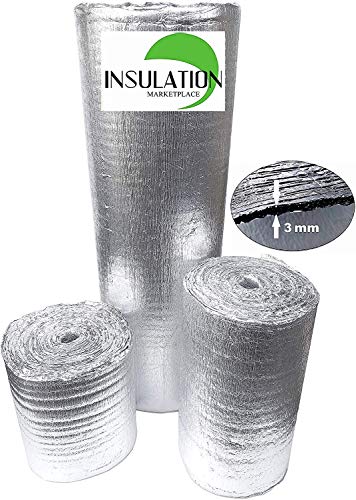
SmartSHIELD 3mm Reflective Roll 16 x 50 ft
The Details Behind The Selections
For a large attic floor, garages, or metal buildings, this double-bubble roll offers more coverage per length than a narrow reflective strip. Its foil face reflects radiant heat, while the two bubble layers add separation and cushioning against the framing.
That makes it more practical for broad surfaces than the DGSL hatch cover. The 48-inch width and 100-foot length can span joists efficiently, although you still need to account for the shape of the attic and the dimensions of each bay.
Where It Delivers
- The 48-inch width reduces the number of strips needed across common joist bays.
- Double-bubble construction provides more separation than a single-layer sheet.
- The reflective foil surface helps limit radiant heat transfer through the covered area.
- A white vinyl backing gives the opposite face a finished, moisture-resistant surface.
Trade Offs
- Flexible bubble material requires careful placement and fastening around irregular framing.
- Its 4-by-100-foot coverage can leave excess material to store after a small installation.
Key Specs
Who It Suits Best
You benefit most when covering a large, accessible attic floor, garage ceiling, or metal building interior.
Another Choice May Suit
The DGSL Attic Door Cover 25 x 54 x 11 in fits better when your project centers on an attic stairs opening.
An open attic hatch can act like a missing section in your ceiling, especially when pull-down stairs create a large opening. This cover surrounds the attic entrance with foil bubble insulation and helps limit heat transfer through that access point.
The 25-by-54-by-11-inch shape gives you a more focused solution than a full attic roll. The installation tool version is useful for a cleaner fit, while the plain cover offers a simpler starting point for a standard opening.
The Helpful Details
- The tent-style shape helps cover the sides of an attic stair opening.
- Internal bubble insulation adds thermal separation around the access area.
- A sealed cover can also reduce dust entering through the opening.
- The installation-tool option supports a more deliberate fit.
Worth Noting
- Measure the opening and surrounding frame before ordering, because the dimensions need to match.
- This targets the hatch rather than the full attic floor, so it does not replace loose-fill or blanket insulation.
Quick Facts
Made For
This fits homeowners with pull-down attic stairs or a similarly sized access opening that needs a removable barrier.
A Better Fit Elsewhere
The US Energy Products Bubble Insulation suits you better when the goal is to cover exposed joists across a larger floor area.
Reflective foil can handle more than one part of a home project, which is where this roll earns its place. You can use it around attic windows, garage surfaces, plumbing areas, or other spaces where radiant heat is a concern.
Compared with the US Energy Products Bubble Insulation, this option presents aluminum on both sides of a bubble layer. The 4-by-100-foot format still provides generous coverage, though a small attic window would leave much more material than you need.
A Favorable Mix
- Aluminum surfaces on both sides suit projects with different orientations and light exposure.
- The 100-foot roll can cover several attic bays or a combination of smaller areas.
- Flexibility makes the material useful around windows, pipes, and garage walls.
Details To Watch
- A one-window project may leave a substantial portion of the roll unused.
- You need a flat, clean attachment surface and suitable fasteners for consistent placement.
Feature Snapshot
The Right Fit
You get the most value from this option when one attic contains several reflective surfaces or when you want material for several rooms.
Consider Something Else When
The SmartSHIELD 3mm Reflective Roll 16 x 50 ft is a stronger fit for moisture-prone locations needing a more substantial foam-core structure.
This mat belongs in a vehicle rather than an attic, so your project needs to center on road noise, engine vibration, or heat inside a car, truck, or RV. Its three-layer construction combines 10mm closed-cell foam with an adhesive backing for direct installation on interior panels.
That difference matters. The reflective attic rolls create a thermal barrier across broad surfaces, while this mat adds vibration control beneath trim, along floors, or across doors.
What It Does Well
- Closed-cell foam helps limit heat transfer and reduces vibration through metal panels.
- The adhesive backing supports installation without requiring a separate layer of glue.
- Flexible material can be trimmed around floor contours, ducts, and door shapes.
Where It May Fall Short
- It is not designed to insulate an attic floor, wall cavity, or access hatch.
- Its 24-square-foot area suits a vehicle-sized project rather than a full house.
- Heat-resistant adhesive still requires clean, dry surfaces for proper placement.
Built With In Mind
You benefit most when reducing heat and vibration inside a car, truck, or recreational vehicle.
Swap It Out When
The DGSL Attic Door Cover 25 x 54 x 11 in is the more suitable option for sealing an attic stairs opening.
Checking insulation depth is awkward when you have to read a small label compressed between joists. These card-stock rulers give you a longer reference, and the 25-inch length suits framing spaces where a shorter measure may not span the visible section.
You can fasten a ruler to a joist or rafter, inspect its markings, and leave it in place while working around that section. The 200-count case provides a useful supply for a large attic or repeated inspections.
Useful Touches
- The 25-inch length provides a broader reading surface for joist and rafter sections.
- Card construction allows quick placement without complicated measuring instruments.
- Two hundred rulers support repeated use across many framing bays.
- The format helps document insulation depth before more material is added.
Small Caveats
- These rulers measure and mark existing insulation rather than install insulation themselves.
- Card stock can bend or tear in a rough attic, so placement matters.
Core Details
Who Will Love This
You benefit most when inspecting many joists or rafter bays and need a consistent reference for the current insulation depth.
Look Elsewhere When
The Saysurey 20-Inch Attic Rulers, 400 Pack suit projects that need a larger quantity of shorter measuring sticks.
For contractors and inspectors moving through several properties, the supply count can matter more than a slightly longer ruler. This case includes 400 pieces, each measuring 20 inches, reducing the chance of running short during repeated attic checks.
The shorter length also makes each ruler easier to carry into confined spaces than the 25-inch version. You can attach the rulers to joists or rafters, read the insulation depth, and keep working through the space without a bulky measuring case.
A Few Strong Suits
- Four hundred rulers suit high-volume residential inspection work.
- Each 20-inch ruler is compact enough for attics with tight access routes.
- Repeated markers simplify documentation across many locations.
Points To Note
- The shorter format may be less convenient across wider framing sections than the 25-inch option.
- Storage space becomes a consideration with twice as many pieces.
- These markers support assessment rather than the actual insulation installation.
Best Suited To
You gain the most from this bundle when conducting frequent inspections across numerous homes or working through large numbers of bays.
Reach For A Different Pick When
The Saysurey 25-Inch Attic Rulers, 200 Pack suit you better when length matters more than having twice the quantity.
SmartSHIELD takes a different approach from the bubble rolls by placing a 3mm closed-cell polyethylene foam core between two aluminum layers. The result is a stronger, more uniform sheet for attics, walls, metal structures, and utility areas where moisture resistance matters.
The 16-inch width makes it narrower than the 4-foot rolls, yet its foam core gives it a more substantial feel. It is especially relevant for pole barns, roofing projects, pipe protection, concrete floors, and other spaces beyond a typical residential hatch.
Where It Excels
- Aluminum on both faces reflects radiant energy across varied orientations.
- The 3mm foam core resists moisture and humidity without relying on loose bubbles.
- Lightweight construction makes the roll manageable during installation.
- It cuts easily to fit walls, ceilings, pipe runs, and shaped floor areas.
Possible Compromises
- The 16-inch width requires more passes across broad attic sections than a 4-foot roll.
- Reflective material needs secure attachment to perform as an installed barrier.
Technical Highlights
Who Should Grab It
You benefit most when your project includes metal buildings, pole barns, exposed pipes, commercial ceilings, or other moisture-prone areas.
Where A Sibling Pick Shines
The Trade Winds Reflective Foil Roll 4 x 100 ft covers broad attic areas with fewer passes because of its wider format.
Match the Attic Project to the Material
Start with the area you need to treat. A broad attic floor calls for wide reflective coverage, while an open hatch needs a fitted enclosure. Reflective film controls radiant heat, but it does not replace air sealing, and neither choice determines how much bulk insulation the space needs.
Reflective Film or Bubble Layer
Bubble-backed foil adds separation and cushioning, making it practical across joists and irregular framing. Double-sided aluminum products suit multiple orientations, while a foam-core sheet provides a more substantial structure for commercial buildings, roofs, poles, and utility areas.
Seal the Access Opening
Measure the attic hatch or pull-down stair opening before choosing a cover. A tent-style enclosure helps limit heat loss through the opening and keeps dust out, but it covers only the access point. You still need separate insulation for surrounding floor areas.
Measure Before Adding Material
Attic measuring rulers help you check the depth of existing insulation before purchasing more. A longer ruler covers a broader framing section, while a larger case benefits repeated work. Confirm your joist spacing, installation surface, and fastener options before the project begins.
Practical Checks Before You Commit
Mistakes Worth Dodging
A common mistake is treating reflective insulation as a substitute for every part of an attic envelope. Check the access hatch, penetrations, framing, and floor coverage separately. You also avoid waste by comparing the roll width with your joist spacing and estimating the total area before purchasing.
What Separates Premium From Basic
Higher-tier materials may use a denser core, stronger facing, or a wider roll that reduces installation time. Those additions help on large or exposed surfaces, while a basic bubble sheet may be enough for a small hatch or modest project. Choose the construction that solves your actual coverage and attachment problem.
Frequently Asked Questions
Is reflective foil enough for an attic?
Reflective foil addresses radiant heat transfer, but your attic may also need air sealing and adequate insulation depth. Evaluate the floor, hatch, and penetrations separately.
What size attic insulation cover fits pull-down stairs?
Measure the width, height, and depth of the opening, including its frame. Compare those dimensions with the cover’s stated 25-by-54-by-11-inch size before ordering.
Is double-bubble insulation better than single bubble?
Double-bubble material provides more thickness and separation than a single layer. It suits broad attic coverage, although proper placement and attachment still determine how the material functions.
Can reflective insulation be used in a garage?
Yes, reflective insulation works well in garages, metal buildings, and workshops where radiant heat is present. Choose a material compatible with the surface, moisture exposure, and fastening method.
How do attic insulation rulers work?
You fasten a ruler to a joist or rafter and use its markings to identify the insulation depth. The markings provide a convenient reference while you inspect multiple framing bays.
Wrap Up
The right attic material depends on the shape of the space, the amount of coverage, and whether moisture or radiant heat is the main concern. Wide bubble rolls suit broad surfaces, fitted covers handle access openings, and foam-core material fits more demanding utility projects. Measure first, then choose the construction that matches the work.