
A wall-mounted TV looks clean until several cords drop behind it. For 2026 setups, you have two practical routes: send low-voltage cables through the wall or conceal them in an adhesive raceway that follows the wall. Each approach suits a different room, installation comfort level, and cable arrangement.
Your Options, Compared
ECHOGEAR TV Cord Hider for Wall Mounted TV, White Cable Management Kit

FITUEYES Corner TV Stand for 43-75" TVs, Black

ECHOGEAR Wall Cable Hiders, 2.25" Mini Cord Hider, White 4-Pack

YouMoro Silicone Cord Hider for Wall, 236" Self-Adhesive Cable Raceway, 0.63" x 0.31"
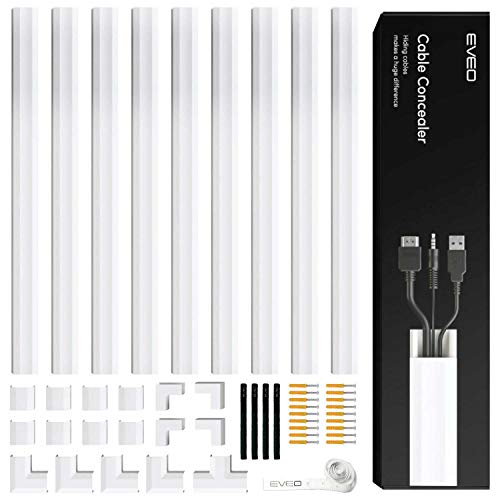
EVEO Cable Hider Wall, 153" White Cable Raceway, 10 Medium Pieces

Delamu TV Cord Hider for 3-4 Wires, 6 White Cable Covers, 1.18" x 0.67"

YouMoro Silicone Cord Hider for Wall, 118" Self-Adhesive Cable Raceway, 0.63" x 0.31"
More On The Choices That Made The List
A mounted TV can look polished while several HDMI, audio, and power leads remain visible below it. This ECHOGEAR kit takes the more permanent route by carrying the run through the wall, leaving the room with fewer exposed sections than a surface-mounted raceway.
Two pass-throughs give the installation room for multiple leads, while the locking brackets and hole-saw attachment support a do-it-yourself cutout. It suits people with a wall-mounted television who are comfortable drilling drywall and can use appropriately rated in-wall cable.
A Few Highlights
- Two pass-through openings accommodate several connected cables rather than forcing everything through one narrow opening.
- Locking brackets help secure the in-wall cable section behind the wall.
- The included hole-saw attachment reduces the need to source a separate matching cutting tool.
- Low-voltage connections such as HDMI and auxiliary cables fit the intended routing use.
- The white finish keeps the visible wall plate less conspicuous on a light-colored wall.
Practical Considerations
- This option requires a cutout and careful placement, so check for studs, wiring, and plumbing before drilling; use only properly rated cable inside the wall.
Key Specs
Made For
This kit is a strong match for confident DIY decorators installing a wall-mounted TV and willing to cut into drywall.
Where Another Pick Suits Better
The YouMoro Silicone Cord Hider for Wall, 236" Self-Adhesive Cable Raceway suits renters or anyone who cannot cut into the wall.
A corner stand solves a different cable problem from an in-wall hider: it keeps the television and its equipment concentrated in one location rather than against an open wall. The trapezoidal FITUEYES design turns that practical corner placement into a deliberate piece of furniture, with two rear frames supporting the display.
Wooden storage shelves add room for media accessories, and the mobile base makes the unit more practical in a multipurpose room. You gain a tidier cable area, but not a concealed wall route, so the cords still need a separate management solution.
Where It Delivers
- The corner form preserves open wall space in rooms where every inch counts.
- Wooden shelves provide storage for media components and small accessories.
- The mobile base lets you reposition the television when the room layout changes.
- Two rear frames add visible structure behind a screen that can range from 43 to 75 inches.
Where It May Fall Short
- This is a TV stand, not a cable channel or wall pass-through, so it does not conceal the cable run itself.
- Measure the corner and the TV base before ordering to confirm that the stand and screen fit together comfortably.
Who It Suits Best
This stand fits apartment living rooms and home offices where a corner TV arrangement makes better use of limited wall space.
Consider Something Else When
Choose the ECHOGEAR Wall Cable Hiders, 2.25" Mini Cord Hider, White 4-Pack instead when your main goal is routing several low-voltage cables behind a mounted device.
The ECHOGEAR mini hider offers a less demanding alternative to the larger ECHOGEAR wall-mounted TV kit. Its 2.25-inch opening is designed to stay tucked behind mounted TVs, speakers, desks, routers, cameras, and other compact electronics where a broad grommet would stand out.
Each opening accommodates up to three low-voltage cables, and the four-pack gives you several outlets for a multi-device setup. That makes it most useful for organizing short runs rather than creating one long concealed path across the room.
What Pays Off
- The 2.25-inch profile can remain less noticeable behind compact mounted equipment.
- Each grommet accepts up to three low-voltage cables, reducing visible leads around entertainment centers.
- Four openings support several devices without buying separate covers for each position.
- The white finish coordinates with lighter walls and common entertainment areas.
Details To Watch
- These are designed for low-voltage cables, so do not treat them as a route for ordinary power cords unless the cable and installation are properly rated.
Quick Facts
The Right Fit
This four-pack suits people organizing several low-voltage connections behind compact mounted equipment or across a home-office desk.
Look Elsewhere When
The ECHOGEAR TV Cord Hider for Wall Mounted TV, White Cable Management Kit is the stronger choice for a main television run that benefits from locking brackets and a hole-saw attachment.
A long cable run rarely travels in a perfectly straight line, and this flexible silicone raceway can bend around a mounted television before continuing toward a nearby outlet or media shelf. Its 236-inch length gives you room to cover a substantial wall route without joining several narrow pieces.
The side-opening channel holds up to three common cables, including power cords, HDMI leads, or speaker wire. Compared with the ECHOGEAR mini hider, nothing disappears into the wall, but the tradeoff is a less involved installation that requires no wall cutout.
The Value In It
- Flexible silicone construction follows gentle curves and corners around mounted equipment.
- The 236-inch length supports longer routes along a wall or entertainment center.
- The 0.63-by-0.31-inch cavity can bundle up to three cables in one channel.
- Self-adhesive installation removes the need for a separate raceway-fastening system.
Small Caveats
- Because the channel sits on the wall, it remains visible even though the cables are covered.
- Measure the complete route before application so bends and endpoints do not leave an awkward short section.
Feature Snapshot
Built With In Mind
This raceway fits people who want a flexible, tool-light way to bundle several cords around a wall-mounted television.
Another Choice May Suit
The EVEO Cable Hider Wall, 153" White Cable Raceway, 10 Medium Pieces may suit you better when separate 16-inch sections make a straight installation easier.
The EVEO kit favors a segmented installation for routes that run mostly straight. Ten medium sections provide 153 inches of total coverage, with each piece measuring 16 inches long and the channel measuring 0.95 inches wide by 0.5 inches high.
That shape is easier to position around outlets and furniture than a single flexible strip, and the adhesive backing keeps the process light. Unlike the YouMoro Silicone Cord Hider for Wall, 236" Self-Adhesive Cable Raceway, 0.63" x 0.31", you trade flexibility for separate pieces that can form modular straight runs.
Positive Takeaways
- Ten individual pieces provide plenty of placement options for a multi-section route.
- The adhesive installation suits a quick setup without a wall cutout.
- The paintable white design can blend into a light wall or be adjusted to match the finish.
- Each 16-inch section offers a practical length for arranging cables around a television.
Trade Offs
- Separate pieces require more careful alignment than one flexible raceway.
- The 153-inch total length may fall short for a route that travels around an entire room.
- The surface-mounted design leaves the cover visible along the wall.
Best Suited To
This kit works well for straight, medium-length cable runs in an office, bedroom, or living room with a simple wall path.
A Better Fit Elsewhere
The YouMoro Silicone Cord Hider for Wall, 236" Self-Adhesive Cable Raceway, 0.63" x 0.31" is the better option for a longer route with curves.
The Delamu covers take a roomy approach to surface cable concealment. Each 1.18-by-0.67-inch section can gather three or four common wires, including HDMI, Ethernet, optical, and USB leads, before the cover closes around them.
Six pieces provide more room for a substantial cable bundle than the narrower YouMoro channel, although the EVEO kit offers more individual sections. Delamu is a sensible middle ground when you have several connected leads but need a broad, straightforward cover.
Useful Touches
- The wider cavity is designed to conceal three or four cables in a single section.
- The snap-on closure keeps each bundle together without routing wires through a wall.
- Six covers give you several mounting positions around a television or desk.
Points To Note
- Check the 1.18-inch width against the space between a mounted television and the wall or furniture behind it.
Technical Highlights
Who Will Love This
This kit suits home theaters, gaming areas, and offices where several thicker cables need one roomy wall cover.
Where A Sibling Pick Shines
The EVEO Cable Hider Wall, 153" White Cable Raceway, 10 Medium Pieces is better for a route requiring more separate 16-inch sections.
This shorter YouMoro channel shares the flexible, side-opening design of the 236-inch model but limits the run to 118 inches. That makes it a practical fit for a smaller television, a compact desk, or a section of wall that does not need a much longer covered path.
The 0.63-by-0.31-inch cavity can hold up to three common cables, including power cords, HDMI leads, or speaker wire. In your view, the real value is the combination of compact length, bendable silicone, and adhesive placement without a wall cutout.
Everyday Wins
- The flexible channel follows gentle turns around a television or desk setup.
- Its 118-inch length suits a focused cable run without excess material.
Possible Compromises
- The shorter length may not reach a distant outlet or entertainment shelf.
- Its 0.63-inch cavity is narrower than the roomy Delamu TV Cord Hider for 3-4 Wires, 6 White Cable Covers, 1.18" x 0.67".
Core Details
Who Should Grab It
This pick suits apartment residents and home-office users who need a short, flexible raceway for a mounted screen or desk.
Reach For A Different Pick When
The YouMoro Silicone Cord Hider for Wall, 236" Self-Adhesive Cable Raceway, 0.63" x 0.31" is the better choice when your route extends beyond 118 inches.
Plan the Route Before You Cover the Cables
Choose Between an In-Wall and Surface Route
An in-wall pass-through produces the cleanest result because the cable disappears into the wall and reappears near the equipment. It requires a cutout, accurate placement, and the right type of cable for an in-wall installation. A surface raceway keeps the wall intact and is more practical for rented rooms or temporary setups.
Match the Opening to Your Cable Bundle
The number of cables matters more than the television size. The ECHOGEAR mini hider handles up to three low-voltage cables, while the Delamu cover accommodates three or four wires in its larger cavity. Measure both the bundle and the available clearance before choosing.
Follow the Full Path Before Applying Adhesive
A cable rarely travels in one straight line. Trace the route from the mounted device to the outlet or media shelf, including corners, furniture gaps, and access points. The 236-inch YouMoro channel suits longer paths, while the EVEO pieces are easier to arrange along a straighter wall.
Match the Finish to the Wall
White covers work well against light walls, and the EVEO channel can be painted to match the surrounding finish. Consider the wall texture and nearby colors before application, since the shape of a raceway remains visible even when the wires disappear.
Two Details That Change the Installation
Common Shopping Slip Ups
The most common mistake is selecting by cable quantity alone. Measure the narrow space behind the television, check whether the cables belong behind the wall, and trace the complete route. A large bundle in a shallow opening can remain difficult to install.
What Separates Premium From Basic
In-wall kits add cutting guidance, pass-throughs, and mounting components that basic surface covers leave out. That extra equipment suits a permanent installation, while an adhesive raceway offers a shorter project for a room you may change later.
Frequently Asked Questions
What is the best way to hide TV cables behind a wall-mounted television?
An in-wall cable pass-through provides the cleanest appearance because the cables travel through a small opening behind the television. You need a drill, careful placement, and appropriately rated cable for an in-wall installation.
Can I hide power cords in an in-wall cable hider?
Only use power cable specifically rated for in-wall installation. Standard power cords are not interchangeable with low-voltage HDMI, audio, network, or USB cable.
Is an adhesive cable raceway easier to install than cutting the wall?
Yes, an adhesive raceway is generally less involved because it attaches to the wall surface. Its trade-off is that the cover remains visible even though the cables are concealed.
What size cord hider is best for several cables?
Choose a cover based on the number and diameter of the wires. A narrow 0.63-inch channel suits up to three common cables, while a wider 1.18-inch cover offers more room for a larger bundle.
How much cable cover length do I need for a wall-mounted TV?
Measure from the television to the outlet or equipment cabinet, then add extra for bends and connections. A 118-inch channel suits a compact route, while 153 or 236 inches covers a longer path.
Final Verdict
Your best choice depends on the wall and the cable run. Choose an in-wall kit for a permanent, polished installation, or use an adhesive raceway when preserving the drywall matters more. Measure the route and bundle before ordering, and the right cover should disappear neatly into your setup.