
Traffic noise outside the studio, echoes across a home office, and rattling body panels inside a car all call for different sound-control approaches. Foam sound insulation helps by absorbing reflections or adding damping, so you can match the material to the problem instead of expecting one panel to handle every room. These picks suit home studios, vehicle projects, podcast spaces, offices, and other places where unwanted vibration or echo gets in the way.
A Quick View Of The Lineup

ZXCASDF 5mm Self-Adhesive Aluminum Foil Acoustic Insulation Sheet, 5m²

yaoqijie 12 Wedge Foam Bass Traps, 12x12x24cm Black

KILMAT 50 mil 50 sqft Butyl Sound Deadening Mat

KILMAT 80 mil 18 sqft Butyl Sound Deadening Mat

KILMAT 80 mil 36 sqft Butyl Sound Deadening Mat

ua acoustics 2-Pack Acoustic Foam Corner Bass Traps, 42cm Triangle
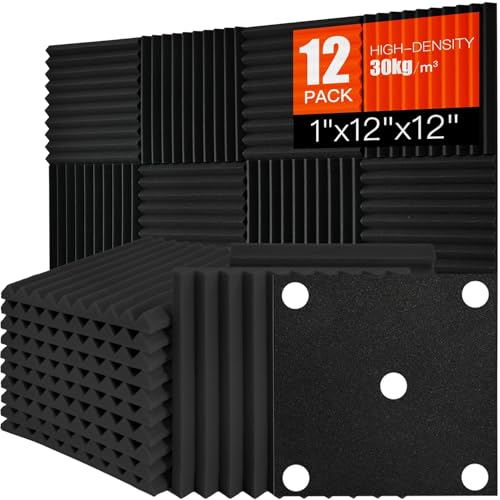
Saiqiang 12-Pack 1x12x12 inch High-Density Acoustic Foam Panels, Black
What Each Pick Brings To The Table
This thin, adhesive-backed sheet fits a different job from the room-filling wedges in the yaoqijie set. Its embossed aluminum foil faces outward, while the 5mm foam layer provides thermal resistance and some vibration damping, making it practical for ducts, pipes, roof sections, vehicle panels, and interior partitions.
You get 5 square meters in a single roll, which may suit a commuter who wants to line several noisy panels without assembling a room-sized array. The aluminum surface also reflects radiant heat, so the sheet does more than address sound, although the acoustic benefit will depend on the panel and how firmly it is attached.
What Earns Its Place
- Self-adhesive backing simplifies installation on compatible flat surfaces.
- The foil layer adds heat reflection and moisture resistance.
- Five square meters covers several vehicle or utility areas.
- It can address vibration, rattles, and airborne noise in one material.
Practical Considerations
- Measure each area before cutting because the adhesive backing leaves little room for repositioning.
- This sheet is thin, so dedicated foam panels may work better for room reflection control.
Feature Snapshot
Built For Vehicle Projects
Choose this sheet for DIY vehicle work or utility surfaces where thin, adhesive damping and heat resistance matter together.
Another Choice May Suit
Home studio creators get a more suitable room-treatment format from the Saiqiang 12-Pack 1x12x12 inch High-Density Acoustic Foam Panels, Black.
Twelve wedge-shaped blocks give you more placement options than a single corner trap, which matters in a rehearsal room or home studio where you may need to cover several reflective surfaces. Each polyurethane block measures 12 x 12 x 24cm, enough depth to interrupt reflections and absorb lower-frequency buildup around equipment.
You can arrange the bricks across a wall, near a mixing desk, or around troublesome room corners. Compared with the one-inch Saiqiang wall panels, these deeper pieces may suit areas where stronger low-frequency absorption is the priority, depending on the room dimensions and the amount of open wall space you have.
Good Reasons To Consider
- Twelve pieces allow several surfaces to be treated at once.
- The wedge profile breaks up flat wall reflections.
- Deep blocks suit home studios and rehearsal areas.
Where It May Fall Short
- The 24cm depth requires more room than a shallow wall panel.
- Twelve bricks can occupy substantial wall or corner space.
- These blocks absorb room energy rather than block sound through walls.
Made For Home Studios
You’ll get the most benefit in a home studio or rehearsal room where you need flexible bass-trap coverage and have space to work with 24cm-deep pieces.
Where a Sibling Pick Shines
The ua acoustics 2-Pack Acoustic Foam Corner Bass Traps, 42cm Triangle is a neater fit for a room with only two corners available.
Vehicle noise has several sources, and this KILMAT sheet targets the structural ones. The 50-mil butyl layer adds mass and damping to metal panels, helping reduce rattles, vibration, and portions of road noise rather than absorbing echoes inside the cabin.
With 50 square feet available, you can treat doors, floors, trunk sections, and other panels as one project. It is easier to cover a broad vehicle area than to place rigid acoustic wedges, although the adhesive sheets need clean, compatible surfaces and careful alignment before pressing them down.
Bright Spots
- Fifty square feet supports broad vehicle coverage.
- Butyl construction is suited to vibration and panel rattle.
- Adhesive backing supports DIY installation.
- The 50-mil thickness is a practical middle ground.
Things To Consider
- It treats vibration inside a vehicle, not airborne noise entering through gaps.
- You’ll need enough flat metal area to use the full sheet.
Quick Facts
Right Fit For DIY Mechanics
Choose this mat for a weekend car project focused on doors, floors, and other panels that transmit rattles or road noise.
Reach for a Different Pick
People tackling a nearly complete vehicle treatment get more 80-mil coverage from the KILMAT 80 mil 36 sqft Butyl Sound Deadening Mat.
The 18-square-foot area keeps this 80-mil option focused, but the added thickness gives it a different role from the 50-mil KILMAT sheet. It makes sense for targeted work on a door, quarter panel, or cargo floor where you want more damping material without handling a full-vehicle roll.
Butyl remains the operative material: a viscoelastic layer that adheres to metal and helps convert panel vibration into less transmitted sound. You may find the 80-mil sheet harder to shape around tight contours than a thinner mat, so flat sections offer a more practical installation path.
A Few Strong Suits
- Thicker than the 50-mil KILMAT option.
- Focused 18-square-foot coverage suits selective work.
- Useful against rattles and vibration in metal panels.
Possible Compromises
- Less coverage requires more planning across a whole vehicle.
- Thicker material can be less adaptable around complex contours.
Who Should Grab It
Choose this mat for a focused vehicle upgrade where 80-mil damping matters more than having a large unused sheet.
Look Elsewhere When
Large-project installers get more usable area from the KILMAT 80 mil 36 sqft Butyl Sound Deadening Mat.
Thirty-six square feet of 80-mil material closes the gap between the compact 18-square-foot KILMAT roll and the broader 50-mil option. You can move through a car methodically, covering doors, floors, trunks, and body sections without stopping to replace a small sheet midway.
The foil-backed butyl construction adds mass and helps reduce vibration transmitted through metal. That makes it a sensible choice for someone addressing several rattle points, although sealing gaps, replacing weather strips, and insulating the wheel wells remain separate parts of a comprehensive vehicle-noise project.
Reasons It Performs
- Generous 36-square-foot coverage supports multiple panels.
- The 80-mil layer provides substantial damping.
- Butyl adhesive backs onto metal vehicle surfaces.
- One purchase suits a broad, methodical vehicle project.
- Useful for floor and door sections that transmit road noise.
Minor Gripes
- The full area may be excessive for one door or panel.
- It does not address every source of cabin noise.
Technical Highlights
Best Suited To Restorers
Choose this roll for a serious vehicle-sound project covering multiple interior panels from the start.
Consider Something Else
The ZXCASDF 5mm Self-Adhesive Aluminum Foil Acoustic Insulation Sheet, 5m² is a better fit for mixed vehicle and utility-panel insulation.
A triangular profile follows the geometry of a room corner, giving these traps a purpose that rectangular wall wedges don’t quite match. At 42cm, each piece can act as a corner treatment aimed at reducing reflections and ambient interference, particularly in the middle and lower frequency ranges.
The two-pack makes a focused studio upgrade rather than a full-room treatment. You can place one trap in each of two corners or concentrate the pair around a recording position, with the angled shape helping the foam work into otherwise awkward space.
Everyday Perks
- Triangular geometry fits neatly into room corners.
- The 42cm size suits compact studio treatments.
- Two pieces allow a balanced corner arrangement.
Details To Watch
- Two traps provide less coverage than the 12-piece yaoqijie set.
- Room reflections away from the corners may remain noticeable.
Whose Shelf It Belongs On
You’ll appreciate this pair in a compact recording room where corner geometry and low-frequency buildup are the main concerns.
Swap It Out When
Studio owners covering several wall and corner positions get more flexible placement from the yaoqijie 12 Wedge Foam Bass Traps, 12x12x24cm Black.
Twelve square, wedge-profile panels create a straightforward way to treat reflections across a studio, podcast room, vocal booth, office, or home workspace. Each panel measures 1 x 12 x 12 inches, so the set offers enough pieces to work across multiple surfaces without creating a bulky bass-trap arrangement.
You can place the panels behind a microphone, near reflective walls, or along a desk area where speech and recordings pick up flutter echoes. The material is designed for acoustic absorption, not structural soundproofing, so it improves room reflections without sealing off the space or blocking every sound path.
Strengths Worth Knowing
- Twelve panels provide broad placement options.
- High-density foam suits studios and podcast spaces.
- One-inch depth works well for wall-mounted reflection control.
- Square panels fit more easily into standard room layouts.
- Black wedge finish suits common studio interiors.
Where It Is Less Suited
- It manages internal reflections rather than providing structural isolation.
- One-inch panels offer less low-frequency depth than the 24cm yaoqijie blocks.
Key Product Details
Made For Content Creators
Choose these panels for podcast, video, voice, or office spaces where clear recording and reduced echo are the priority.
Not Your Match When
Low-frequency-focused studio treatment benefits more from the yaoqijie 12 Wedge Foam Bass Traps, 12x12x24cm Black.
Match the Material to the Noise Path
Begin with the type of noise you hear. Echo inside a studio calls for porous foam that absorbs reflected sound, while rattles and vibration in a car call for dense butyl or foil-backed damping. Sound traveling through a wall is a separate structural issue that ordinary foam panels won’t stop.
Compare Thickness and Coverage
Thickness influences how much space the material occupies and how substantial the damping layer feels. The KILMAT 50-mil sheet provides broad coverage, while the 80-mil versions trade additional area for thicker damping. For room treatment, one-inch panels suit general wall reflections, and 24cm wedges or corner traps suit deeper low-frequency work.
Think About Room Placement
Measure the surface before ordering. A 12-panel set can cover several walls, two corner traps suit a focused room, and a single vehicle mat may cover several metal sections. You’ll get a more useful result by placing material where echoes or vibration are strongest rather than spreading it too thinly.
Plan the Installation
Check the surface and mounting method before cutting adhesive material. Vehicle panels need compatible metal areas, while wall foam needs a stable attachment plan. Measure twice, account for corners and obstructions, and leave enough access for the panels to sit without creating an uneven visual or physical obstruction.
Common Mistakes Worth Dodging
Wrong Turns To Avoid
Choosing foam solely by its “soundproofing” description can leave you with material that absorbs reflections but does little about transmission through walls. Match the product to the noise path, and distinguish absorption from isolation before you buy.
Where The Extra Money Goes
Higher-tier options usually add thickness, coverage, or a specialized shape. That can be worthwhile for deeper bass treatment or a larger vehicle project, but a smaller room or one troublesome panel may need less. Pay for the coverage and profile your space actually requires.
Frequently Asked Questions
Does foam sound insulation stop sound from passing through walls?
Foam sound insulation mainly absorbs echoes and controls reflections inside a room. Blocking sound through a wall generally requires a separate structural approach involving dense materials, air gaps, and suitable construction.
Which thickness is best for reducing car noise?
The 50-mil KILMAT sheet offers broad coverage for lighter projects, while the 80-mil versions add a thicker damping layer for more demanding vehicle work. Door, floor, and trunk panels are common starting points.
Can acoustic foam panels improve a home office?
Yes, especially where hard walls cause noticeable echo during calls or recordings. Panels placed behind a desk or along reflective walls can reduce reflections, but they will not stop sound traveling through doors or neighboring rooms.
How many foam panels does a room need?
The number depends on room size, surface materials, and where reflections are strongest. Start near the main sound source and hardest reflective surfaces, then add coverage where listening or recording still reveals excessive echo.
Do acoustic foam panels require framing?
Mounting depends on the product and wall construction, so the attachment method matters. Secure the panels continuously and make sure the surface is clean, stable, and suitable for adhesive or fasteners.
Wrap Up
The right foam sound insulation depends on the noise you want to control. Use wedge panels and corner traps for room reflections, butyl mats for vehicle vibration, and thin foil-backed sheets for mixed insulation tasks, then match the coverage and depth to your space. A measured, targeted installation will make better use of every panel.